Reviewed by the HyaluFlow Health Editorial Team | Published: June 17, 2026 | Last Updated: August 25, 2026
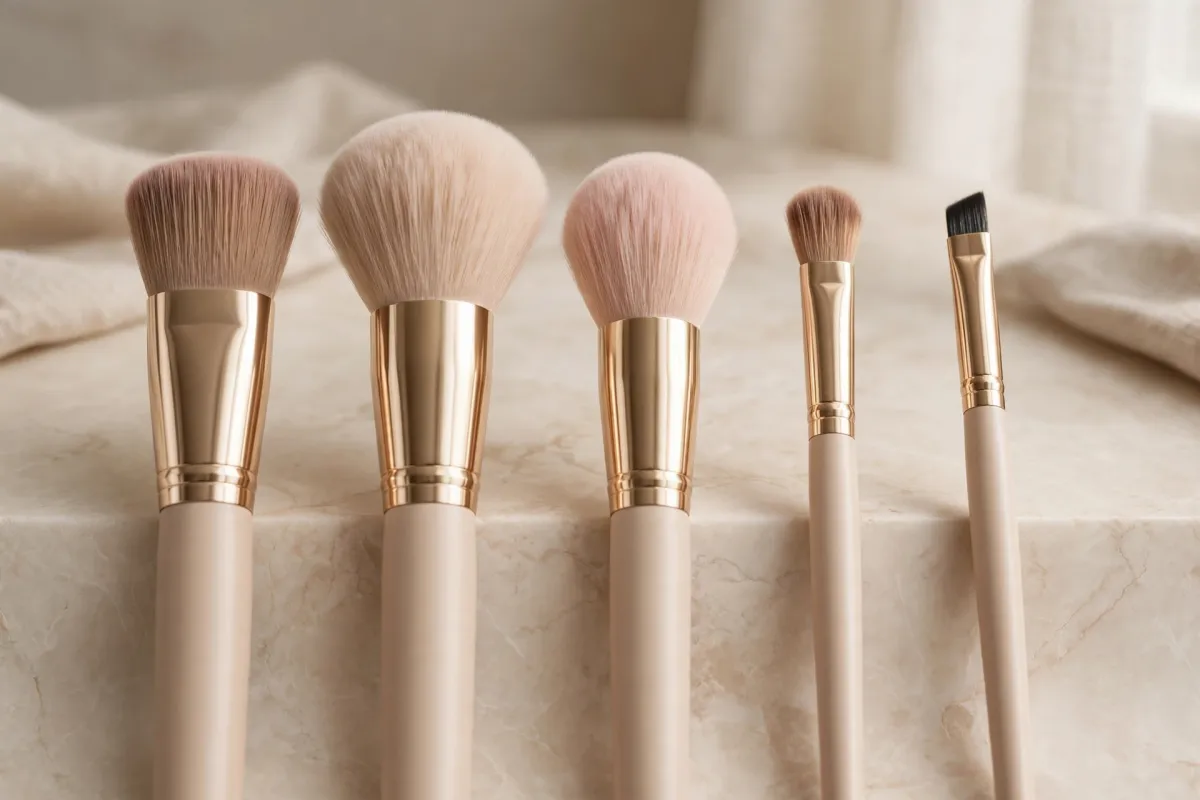
You do not need a drawer full of makeup brushes to create a polished look. Five versatile brushes can cover most everyday makeup needs, from applying foundation and powder to blending eyeshadow and defining brows.
- Five versatile brushes can cover most basic makeup applications.
- Brush shape and density affect how much product is deposited and blended.
- Clean brushes can help reduce the buildup of oil, makeup residue, and microorganisms.
- People with acne-prone skin should consider non-comedogenic makeup and clean applicators.
- Eye-area brushes require particularly careful hygiene and should never be shared.
Why Makeup Brushes Matter
Makeup brushes are designed to distribute cosmetic products across the skin with controlled pressure and coverage. A dense brush can provide more coverage, while a softer, less-dense brush generally helps diffuse powder or pigment.
Using your fingers is not automatically unhygienic, provided your hands are clean. However, brushes can make certain applications more precise and can be useful when you want an even layer without repeatedly touching your face.
1. Foundation Brush
A foundation brush is useful for applying liquid, cream, or some stick foundations. A flat brush can provide more controlled placement, while a rounded or buffing design can help blend foundation across larger areas.
Use light, controlled strokes rather than repeatedly dragging the brush over the same area. The goal is an even layer, not maximum product coverage.
2. Powder Brush
A large, soft powder brush is one of the most versatile tools in a makeup kit. It can distribute loose or pressed powder across the face without depositing an unnecessarily heavy layer.
For a natural finish, pick up a small amount of powder, tap off excess, and gently press or sweep it where you need shine control. A softer brush is especially useful when you want a diffused result.
3. Blush Brush
A medium-sized angled or rounded blush brush can help place powder blush on the cheeks and blend the edges. The ideal shape depends on whether you prefer concentrated color or a softer wash.
Start with a small amount of product and build gradually. This makes it easier to control intensity and avoid a patchy finish.
4. Eyeshadow Blending Brush
A fluffy blending brush is useful for softening the edges of eyeshadow and creating transitions between shades. A smaller version can provide greater control around the crease or outer corner.
Keep eye brushes clean because they come into close contact with delicate skin and the eye area. The FDA's Eye Cosmetic Safety Guidance recommends keeping eye cosmetics and applicators clean and avoiding shared products to reduce contamination risks.
5. Angled Brow or Liner Brush
An angled brush has a thin, slanted edge that works well for defining brows with powder, pomade, or other compatible products. It can also be used to apply gel or cream eyeliner along the lash line.
Because the brush is used near the eyes, avoid sharing it and clean it regularly. Never use an eye-area brush if it becomes contaminated with a product that is not intended for use around the eyes.
How to Choose Makeup Brushes
Brush quality is less about an expensive brand and more about construction, comfort, and suitability for the product. Look for secure bristles, a comfortable handle, and a shape that matches the application you want.
For sensitive or acne-prone skin, the brush itself is only one part of the equation. The American Academy of Dermatology recommends choosing makeup labeled “oil-free,” “non-comedogenic,” or “won't clog pores” when makeup contributes to breakouts. American Academy of Dermatology: Makeup and Acne
What the Science Says About Brush Hygiene
Dirty brushes can accumulate makeup residue, oil, dead skin cells, and microorganisms. Regular cleaning is therefore more important for skin hygiene than simply buying premium brushes.
The American Academy of Dermatology recommends washing makeup brushes every 7 to 10 days and advises against sharing them. American Academy of Dermatology: How to Clean Your Makeup Brushes
For cleaning, rinse the brush tips with lukewarm water, use a gentle or clarifying shampoo, rinse thoroughly, remove excess water, and lay the brushes flat to dry. Avoid soaking the entire brush because moisture can weaken the adhesive holding the brush head together.
Common Myths About Makeup Brushes
Myth: You should never apply makeup with your fingers. False. Clean fingers can be appropriate for some products, particularly creams. Brushes are a tool for control and blending, not a requirement for safe makeup application.
Myth: Expensive brushes always create better makeup. Not necessarily. Shape, density, technique, and cleanliness often matter more than price.
Myth: Dirty brushes only affect people with acne. No. Unclean brushes can contribute to irritation and contamination, including around the eyes. FDA Eye Cosmetic Safety Recommendations
Who Should Pay Attention?
Anyone who regularly wears makeup can benefit from a simple brush-cleaning routine. People with acne-prone or sensitive skin should pay particular attention to clean applicators and products that do not aggravate their skin.
If makeup repeatedly causes redness, itching, swelling, or breakouts, stop using the suspected product and consider discussing persistent symptoms with a dermatologist. For eye irritation or suspected infection, seek medical advice promptly.
Evidence Strength Summary
- Strong: Regular makeup-brush cleaning reduces accumulated residue and helps limit contamination.
- Moderate: Brush shape and density influence makeup placement, blending, and coverage.
- Established safety guidance: Eye-area cosmetics and applicators should be kept clean and should not be shared.
- Not supported: Claims that expensive brushes are medically or cosmetically superior simply because of their price.
Bottom Line
You do not need dozens of brushes. A foundation brush, powder brush, blush brush, eyeshadow blending brush, and angled brow or liner brush can cover most everyday makeup applications.
Choose tools that suit your products and technique, clean them regularly, and never share eye-area brushes. Good brush hygiene is far more important than having an oversized collection.