Reviewed by the HyaluFlow Health Editorial Team | Published: June 17, 2026 | Last Updated: August 25, 2026
Healthy hair growth depends on active hair follicles, adequate calories, protein, and essential nutrients. However, taking more supplements does not automatically make hair grow faster. Nutrition matters most when your diet is inadequate or a nutrient deficiency affects normal hair growth.
- Protein provides amino acids needed to produce keratin, the main structural protein in hair.
- Iron and zinc are important for normal body and follicle function, but taking extra amounts does not guarantee thicker hair.
- Biotin deficiency can cause hair thinning, but true deficiency is uncommon.
- High-dose supplements can cause problems or interfere with certain laboratory tests.
Why Nutrition Matters for Hair Growth
Hair follicles are highly active tissues that require energy and nutrients to produce hair. Inadequate calorie intake, rapid weight loss, restrictive diets, or poor overall nutrition can disrupt the hair-growth cycle and contribute to increased shedding.
The American Academy of Dermatology (AAD) identifies inadequate iron, protein, biotin, and zinc as nutritional factors that can contribute to noticeable hair loss. However, hair loss has many possible causes, so correcting nutrition alone will not address every case. American Academy of Dermatology: Hair Loss Causes
Protein and Amino Acids Build Hair
Hair is largely composed of keratin, a structural protein made from amino acids. Adequate dietary protein therefore provides important building blocks for normal hair structure and follicle activity.
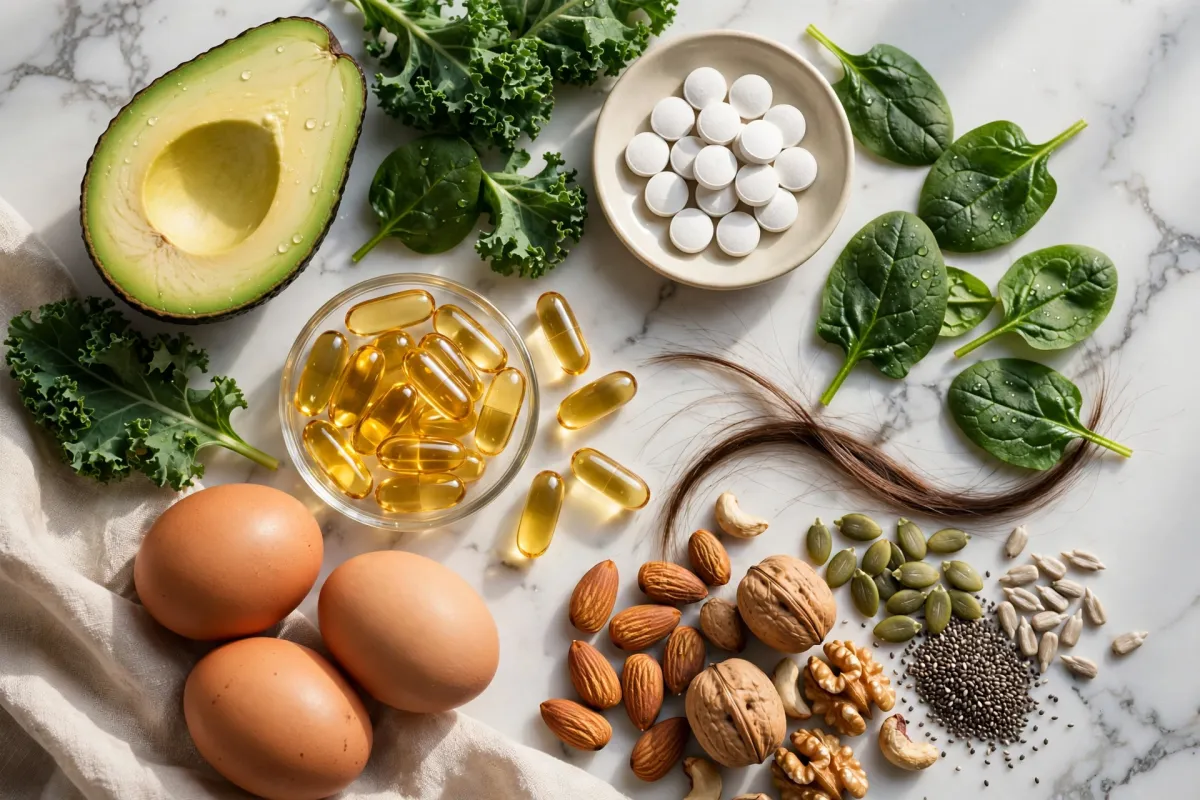
Good protein sources include eggs, fish, poultry, dairy, soy, beans, lentils, nuts, and seeds. For most people, a varied diet can supply sufficient protein without requiring a specialized hair-growth supplement.
The AAD also notes that inadequate protein intake can contribute to hair loss, particularly when overall calorie intake is too low. American Academy of Dermatology: Hair Loss Tips
Iron and Hair Shedding
Iron supports hemoglobin production and oxygen transport. Iron deficiency can be associated with diffuse hair shedding, but hair loss does not automatically mean that iron supplementation is appropriate.
Taking unnecessary iron can be harmful. The AAD recommends determining whether a person is actually deficient before using iron or other supplements specifically for hair loss. American Academy of Dermatology: Hair Loss Diagnosis and Treatment
Zinc and Normal Follicle Function
Zinc is an essential mineral involved in cell growth, protein production, and numerous biological processes. Zinc deficiency can contribute to hair loss, particularly in people with inadequate intake or conditions that interfere with zinc absorption.
However, taking extra zinc does not necessarily make healthy hair grow faster or thicker. Excessive zinc intake can also interfere with copper absorption and create other health problems. NIH Office of Dietary Supplements: Zinc Fact Sheet
Does Biotin Really Help Hair Growth?
Biotin, also known as vitamin B7, is involved in important metabolic reactions involving fats, carbohydrates, and amino acids. A genuine biotin deficiency can cause hair loss, but biotin supplements are frequently promoted for hair growth without strong evidence that they benefit people who already have adequate intake.
The NIH Office of Dietary Supplements states that claims about biotin supplements improving hair, skin, and nails are supported, at best, by limited evidence from small studies and case reports. NIH Office of Dietary Supplements: Biotin Fact Sheet
High-dose biotin can also interfere with certain laboratory tests, including some tests used to measure hormones. Anyone taking a biotin supplement should tell their healthcare professional before laboratory testing. NIH Office of Dietary Supplements: Biotin Consumer Fact Sheet
What the Science Says About Hair Supplements
The strongest case for supplementation is correcting a documented nutrient deficiency. Evidence is much weaker for routine hair supplements in people who already meet their nutritional requirements.
Research on nutritional supplements for hair loss has reported potential benefits for some products, but studies differ substantially in quality, formulations, sample sizes, and outcomes. This makes it difficult to conclude that a particular supplement will reliably improve hair growth for everyone.
The AAD similarly recommends finding the cause of hair loss before relying on supplements and notes that excessive amounts of certain nutrients can actually worsen hair loss. American Academy of Dermatology: Hair Loss Tips
Common Myths About Hair Growth Nutrients
Myth: More biotin means faster hair growth. Not necessarily. Most people can obtain biotin from food, and the NIH reports limited evidence supporting biotin supplements for hair health in people without deficiency. NIH Office of Dietary Supplements: Biotin Fact Sheet
Myth: Every case of shedding is caused by a vitamin deficiency. False. Hair loss can result from hereditary factors, hormonal changes, illness, medications, stress, thyroid disease, scalp disorders, and other causes. American Academy of Dermatology: Hair Loss Causes
Myth: Hair vitamins are automatically safe. No. Excessive amounts of certain nutrients can cause adverse effects, and high-dose biotin can interfere with laboratory tests. American Academy of Dermatology: Hair Loss Tips
Who Should Pay Attention?
Nutritional causes deserve closer attention if you follow a restrictive diet, have recently lost weight rapidly, have gastrointestinal conditions affecting nutrient absorption, have undergone bariatric surgery, experience heavy menstrual bleeding, or have another risk factor for nutrient deficiency.
Sudden, severe, persistent, or patchy hair loss should not automatically be treated with supplements. A dermatologist can assess the pattern of hair loss, identify possible causes, and determine whether blood tests or other investigations are appropriate. American Academy of Dermatology: Hair Loss Diagnosis and Treatment
Evidence Strength Summary
- Strong: Correcting genuine nutrient deficiencies is important and can address deficiency-related hair problems.
- Moderate: Adequate calories, protein, and overall nutrition support normal hair structure and growth.
- Limited: Routine biotin, zinc, or multi-nutrient supplementation in people without deficiencies.
Bottom Line
Healthy hair starts with adequate nutrition, not megadoses of hair vitamins. Prioritize sufficient calories, protein, and a varied diet that provides essential vitamins and minerals.
Biotin, zinc, and iron can matter when intake is inadequate or deficiency is present, but more is not automatically better. If shedding continues, identifying the underlying cause is more useful than repeatedly adding supplements.