Reviewed by the HyaluFlow Health Editorial Team | Published: May 28, 2026 | Last Updated: August 18, 2026
- “Clean beauty” has no single universal scientific definition.
- Natural ingredients can still cause irritation or allergic reactions.
- Preservatives can be essential for preventing microbial contamination.
- Fragrance may trigger irritation in people with sensitive skin.
- Talc requires careful consideration because of potential asbestos contamination.
- Synthetic ingredients are not automatically unsafe.
- Ingredient transparency matters more than luxury pricing or marketing claims.
What Does Clean Beauty Really Mean?
Clean beauty has become one of the biggest trends in modern cosmetics. Yet the term has no single universal scientific or regulatory definition.
Brands may use “clean” to describe products that exclude selected ingredients or follow their own formulation standards. Two products carrying the same label can therefore have very different ingredients and safety profiles.
Look Beyond the Marketing
Terms such as “natural,” “non-toxic,” and “chemical-free” can sound reassuring but provide limited information by themselves. In reality, everything is made of chemicals, including water and naturally derived ingredients.
A better strategy is to read the complete ingredient list and consider whether the product is appropriate for your skin type. Manufacturer transparency, appropriate testing, and responsible formulation are more useful than vague marketing language.
Why Fragrance Matters
Fragrance can improve the sensory experience of cosmetics, but fragrance ingredients can trigger irritation or allergic contact dermatitis in susceptible individuals.
If skincare or makeup repeatedly causes redness, itching, burning, or irritation, fragrance-free products may be worth considering. This is especially relevant for people with sensitive or reactive skin.
Are Parabens Really the Problem?
Parabens are preservatives used to help prevent microbial growth in cosmetics. Although some consumers avoid them, describing every paraben-containing product as inherently dangerous oversimplifies the evidence.
Preservation is important because contaminated cosmetics can create genuine health risks. A product marketed as “preservative-free” is not automatically safer if it lacks an effective system for controlling microbial growth.
What About Talc in Cosmetics?
Talc deserves a more precise discussion than simply labeling it toxic. The concern is that talc deposits can potentially contain asbestos, a known human carcinogen.
The U.S. Food and Drug Administration has tested talc-containing cosmetic products and continues to evaluate appropriate methods for detecting asbestos contamination. The presence of talc alone does not mean that a cosmetic contains asbestos.
Reference: U.S. Food and Drug Administration. Talc. FDA Cosmetics.
Should You Avoid Silicones?
Silicones are widely used in cosmetics because they improve spreadability, texture, shine, and the sensory feel of a product. Their synthetic origin does not automatically make them harmful.
Some people may dislike how certain silicone-rich products feel or behave on their skin, but individual tolerance and the complete formulation matter more than the ingredient category alone.
Choose Ingredients That Support Your Skin
A thoughtful beauty routine does not require avoiding every synthetic ingredient. Well-formulated products can contain useful ingredients such as glycerin, ceramides, squalane, hyaluronic acid, and niacinamide.
These ingredients can support hydration and the skin barrier when appropriately formulated. The objective should be effective, well-tolerated skincare rather than an unnecessarily restrictive ingredient list.
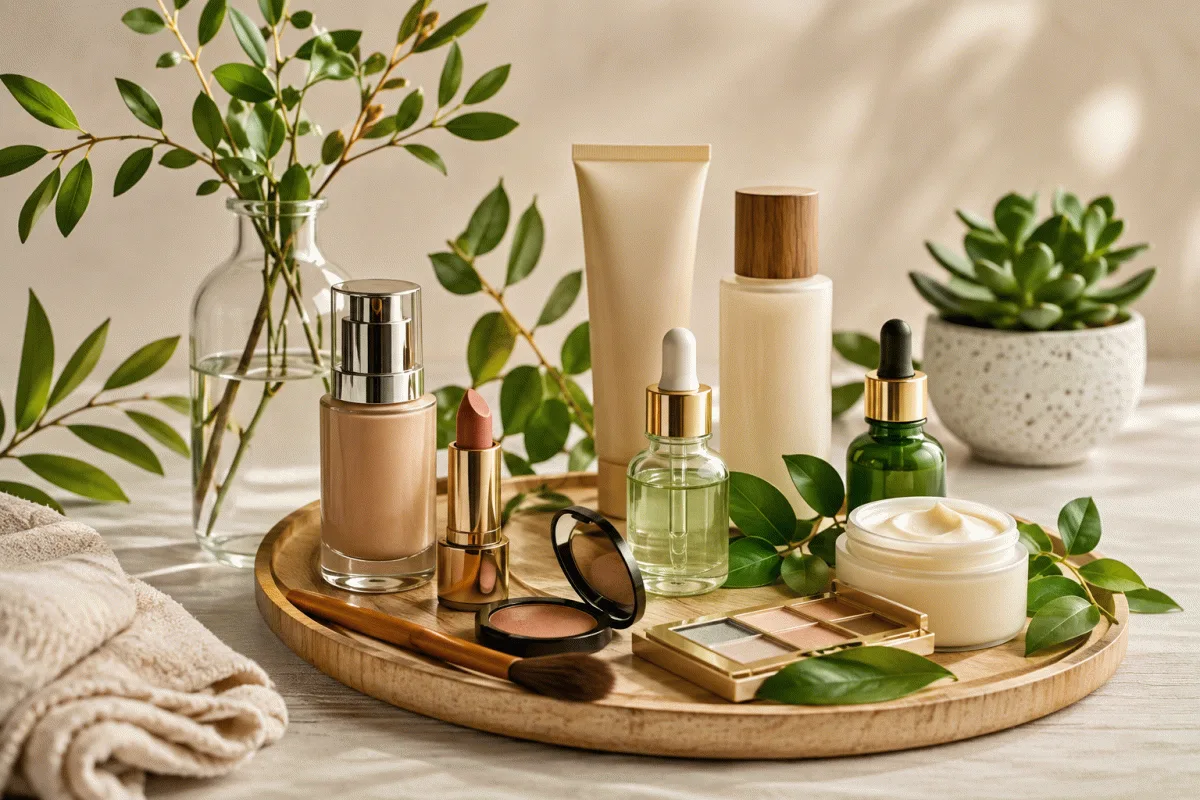
Build a Smarter Clean Beauty Kit
- Gentle cleanser: Choose a formula that removes makeup, sweat, and excess oil without excessive dryness.
- Moisturizer: Look for barrier-supporting ingredients such as ceramides and glycerin.
- Sunscreen: Use broad-spectrum SPF 30 or higher for daily ultraviolet protection.
- Foundation: Select a formula suited to your skin type and personal tolerance.
- Lip products: Avoid formulas that repeatedly cause burning, peeling, or irritation.
- Makeup remover: Choose a gentle formula that removes cosmetics without aggressive rubbing.
How to Test a New Cosmetic
Introducing several new products at the same time makes it difficult to identify what caused a reaction. Add products gradually and observe how your skin responds.
If a product causes persistent burning, swelling, itching, or a rash, discontinue use. Repeated reactions may require assessment by a dermatologist, particularly when symptoms are severe or persistent.
Common Clean Beauty Myths
Myth 1: Natural Means Safer
Fact: Natural ingredients can cause irritation or allergic reactions. “Natural” describes an origin, not a guarantee of safety.
Myth 2: Synthetic Means Toxic
Fact: Synthetic ingredients can be safe and useful when appropriately formulated and used at suitable concentrations.
Myth 3: Preservative-Free Is Always Better
Fact: Preservatives can protect water-containing cosmetics from microbial contamination. Removing them does not automatically improve product safety.
Myth 4: Luxury Products Are Safer
Fact: A higher price does not prove superior safety or effectiveness. Ingredient quality and formulation matter more than the price tag.
What the Science Says
The strongest approach to clean beauty is not eliminating ingredients based on fear. It is evaluating evidence, formulation quality, individual skin tolerance, and appropriate product use.
Consumers should also be cautious with claims suggesting that a single cosmetic ingredient causes widespread disease without strong human evidence. Scientific evidence should guide ingredient decisions rather than viral ingredient lists or fear-based marketing.
Who Should Be More Careful?
People with sensitive skin, eczema, recurrent cosmetic reactions, or known allergies may benefit from simpler routines and fewer potential irritants.
Those experiencing repeated reactions should consider professional evaluation instead of continuously switching between “clean” products. Identifying the actual trigger is often more useful than changing an entire skincare collection.
Bottom Line
Clean beauty should be about smarter cosmetic choices, not fear of everything synthetic. Read ingredient lists, question exaggerated claims, and choose products according to your skin's needs.
The best beauty routine is not necessarily the one with the longest “free-from” list. It is the routine that protects your skin, minimizes unnecessary irritation, and consistently uses products supported by sensible safety principles.
References
- U.S. Food and Drug Administration. Talc. FDA Cosmetics.
- U.S. Food and Drug Administration. FDA Releases Data from the Agency's Testing of Talc-Containing Cosmetic Products for Asbestos.
- U.S. Food and Drug Administration. Cosmetics and the Law. FDA.
- U.S. Food and Drug Administration. Cosmetics: Ingredients and Safety. FDA.
- Johansen JD. Fragrance contact allergy: a clinical review. American Journal of Clinical Dermatology. 2003;4(11):789-798.
- Basketter DA, et al. Preservatives and contact allergy in cosmetics. Contact Dermatitis.