Reviewed by the HyaluFlow Health Editorial Team | Published: June 17, 2026 | Last Updated: August 24, 2026
Quick Answer: For a natural, dewy foundation finish, start with clean skin, apply moisturizer suited to your skin type, allow skincare to settle, then use a thin layer of liquid foundation. Build coverage only where you need it and press the product into the skin rather than piling it on.
A flawless base is less about covering every pore and more about working with your natural skin texture. The right prep and lighter application can make foundation look more like skin and less like makeup.
- Good skin preparation can improve how foundation looks and wears.
- Moisturizer helps dry skin look smoother and more comfortable under makeup.
- Thin layers usually create a more natural finish than heavy coverage.
- Spot-concealing can provide coverage without covering the entire face.
- Non-comedogenic makeup may be preferable for acne-prone skin.
- Clean makeup tools can help reduce irritation and contamination.
Why Does Foundation Look Cakey?
Foundation can emphasize flakes, rough patches, pores, and fine lines when too much product is applied or the skin underneath is dry or irritated. Heavy layering can also make the makeup appear less natural as the day progresses.
That does not mean you need an elaborate 10-step skincare routine. The American Academy of Dermatology recommends keeping skincare practical and applying moisturizer and sunscreen before makeup when appropriate. AAD: How to Apply Skin Care Products in the Right Order
How Should You Prep Skin Before Foundation?
Begin with a gentle cleanse, then apply any treatment products appropriate for your routine. Follow with moisturizer and daytime sunscreen, allowing each layer enough time to settle before applying makeup.
If your skin is dry, moisturizer can make a noticeable difference in comfort and appearance. Dermatologists recommend applying moisturizer to slightly damp skin to help retain moisture. AAD: Skin Care on a Budget
Avoid piling on multiple rich products immediately before foundation. Too many layers can cause products to pill or make the base slide around instead of setting evenly.
Should You Use Primer for a Dewy Base?
Primer is optional, not mandatory. If your foundation already works well with your skincare, adding another layer may provide little benefit.
If you use primer, choose one that matches the finish you want. A hydrating primer may suit dry skin, while a lightweight smoothing or oil-controlling formula may work better for areas that become shiny.
How to Apply Liquid Foundation Naturally
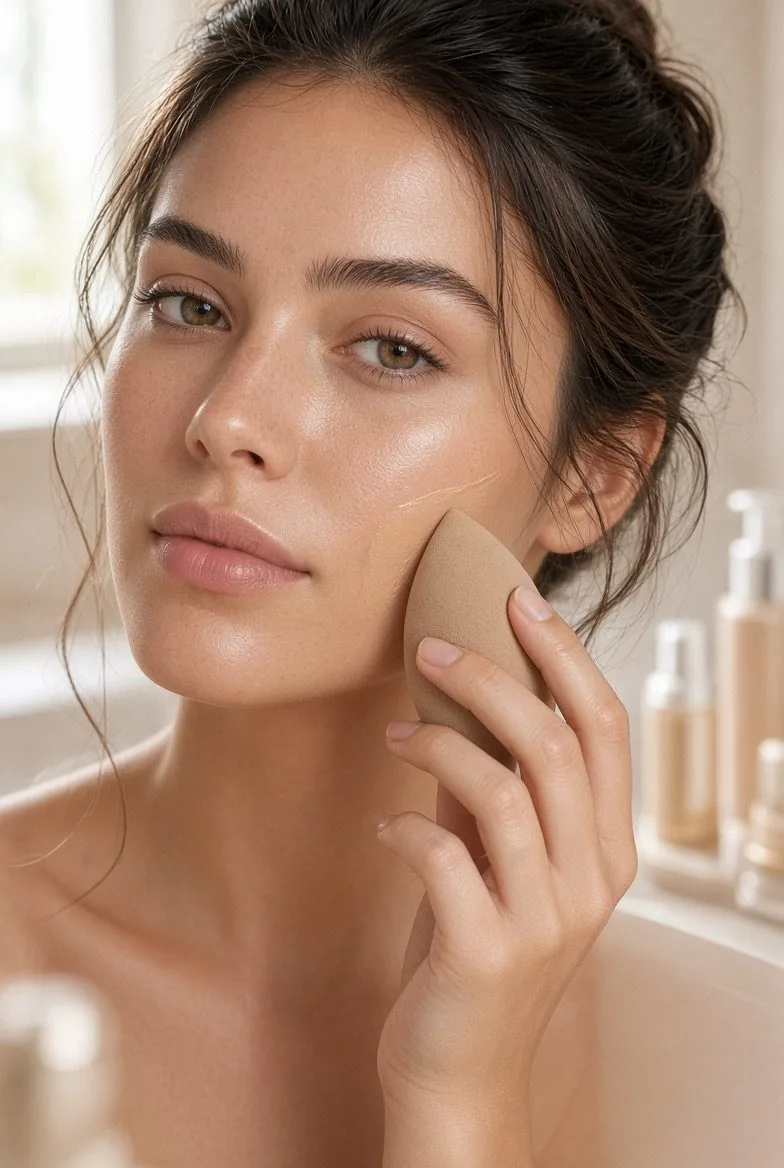
Start with a small amount of foundation and distribute it from the center of your face outward. Use a damp makeup sponge, foundation brush, or clean fingertips depending on the formula and finish you prefer.
With a sponge, use gentle pressing or bouncing motions rather than aggressively rubbing the product across the skin. This can help distribute a thin layer while preserving some of your natural skin texture.
Add another small amount only where additional coverage is needed. Building gradually is usually easier than trying to remove excess foundation after applying too much.
Why Spot-Concealing Can Look More Natural
You do not necessarily need full coverage across your entire face. Apply concealer selectively to areas such as redness, blemishes, or dark spots while leaving areas of naturally even skin lighter.
This technique can create the appearance of more coverage without creating a thick layer of makeup everywhere. For acne-prone skin, the AAD recommends choosing cosmetics labeled non-comedogenic, oil-free, or “won’t clog pores.” AAD: Makeup and Acne-Prone Skin
How Do You Keep a Dewy Finish From Looking Oily?
Dewy and greasy are not the same thing. Keep glow concentrated on areas where you want natural-looking radiance rather than applying luminous products heavily across the entire face.
If your T-zone becomes shiny, use a small amount of setting powder only where needed. Leaving the high points of the face less powdered can preserve a fresh-looking finish.
Common Foundation Mistakes to Avoid
Myth: More foundation means a more flawless complexion.
Reality: Excess product can emphasize texture. Start with a thin layer and build strategically.
Myth: You need to exfoliate heavily before makeup.
Reality: Aggressive scrubbing can irritate skin and make texture more noticeable. Gentle skincare is generally a better starting point.
Myth: A damp sponge is essential for every foundation.
Reality: Application tools are a preference. A brush, sponge, or clean fingers can work depending on the product and desired finish.
Who Should Pay Attention?
Anyone struggling with foundation that looks dry, heavy, patchy, or overly shiny may benefit from simplifying their prep and using thinner layers. Your skin type, foundation formula, climate, and skincare routine all affect the final result.
If you have acne-prone or sensitive skin, choose products carefully and avoid sharing makeup or applicators. The AAD also recommends cleaning makeup brushes regularly and removing makeup before bed. AAD: Makeup Tips for Acne-Prone Skin
What the Science Says
Evidence strength: Strong for basic skincare principles; limited for specific makeup application techniques. Dermatology guidance supports gentle cleansing, appropriate moisturization, sun protection, and non-comedogenic products when needed. Claims that one particular sponge, primer, or technique guarantees flawless skin are not well supported by clinical research.
The goal should be realistic: create a smoother-looking makeup finish while maintaining a skincare routine that supports your skin barrier.
Bottom Line
A dewy foundation look does not require heavy coverage or a complicated routine. Start with comfortable, well-moisturized skin, apply a thin layer of liquid foundation, and add coverage only where necessary.
Let some real skin show. That is often what makes a makeup base look fresh, radiant, and convincingly skin-like rather than overly perfected.