Reviewed by the HyaluFlow Health Editorial Team | Published: June 17, 2026 | Last Updated: August 24, 2026
Quick Answer: Choose blush by considering both your skin depth and undertone, then test the shade in natural light. Fair skin often works well with soft pinks and peaches, medium skin with rose, coral, and mauve, while deeper skin tones can carry richer berries, terracotta, and vivid orange shades beautifully.
But those are starting points, not rules. The most flattering blush is ultimately the shade that complements your complexion and gives you the effect you want.
- Skin depth and undertone are different factors.
- Cool undertones often suit rosy, pink, or berry shades.
- Warm undertones can work well with peach, coral, and terracotta.
- Neutral undertones can often wear a wide range of shades.
- Deeper skin tones can benefit from highly pigmented, saturated blushes.
- Testing blush in natural light gives a more reliable color match.
What Is Your Skin Tone?
Skin tone refers mainly to how light or deep your complexion appears. Beauty brands commonly group shades into categories such as fair, light, medium, tan, deep, and very deep.
Your skin tone can change somewhat with sun exposure, while your undertone is generally more consistent. That is why matching blush solely to how light or dark your skin looks can sometimes produce an underwhelming result.
How Do You Find Your Undertone?
Undertone describes the subtle hue beneath your skin's surface. A common starting point is to look at how your skin responds to different colors and whether gold or silver jewelry tends to complement you more.
Cool undertones often appear pink, red, or bluish, while warm undertones may look golden, peachy, or yellow. Neutral undertones sit somewhere between these descriptions and may suit both warm and cool shades.
These tests are only guidelines. Lighting, skin pigmentation, and personal perception can affect how undertones appear, so comparing several blush shades directly against your complexion is often more useful.
Best Blush Shades for Fair Skin
Fair complexions can look beautiful with sheer pink, soft rose, light peach, and delicate coral shades. Very intense pigments may require lighter application to prevent the color from overpowering the face.
If your undertone is cool, try soft pink or rose. For warm undertones, peach and gentle apricot can create a naturally warm flush.
Best Blush Shades for Medium and Olive Skin
Medium skin tones have plenty of flexibility. Rose, mauve, coral, apricot, warm pink, and terracotta can all work depending on the undertone and desired makeup look.
Olive skin can have greenish, golden, or neutral undertones, making shade selection particularly interesting. Warm peach, apricot, terracotta, and muted rose can complement olive complexions without looking overly pale or ashy.
Best Blush Shades for Deep Skin
Deep skin tones can beautifully support saturated shades that might appear too intense on lighter complexions. Rich berry, plum, brick, terracotta, vivid coral, and orange can create visible, radiant color.
The key is pigmentation rather than avoiding bright shades. A highly pigmented blush can be applied gradually, allowing you to control intensity without repeatedly layering product.
Powder, Cream, or Liquid Blush?
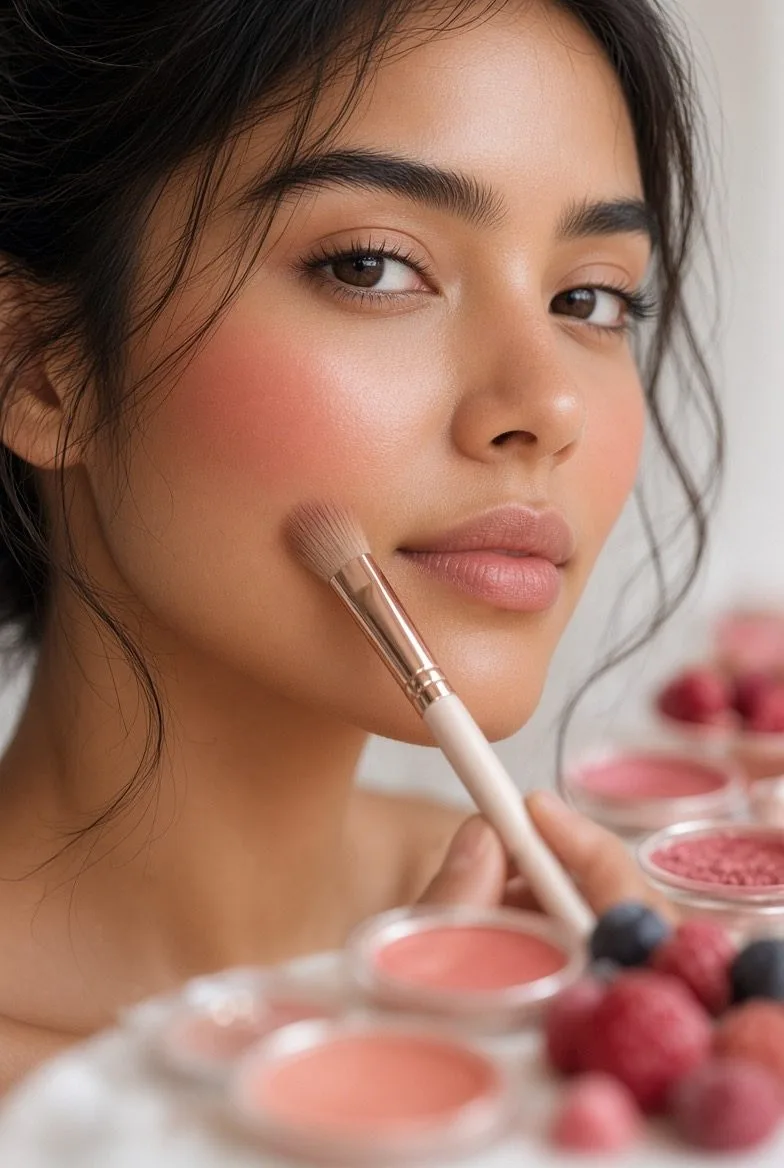
Formula can change how a blush looks and wears. Powder blushes are easy to build gradually, while cream and liquid formulas can create a more skin-like or luminous appearance depending on the product.
There is no universally best formula for every skin type. If you are acne-prone, consider products labeled non-comedogenic and remove makeup thoroughly at the end of the day. American Academy of Dermatology: Makeup and Acne-Prone Skin
How Should You Test a Blush Shade?
Test the color in natural daylight whenever possible. Apply a small amount and observe how it looks after blending rather than judging the concentrated pigment straight from the package.
If you are shopping in person, compare several shades side by side. If buying online, look for swatches from people with a similar skin depth and undertone, while remembering that screens can alter color.
Common Blush-Matching Myths
Myth: Cool skin can only wear pink blush.
Reality: Undertone is a useful guide, not a restriction. Makeup is personal, and contrast can be intentional.
Myth: Darker skin should only use dark blush.
Reality: Deep complexions can look striking with bright, saturated colors. Pigment level and application technique matter more than avoiding vibrant shades.
Myth: Your blush must exactly match your natural flush.
Reality: Matching your natural coloring creates a subtle effect, but contrasting shades can also create beautiful editorial or dramatic looks.
Who Should Pay Attention?
Anyone frustrated by blush that looks too orange, gray, pale, or harsh can benefit from considering undertone as well as skin depth. Formula and pigmentation should also influence your choice.
If makeup repeatedly causes burning, itching, redness, or irritation, stop using the product. Persistent reactions around the face should be discussed with a dermatologist.
What the Science Says
Evidence strength: Limited for specific blush shade recommendations. There is no clinical formula proving that a particular blush color is medically or universally “best” for a specific skin tone.
Color recommendations are primarily based on cosmetic color theory, product pigmentation, and individual preference. Dermatology guidance is more relevant to product safety, irritation, acne, and appropriate cosmetic use than to selecting a flattering shade.
Bottom Line
The best blush shade is not determined by a rigid chart. Use your skin depth and undertone as starting points, then consider the finish, pigmentation, and look you want.
When in doubt, test before committing. A blush that blends naturally into your complexion and makes you feel confident is more important than following a beauty rule.