Reviewed by the HyaluFlow Health Editorial Team | Published: June 17, 2026 | Last Updated: August 25, 2026
Nighttime hair care is easy to overlook. Hours of rubbing, tangling, and pressure can add mechanical stress, especially when hair has already been weakened by heat, chemicals, or frequent styling.
Quick Answer: Prevent hair breakage while sleeping by reducing friction and tension. Use smooth bedding, a loose protective hairstyle, gentle detangling, and soft hair ties instead of tight elastics.
Key Takeaways:
- Nighttime friction can contribute to mechanical hair damage.
- Previously damaged hair is more vulnerable to breakage.
- Silk and satin may reduce friction but cannot repair split ends.
- Loose hairstyles can reduce tangling without excessive tension.
- Tight elastics and hairstyles can increase mechanical stress.
- Conditioning can improve hair slip and reduce friction during handling.
Why Hair Breakage Happens During Sleep
Hair experiences mechanical stress whenever strands rub, bend, stretch, or become tangled. Repeated stress can gradually weaken vulnerable areas of the hair fiber.
Research shows that hair friction increases as the protective surface layer becomes weathered. Bleaching, coloring, heat styling, brushing, and combing can accelerate this process and make hair more prone to friction. “Understanding and controlling the friction of human hair” (PubMed)
Can a Pillowcase Cause Hair Breakage?
Your pillowcase can be part of the friction problem, but saying that cotton directly causes split ends or hair loss is too simplistic. The important factor is the amount of rubbing and mechanical stress your hair experiences.
Hair that has already been weakened by chemical treatments or repeated grooming may tolerate additional stress poorly. Research on hair fragility identifies hair-care practices as an important contributor to acquired hair-shaft damage and breakage. “Hair breakage in normal and weathered hair” (PubMed)
Are Silk Pillowcases Better for Hair?
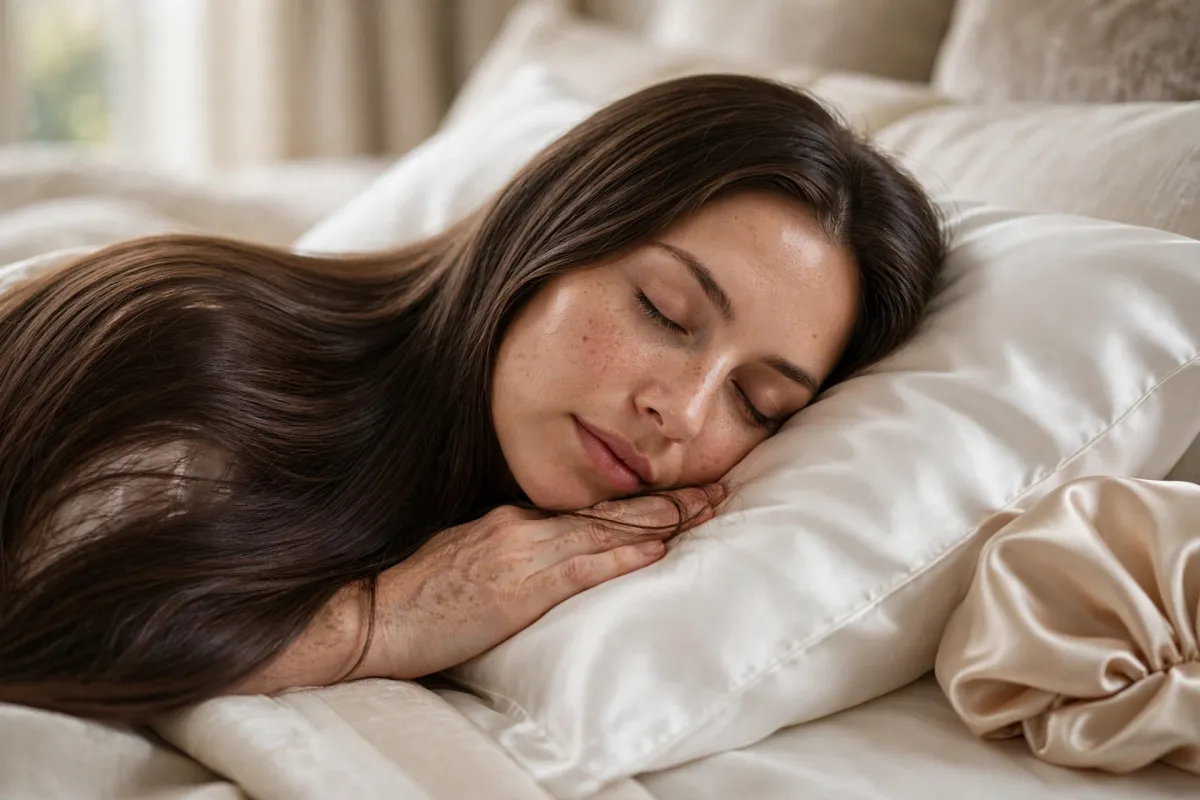
Silk has a smooth surface that may reduce friction between hair and bedding. This can make it a reasonable option for people who wake up with frequent tangles, frizz, or difficult-to-manage hair.
However, there is not enough clinical evidence to claim that silk pillowcases prevent split ends, stimulate hair growth, or repair damaged hair. Their potential advantage is mechanical rather than restorative.
Satin can also provide a smooth surface and may be a lower-cost alternative. The actual friction depends on the fabric, weave, construction, and how much your hair moves during sleep.
Best Hairstyles for Sleeping
The best protective hairstyle for sleeping is loose and comfortable. Loose braids, twists, or a relaxed pineapple can help contain hair while limiting unnecessary movement and tangling.
A soft scrunchie is preferable to a tight elastic when possible. Avoid hairstyles that cause scalp discomfort, pulling, or visible tension around the hairline.
Mechanical research shows that repeated bending, stretching, and grooming can contribute to progressive damage within hair fibers. “Understanding breakage in curly hair” (PubMed)
What the Science Says
Hair breakage is a complex mechanical process. Bending and longitudinal shear can be particularly important because damaged areas can develop cracks that eventually lead to fracture. “The mechanics of fracture of human hair” (PubMed)
More recent research using mechanical testing has shown that hair damage can begin at different interfaces within the fiber, with cracks potentially progressing into visible splits and eventual breakage. “Hair anisotropy and damage: Understanding hair cracking and fracture via the moving loop test” (PubMed)
How to Protect Hair Before Bed
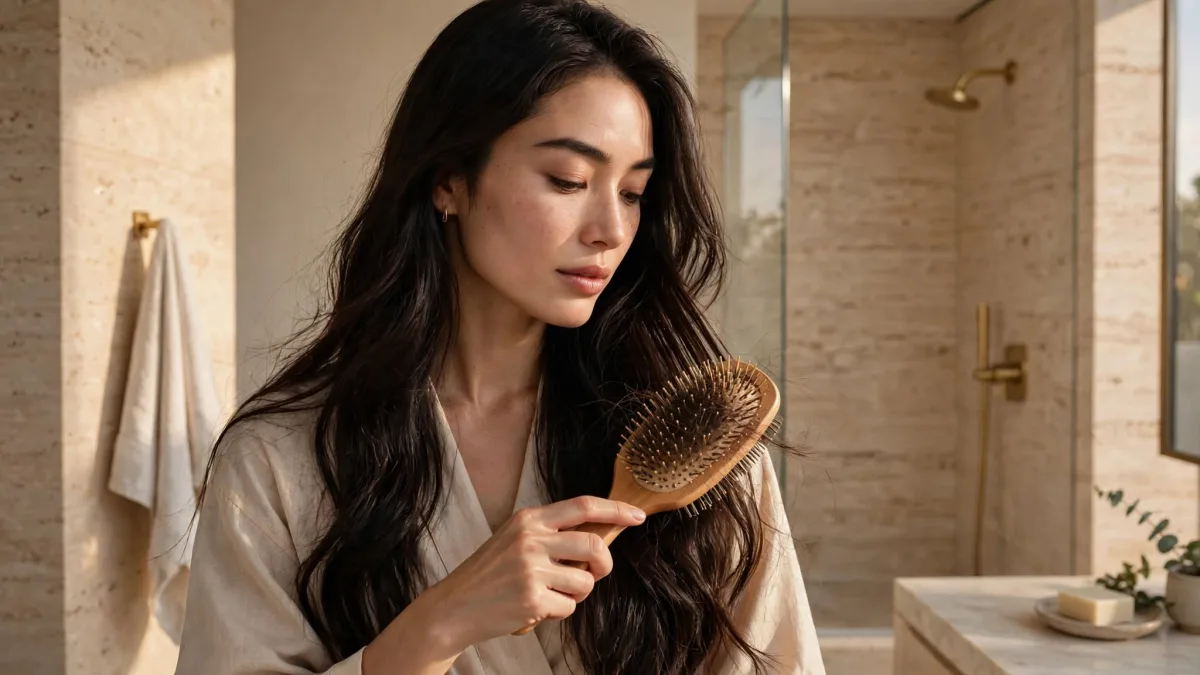
Start with gentle handling. If your hair needs detangling, work gradually from the ends toward the roots rather than forcing a comb through knots.
Conditioning can also help by improving slip and reducing friction. Research shows that conditioners can temporarily lower hair friction by depositing protective ingredients onto the hair surface. “Understanding and controlling the friction of human hair” (PubMed)
Limit unnecessary brushing, heat styling, and chemical processing. A dermatology review notes that many forms of cosmetic hair damage are associated with grooming practices and chemical exposure. “The biology of hair care” (PubMed)
Common Myths About Sleeping With Hair
Myth: Cotton always damages hair. Cotton is not inherently harmful. The concern is repeated friction and mechanical stress.
Myth: Silk repairs split ends. It cannot repair an existing split. A smoother surface may only reduce additional mechanical wear.
Myth: A tight bun protects hair. Tight hairstyles can increase tension and stress fragile strands. A loose style is generally more appropriate for overnight use.
Who Should Pay Attention?
Nighttime friction may matter more if your hair is bleached, chemically treated, frequently heat-styled, very dry, highly textured, or prone to tangling and breakage.
People experiencing sudden thinning, excessive shedding, scalp symptoms, or unexplained hair loss should not assume their pillowcase is the cause. Persistent or unexplained hair loss warrants evaluation by a dermatologist.
Evidence Strength Summary
Evidence strength: Moderate for reducing mechanical stress; limited for specific sleep products. Hair research supports minimizing friction, tension, and unnecessary manipulation, but direct clinical trials comparing silk, satin, and cotton bedding for long-term hair outcomes remain limited.
Bottom Line
You do not need an expensive nighttime routine to reduce hair breakage. Focus on the basics: lower friction, avoid tight hairstyles, detangle gently, and minimize unnecessary mechanical stress.
A silk or satin pillowcase can be useful, but it is not a miracle treatment. Consistent gentle hair care matters more than any single sleep accessory.