Reviewed by the HyaluFlow Health Editorial Team | Published: June 17, 2026 | Last Updated: August 24, 2026
Quick Answer: For naturally shaped eyebrows, start by identifying your existing brow line, remove only clearly unwanted hairs, and use a fine pencil or tinted gel to fill sparse areas. Avoid aggressive reshaping because over-plucking can damage hairs and make regrowth difficult.
The goal is not identical brows. Natural brows have small differences in height, density, and shape, and trying to make them perfectly symmetrical can lead to unnecessary hair removal.
- Work with your natural brow shape rather than creating an entirely new one.
- Map the brow before tweezing to avoid removing too much hair.
- Trim only visibly long hairs and avoid cutting the entire brow too short.
- Use small, hair-like strokes to fill sparse areas.
- Clean tweezers and makeup tools before using them near the eyes.
- Give over-plucked brows time to regrow before reshaping them again.
Why Does Brow Shape Matter?
Eyebrows help frame the upper part of the face and contribute to facial expression. A subtle change in their thickness or arch can noticeably change how your features appear.
But there is no single brow shape that suits everyone. Face shape, natural hair growth, age, genetics, and personal preference all influence what looks balanced.
How Do You Map Your Natural Brow?
Brow mapping can give you a starting point before you tweeze. Hold a thin makeup brush or pencil vertically beside the outer edge of your nostril to estimate where the brow can begin.
For the arch, angle the tool from the side of your nose toward the outer edge of your iris while looking straight ahead. For the tail, angle it toward the outer corner of your eye.
These are guidelines, not strict measurements. Your natural brow may sit differently, and forcing every brow into identical points can make the result look artificial.
How Should You Tweeze Eyebrows?
Use clean, slant-tip tweezers and remove individual hairs in the direction they grow. Work slowly and step back from the mirror regularly so you can judge the overall shape.
Focus on obvious stray hairs underneath or between the brows rather than repeatedly attacking the main brow line. Removing too much can create gaps that take time to grow back.
The American Academy of Dermatology recommends taking care when removing unwanted hair because techniques such as plucking can cause irritation or other skin problems when performed improperly. AAD: Hair Removal: How to Choose the Right Method
Should You Trim Long Brow Hairs?
Trimming can make unruly brows look neater, but it is easy to overdo. Brush the hairs upward with a clean spoolie and trim only the tips that extend substantially beyond your natural shape.
Avoid cutting every hair to the same length. Brow hairs grow in different directions and lengths, and that variation helps create a softer, more natural appearance.
How Do You Fill Sparse Eyebrows Naturally?
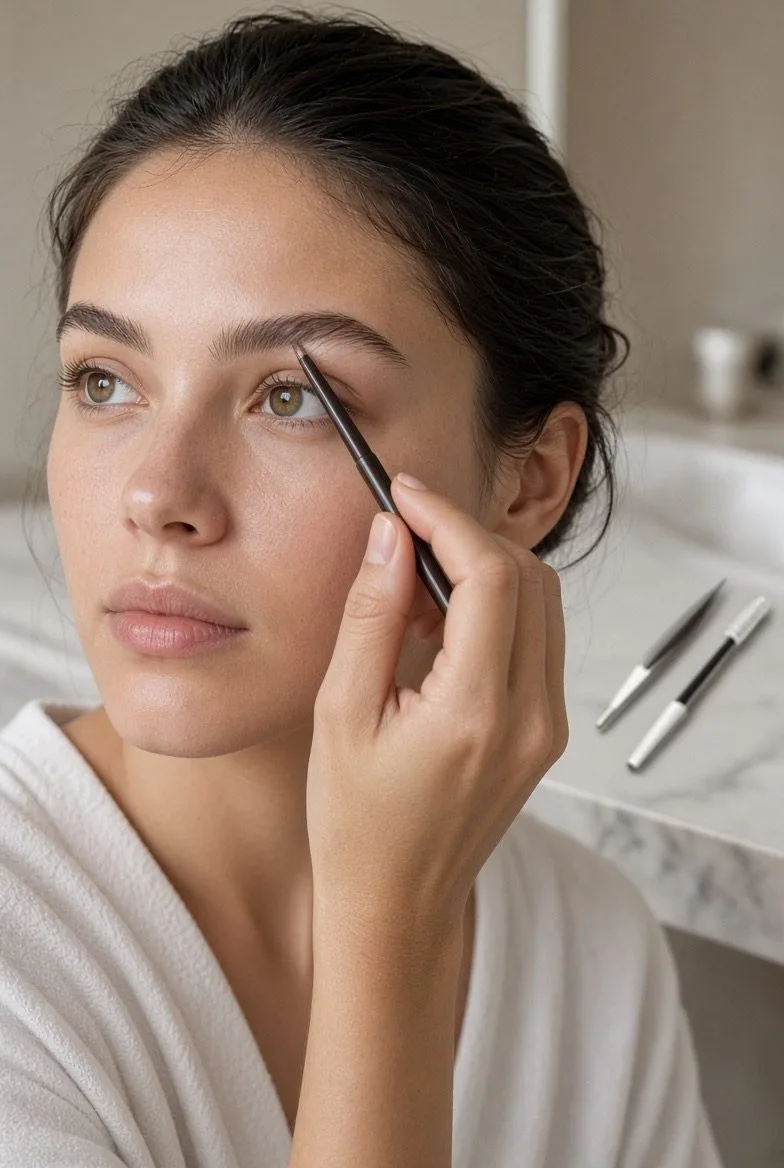
Choose a brow pencil close to your natural hair color and use light, short strokes that mimic individual hairs. Concentrate product where density is lowest instead of filling the entire brow with a solid block of color.
A tinted brow gel can add subtle color and hold, while a clear gel can keep hairs in place without adding pigment. If your skin is sensitive, introduce new cosmetics carefully and stop using products that cause irritation.
How Can You Make Eyebrows Look Fuller?
Fuller-looking brows do not always require permanent makeup or aggressive products. Letting naturally growing hairs remain in place and using targeted cosmetic filling can create the appearance of greater density.
If your brows have become noticeably thinner, resist repeatedly tweezing the same areas. Persistent or sudden hair loss can sometimes have medical causes and may warrant discussion with a dermatologist.
Common Eyebrow Grooming Myths
Myth: Your eyebrows should be perfectly identical.
Reality: Natural facial asymmetry is normal. Trying to create identical brows can encourage unnecessary plucking.
Myth: Plucking makes eyebrow hair grow back thicker.
Reality: Plucking removes the hair from the follicle and does not reliably make new growth thicker.
Myth: More product creates fuller-looking brows.
Reality: Heavy, solid color can make brows look drawn on. Small strokes and targeted application usually look more natural.
Who Should Pay Attention?
Anyone who regularly tweezes, trims, waxes, or fills their eyebrows can benefit from a slower, more conservative approach. This is particularly important if you have sensitive skin around the eyes.
Do not share tweezers, brow pencils, or eye-area cosmetics. Keep tools clean, and avoid grooming irritated, infected, or recently damaged skin.
What the Science Says
Evidence strength: Limited for specific brow-shaping techniques; strong for basic skin and hair-removal safety principles. Most eyebrow-shaping methods are cosmetic practices rather than clinically studied interventions.
For thinning eyebrows, however, the cause matters. The American Academy of Dermatology's guidance on alopecia areata notes that this autoimmune condition can cause sudden hair loss, including loss of eyebrow hair.
Bottom Line
The best natural-looking brow shape usually starts with restraint. Map your features, remove only obvious strays, lightly trim long hairs, and fill sparse areas with small strokes.
Do less, not more. Keeping your natural density and shape intact is often the easiest way to create polished brows that still look like your own.