Reviewed by the HyaluFlow Health Editorial Team | Published: June 17, 2026 | Last Updated: August 25, 2026
Keratin treatments can make hair look smoother, straighter, and easier to manage for weeks. The trade-off is that some salon smoothing formulas use chemicals that can release irritating formaldehyde when heated, while chemical processing itself can damage the hair fiber.
- Keratin treatments are cosmetic smoothing procedures, not treatments for hair loss.
- Some products release formaldehyde gas when heated during blow-drying or flat-ironing.
- Formaldehyde exposure can irritate the eyes, skin, nose, and respiratory tract and carries longer-term health concerns.
- “Formaldehyde-free” claims should be checked against the actual product ingredients and safety information.
- Glyoxylic-acid-based alternatives are not automatically safer and have been linked to reported cases of acute kidney injury.
What Is a Keratin Hair Treatment?
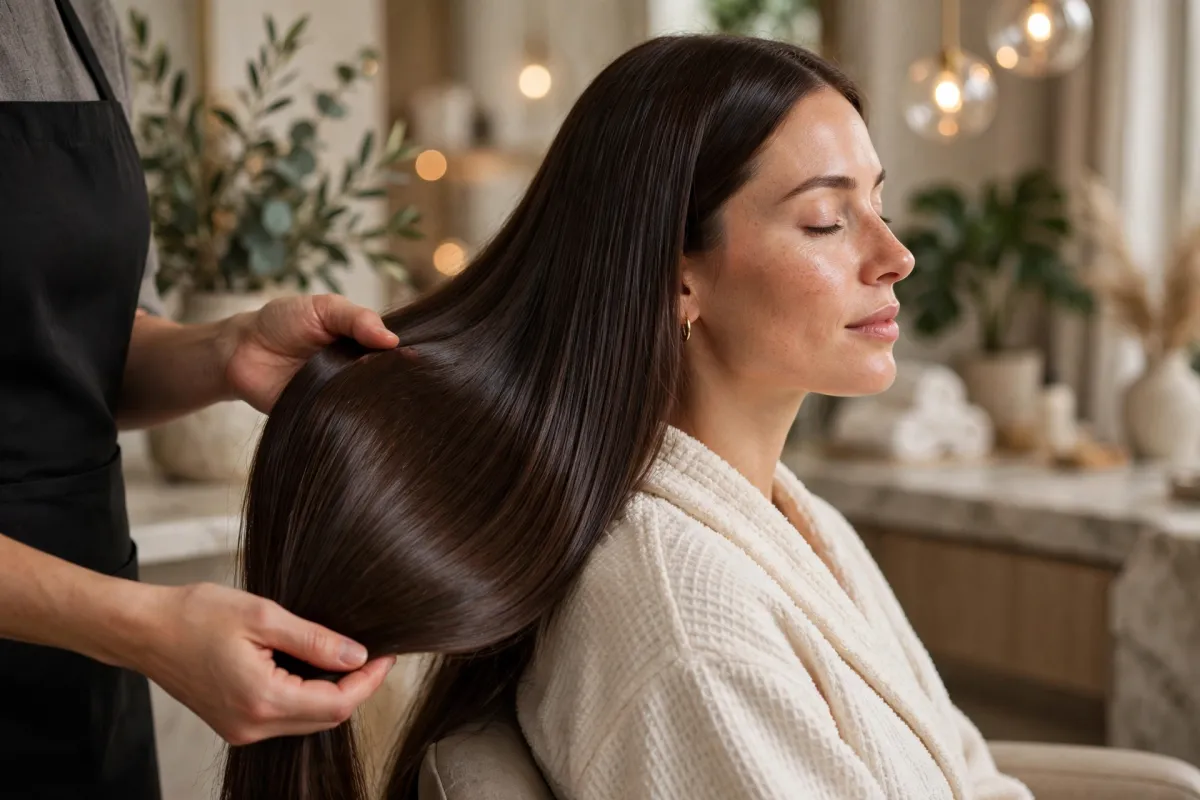
A keratin treatment is a salon procedure designed to smooth the hair surface, reduce frizz, and make styling easier. The process typically involves applying a chemical solution followed by heat from a blow dryer or flat iron.
Despite the name, the main effect is not simply adding healthy keratin to damaged hair. Chemical processing changes the hair fiber and creates a smoother cosmetic appearance.
What Are the Benefits of Keratin Treatments?
The most noticeable benefit is cosmetic: treated hair may appear smoother, shinier, and less frizzy. Straightening or smoothing can also reduce daily styling time for some people.
However, smoother-looking hair does not necessarily mean healthier hair. Chemical treatments can alter the cuticle and cortex, and research comparing straightening methods has demonstrated measurable protein loss and changes in hair-fiber properties. Impact of Acid and Alkaline Straightening on the Hair Fiber
Why Formaldehyde Is a Concern
Some hair-smoothing products contain formaldehyde, formalin, or methylene glycol, while other formulations can release formaldehyde when heated. The FDA warns that inhaling released formaldehyde can cause irritation of the eyes, nose, throat, and lungs. FDA: Formaldehyde in Hair Smoothing Products
OSHA has also found that some salon smoothing products can expose workers to formaldehyde levels above occupational limits during treatment. This makes salon ventilation, product handling, and accurate ingredient information important safety considerations. OSHA: Formaldehyde in Hair Products
Is “Formaldehyde-Free” Always Safer?
Not necessarily. OSHA has reported that some products marketed as “formaldehyde-free” have nevertheless been found to contain or release formaldehyde under treatment conditions.
The safest approach is to ask the salon for the complete ingredient list and Safety Data Sheet rather than relying only on marketing language. The FDA specifically recommends checking for formaldehyde, formalin, and methylene glycol before using a smoothing product. FDA: Hair Smoothing Products That Release Formaldehyde When Heated
Are Glyoxylic Acid Treatments a Safer Alternative?
Glyoxylic acid has been used in some formaldehyde-free hair-straightening formulas, but calling it a “non-toxic” alternative would be misleading. Research has identified potential safety concerns that deserve attention.
A 2024 New England Journal of Medicine report described recurrent acute kidney injury associated with a glyoxylic-acid-containing hair-straightening product, supported by experimental evidence of calcium oxalate kidney injury. New England Journal of Medicine: Kidney Injury and Hair-Straightening Products Containing Glyoxylic Acid
A larger case series involving 26 patients also reported severe acute kidney injury following hair-straightening treatments containing glycolic-acid derivatives. The authors noted that more research is needed, so these findings should not be interpreted as proving that every product causes kidney injury. Acute Kidney Injury and Hair-Straightening Products: A Case Series
What the Science Says About Hair Damage
Chemical straightening can affect both the outer cuticle and inner cortex of the hair. A laboratory study found that glyoxylic-acid treatment caused measurable protein loss and changes in hair-fiber properties, demonstrating that “formaldehyde-free” does not mean damage-free. Impact of Acid and Alkaline Straightening on the Hair Fiber
That distinction matters: a treatment can produce attractive cosmetic results while still placing mechanical or chemical stress on the hair shaft.
Common Myths About Keratin Treatments
Myth: Keratin treatments repair damaged hair permanently. They can temporarily improve the appearance and feel of hair, but chemical processing does not permanently restore damaged hair to its original biological state.
Myth: Formaldehyde-free means completely risk-free. No. Other chemicals can have their own risks, and some formaldehyde-free products have been associated with adverse effects.
Myth: Keratin treatments make hair grow faster. There is no good evidence that salon smoothing treatments stimulate follicle growth or treat hair loss.
Who Should Pay Attention?
Anyone considering a chemical hair-smoothing treatment should ask what product will be used, whether it contains formaldehyde-related ingredients, and whether the salon has adequate ventilation and trained staff.
If you develop eye irritation, breathing problems, scalp irritation, rash, nausea, vomiting, or other unusual symptoms after a smoothing treatment, stop further exposure and seek appropriate medical advice. The FDA recommends reporting significant adverse reactions to a healthcare professional and its safety-reporting system. FDA: Hair Smoothing Product Safety
Evidence Strength Summary
- Strong: Some heated hair-smoothing products can release formaldehyde, creating an established exposure concern.
- Moderate: Chemical straightening can alter and damage the hair fiber.
- Emerging: Glyoxylic-acid-containing straighteners have been associated with acute kidney injury in case reports and case series.
- Insufficient: Claims that keratin or plant-based smoothing treatments stimulate hair growth.
Bottom Line
Keratin treatments can deliver smoother, less frizzy hair, but the cosmetic benefit does not make every formula safe. Formaldehyde exposure is a legitimate concern, and “formaldehyde-free” products should not automatically be assumed to be harmless.
If you choose a smoothing treatment, review the exact ingredients and safety information, use a properly ventilated professional salon, and avoid products containing formaldehyde-related ingredients. For a lower-chemical approach, focus on conditioning, gentle styling, and reducing heat and friction rather than trusting “clean” marketing claims.