Reviewed by the HyaluFlow Health Editorial Team | Published: June 17, 2026 | Last Updated: August 25, 2026
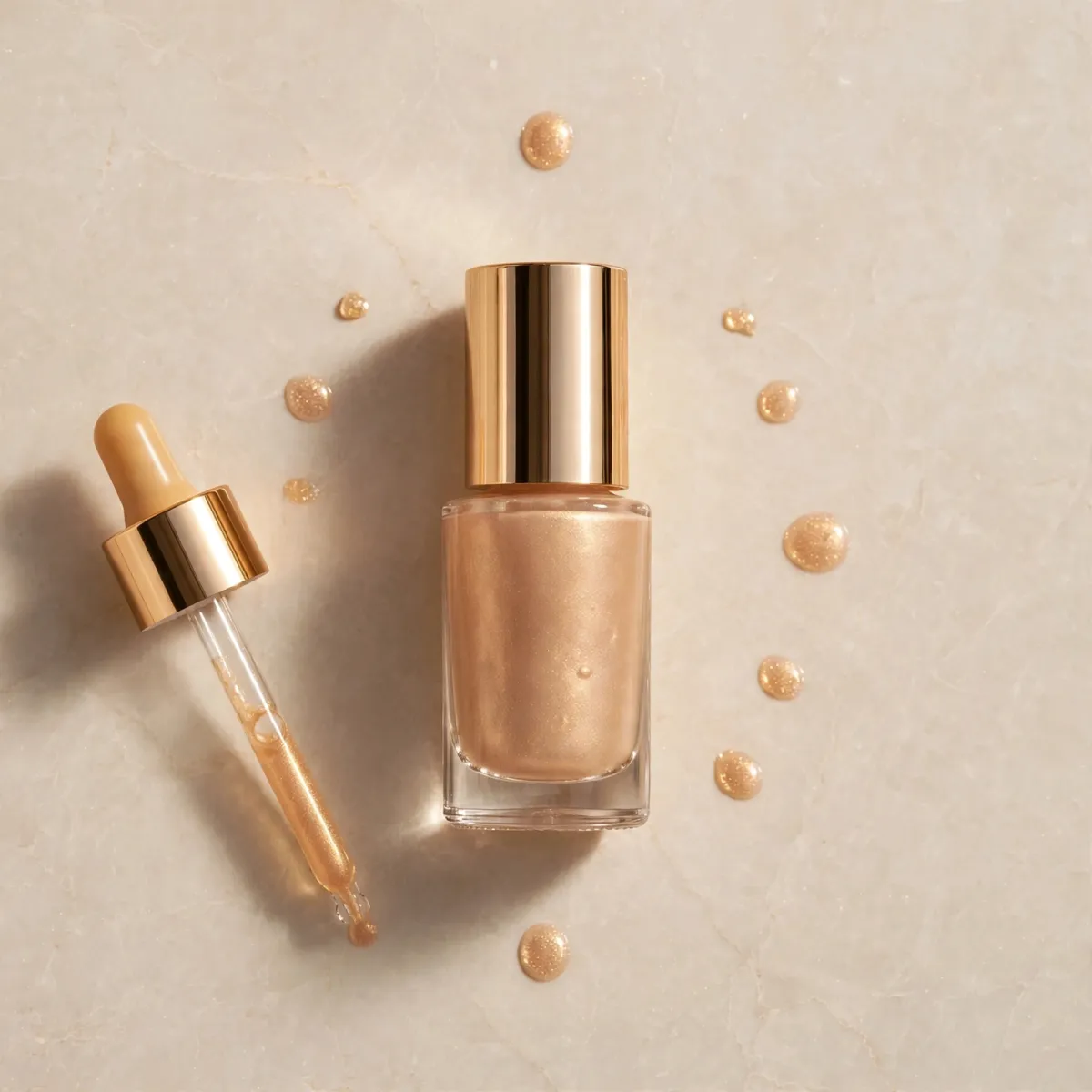
Liquid highlighter is designed to add light-reflecting color to selected areas of the face. Used sparingly, it can create a fresh, dewy appearance that looks more subtle than a heavily applied metallic powder.
- Liquid highlighter can create a soft, luminous finish with a small amount of product.
- High points of the face are usually the most effective areas for targeted application.
- Thin layers generally look more natural than heavy highlighting.
- Mixing highlighter with moisturizer or foundation can create a more diffuse glow.
- People with sensitive or acne-prone skin should check the product's ingredients and stop using it if irritation develops.
What Is Liquid Highlighter?
Liquid highlighters are cosmetic products formulated to reflect light and create a luminous appearance. Their finishes can range from subtle and satin-like to highly reflective or metallic.
The glow comes from light-reflecting pigments or particles within the formula rather than from the skin becoming biologically “more hydrated.” Product texture and particle size strongly influence how noticeable the finish appears.
Why Choose a Liquid Highlighter?
Liquid formulas can blend easily into foundation or moisturizer and may create a more diffused finish than some powder products. They are particularly useful when you want controlled luminosity rather than an obvious stripe of highlight.
However, liquid does not automatically mean more natural. A highly reflective formula can still emphasize pores, fine lines, or uneven texture when applied too heavily.
Where Should You Apply Highlighter?
The upper cheekbones are a popular placement because they naturally catch light. A small amount can also be applied to the brow bone, bridge of the nose, inner corners of the eyes, or Cupid's bow.
You do not need to highlight every suggested area. Choose one or two features when you want a subtle everyday glow, then add more only if needed.
How to Apply Liquid Highlighter
Start with a small drop on the back of your hand rather than applying a large amount directly to your face. Pick up a little product with your fingertip, sponge, or brush and gently tap it onto the desired area.
Use tapping or pressing motions instead of vigorous rubbing, especially over foundation. This helps reduce the chance of disturbing the makeup underneath.
Can You Mix Highlighter With Moisturizer?
Yes. Mixing a small amount of liquid highlighter with moisturizer can create a more diffuse, all-over luminous effect. The result depends on the moisturizer and highlighter formulas, so test a small amount first.
This technique changes the cosmetic finish but should not be confused with a treatment for dry skin. For genuine dryness, use a moisturizer formulated to support the skin barrier rather than relying on reflective pigments.
Can You Mix Highlighter With Foundation?
A small amount of liquid highlighter can be mixed with foundation to create a more luminous finish. Keep the ratio conservative because too much reflective pigment can reduce the foundation's intended coverage and make texture more visible.
For combination or oily skin, targeted highlighting may be easier to control than mixing glow throughout the entire face.
Liquid vs Powder Highlighter
Liquid and powder highlighters can both produce attractive results. Liquid formulas are often easier to sheer out or mix with other products, while powders can provide stronger, more concentrated surface reflection.
Neither format is universally better. Choose based on your foundation type, desired finish, skin texture, and application preference.
What the Science Says About Makeup and Skin
Highlighter is a cosmetic product, so its primary purpose is to change appearance rather than improve underlying skin biology. Claims that a highlighter can permanently make skin look younger or healthier should therefore be treated cautiously.
For people with acne-prone skin, the American Academy of Dermatology recommends choosing makeup labeled “oil-free,” “non-comedogenic,” or “won't clog pores” when appropriate. American Academy of Dermatology: Can Makeup Cause Acne?
Common Myths About Liquid Highlighter
Myth: More highlighter creates a more youthful glow. Not necessarily. Excessive shine can emphasize texture and make makeup appear heavy.
Myth: Liquid highlighter hydrates the skin. Not automatically. A dewy appearance is a cosmetic effect and does not necessarily indicate improved skin hydration.
Myth: Highlighter should always go on every high point. No. Strategic placement often creates a more natural result than highlighting the entire face.
Who Should Pay Attention?
Liquid highlighter can work for most makeup users, but people with visible texture, oily skin, or sensitive skin may want to be more selective. A fine, subtle formula can be easier to control than a highly reflective product.
If a cosmetic causes persistent itching, burning, redness, or swelling, stop using it. Persistent skin reactions may require evaluation by a dermatologist.
Evidence Strength Summary
- Established: Highlighters change the appearance of skin by reflecting light.
- Practical: Thin, targeted application generally provides greater control over the final finish.
- Individual: Liquid and powder formulas can both work well depending on skin type and makeup technique.
- Not supported: Claims that cosmetic highlighters permanently improve skin hydration, elasticity, or skin health.
Bottom Line
Liquid highlighter can create a soft, luminous finish when applied strategically. Focus on the areas you want to emphasize, use a small amount, and blend gently into the surrounding makeup.
For an everyday glow, less is usually more. You can also mix a small amount with moisturizer or foundation, but remember that the result is cosmetic luminosity rather than a treatment for skin dryness or aging.