Reviewed by the HyaluFlow Health Editorial Team | Published: June 19, 2026 | Last Updated: August 30, 2026
Quick Answer
Lymphatic drainage face massage may temporarily reduce facial puffiness when excess fluid contributes to swelling. Evidence for permanent facial sculpting, skin tightening, or anti-aging effects is limited.
Manual lymphatic drainage has a legitimate medical role in some lymphedema treatment programs, but cosmetic facial massage has far less direct research. National Cancer Institute: Lymphedema and Cancer
Key Takeaways
- Gentle massage may temporarily reduce fluid-related facial puffiness.
- It uses lighter pressure than conventional deep-tissue massage.
- It does not remove facial fat or change bone structure.
- Evidence for permanent facial contouring is insufficient.
- Too much pressure can irritate sensitive skin.
- Sudden or persistent facial swelling may need medical evaluation.
What Is Lymphatic Drainage Massage?
The lymphatic system transports lymph fluid through vessels and lymph nodes and plays an important role in immune function. Manual lymphatic drainage uses specialized, gentle movements to encourage lymph fluid movement.
Clinically, manual lymphatic drainage may be included in lymphedema care alongside compression, exercise, and skin care. Research remains mixed, with benefits varying by condition and treatment setting. Manual Lymphatic Drainage Treatment for Lymphedema: A Systematic Review
Why Does Your Face Look Puffy?
Facial puffiness can result from normal overnight fluid shifts, salty meals, alcohol, poor sleep, allergies, hormonal changes, or certain health conditions.
Massage cannot treat every cause of facial swelling. It may be most useful when temporary fluid accumulation is contributing to a puffy appearance.
How to Do a Gentle Face Massage
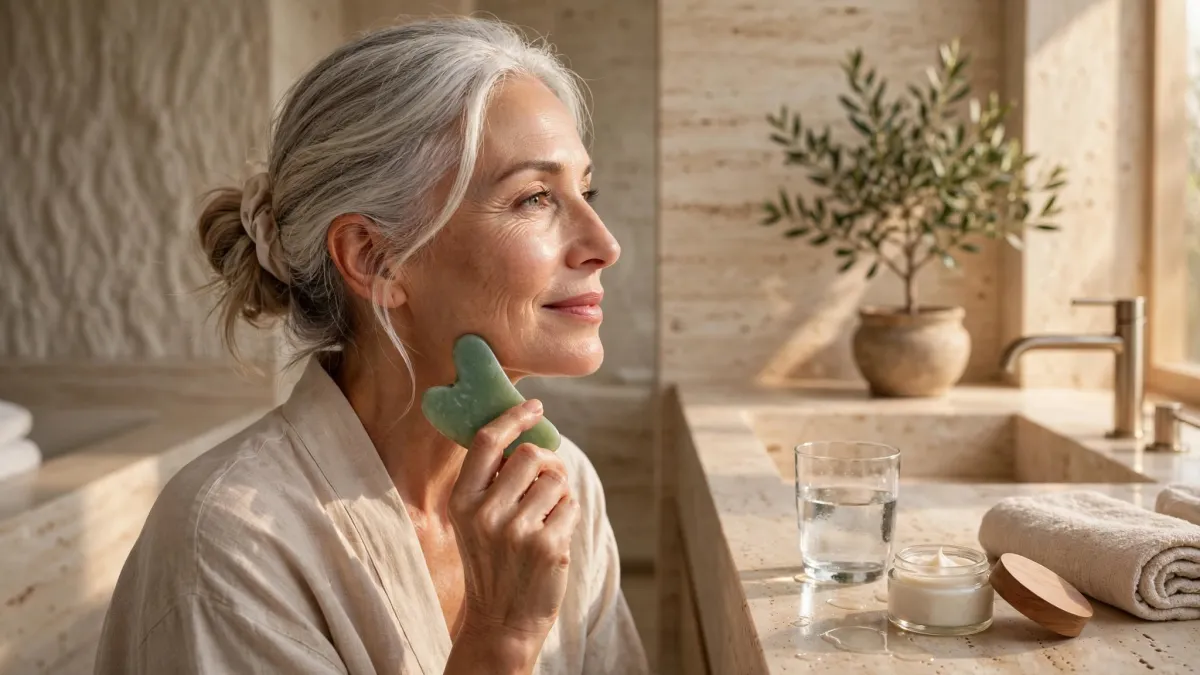
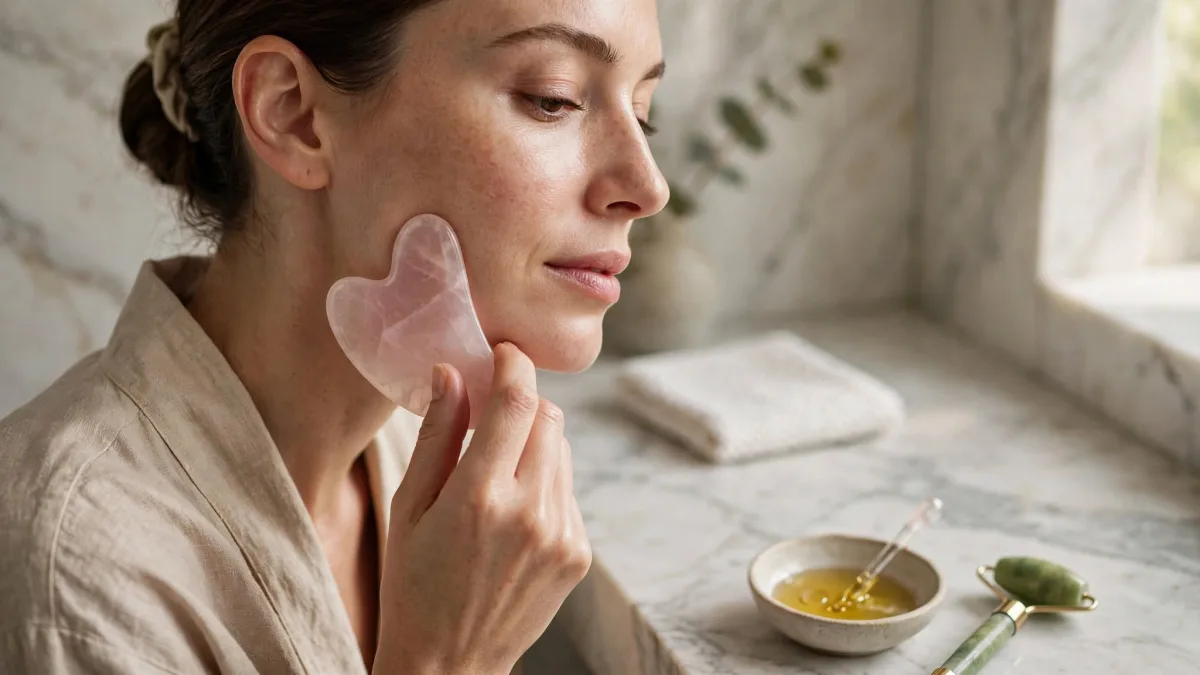
Wash your hands and use a moisturizer or facial product that allows your fingers to glide without pulling the skin. Keep pressure light and comfortable rather than trying to massage deeply.
- Start at the neck: Use slow strokes along the sides of the neck toward the collarbone.
- Move across the jaw: Gently sweep from the chin outward toward the ears.
- Massage the cheeks: Glide from beside the nose outward toward the ears.
- Finish around the eyes: Use very light pressure from the inner eye area toward the temples.
Slow, gentle movements are more consistent with professional manual lymphatic drainage than aggressive rubbing. An Overview of Manual Lymphatic Drainage
If you are building a basic skincare routine alongside facial massage, our Skin Type Analyzer can help you identify your skin type and choose a more appropriate routine.
What the Science Says
Research supports manual lymphatic drainage as a therapeutic technique in selected cases of lymphedema, but studies do not consistently show additional benefits across all outcomes.
A systematic review of randomized trials found that the effect of manual lymphatic drainage on quality of life in chronic edema was unclear. Manual Lymphatic Drainage and Quality of Life: A Systematic Review
That evidence should not be stretched into claims that a short facial massage permanently lifts or reshapes the face. A temporary reduction in visible puffiness is more plausible than lasting structural change.
Common Myths About Facial Lymphatic Massage
Myth: It permanently lifts the face
There is insufficient evidence that facial lymphatic massage produces a permanent facelift-like effect. Any visible change is more likely to be temporary.
Myth: More pressure means better drainage
Professional lymphatic drainage uses gentle techniques. Aggressive rubbing can cause redness, irritation, or discomfort without proving greater effectiveness.
Myth: It removes facial fat
Massage does not dissolve or permanently remove facial fat. A slimmer appearance immediately afterward is more likely related to temporary changes in swelling.
Who Should Pay Attention?
Healthy adults with occasional morning puffiness may use gentle facial massage as a beauty or relaxation practice. Persistent swelling, however, deserves attention to the underlying cause rather than repeated self-massage.
Avoid self-treatment for sudden, severe, painful facial swelling or swelling accompanied by breathing difficulty or other concerning symptoms. People with diagnosed lymphedema or swelling following cancer treatment should follow guidance from their healthcare team or a trained lymphedema therapist. National Cancer Institute: Lymphedema
Evidence Strength Summary
- Manual lymphatic drainage for selected lymphedema: Moderate but mixed evidence.
- Temporary facial puffiness reduction: Plausible, but direct research is limited.
- Permanent facial sculpting: Insufficient evidence.
- Facial fat loss: No convincing evidence.
- Anti-aging effects: Insufficient evidence.
Bottom Line
Lymphatic drainage face massage can be a simple addition to a skincare or relaxation routine when temporary puffiness is the concern. Its realistic benefit is a short-term improvement in the appearance of swelling, not a permanent facelift.
Use light pressure and realistic expectations. If facial swelling persists, repeatedly returns without an obvious reason, or appears suddenly, addressing the underlying cause is more important than adding another beauty ritual.