Reviewed by the HyaluFlow Health Editorial Team | Published: June 6, 2026 | Last Updated: August 24, 2026
Quick Answer: Rice water may make hair feel smoother and look shinier, but strong clinical evidence for hair growth or permanent strengthening is lacking.
It is an inexpensive traditional hair rinse. However, popular claims about repairing hair from the inside out go beyond current research.
Key Takeaways
- Rice water is traditionally used as a hair rinse.
- Evidence for hair growth benefits is currently limited.
- Rice-derived compounds may affect hair fibers, but this does not prove rice water works the same way.
- Fermentation does not guarantee better hair results.
- Improper storage can allow microbial growth.
- Stop using it if your scalp becomes irritated or your hair feels unusually stiff.
What Is Rice Water for Hair?
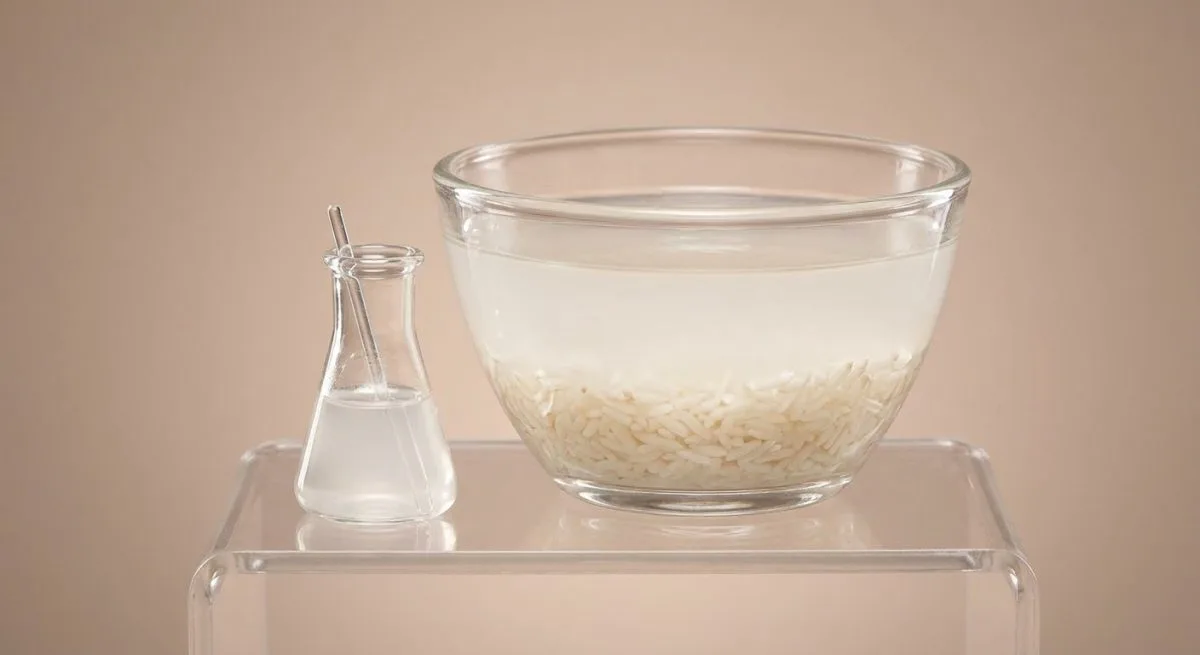
Rice water is the liquid left after rice is soaked, boiled, or fermented in water.
It has become popular online as a natural hair rinse for improving shine, softness, strength, and growth.
A 2025 dermatology publication examined the popularity of rice water for hair and skin and highlighted the limited scientific evidence behind many social-media claims. Rice Water for Hair and Skin on TikTok: A Cross-Sectional Analysis
Does Rice Water Help Hair Growth?
There is currently no strong clinical evidence showing that rice water makes hair grow faster.
Hair growth occurs within the follicle beneath the scalp. A rinse applied to the hair shaft cannot be assumed to stimulate follicle activity.
This distinction matters because smoother-looking hair can appear healthier without actually growing faster.
What About Inositol?
Rice contains inositol, a naturally occurring carbohydrate compound.
Some rice-water claims suggest that inositol penetrates damaged hair and remains inside the fiber after rinsing.
However, evidence that homemade rice water delivers a meaningful amount of inositol to human hair is limited.
Research on isolated inositol also does not establish that topical rice water promotes hair growth or repairs damaged hair.
Can Rice Water Make Hair Shinier?
It may make some hair feel smoother or appear shinier after rinsing.
But that does not mean rice water permanently repairs the hair fiber.
Research on rice-derived antioxidants has found potential protective effects on hair fibers exposed to ultraviolet radiation. However, the study examined specific antioxidant formulations rather than homemade rice-water rinses. Efficacy of antioxidants in human hair
Does Fermented Rice Water Work Better?
Fermented rice water is often promoted as more potent than freshly prepared rice water.
There is not enough high-quality human research to conclude that fermentation provides superior hair benefits.
Fermentation also changes the liquid's chemistry and may introduce contamination if preparation and storage are poorly controlled.
So, “fermented” does not automatically mean “more effective.”
How to Use Rice Water Safely
If you want to try rice water, keep the routine simple.
- Prepare: Rinse clean rice and soak it in fresh water.
- Strain: Separate the liquid from the rice.
- Apply: Pour the rinse over clean hair and distribute it through the lengths.
- Rinse: Wash it out thoroughly rather than leaving residue on the hair.
- Store carefully: Refrigerate homemade rice water and discard it if its appearance, smell, or texture changes.
You do not need to ferment rice water for 12 to 24 hours to get a proven benefit. There is currently no established clinical formula for homemade rice-water treatments.
Can Rice Water Damage Hair?
Rice water is not automatically suitable for every hair type.
Some people may find frequent use leaves their hair feeling stiff, coated, dry, or difficult to manage.
Scalp irritation is also possible, especially if the preparation becomes contaminated or contains ingredients that do not agree with your skin.
Stop using the rinse if you develop itching, burning, redness, or persistent dryness.
Common Rice Water Myths
Myth: Rice water makes hair grow faster.
Reality: There is not enough clinical evidence to support this claim.
Myth: Rice water repairs damaged hair from inside out.
Reality: Hair is nonliving fiber. A rinse cannot permanently restore severely damaged strands.
Myth: Fermented rice water is scientifically proven to be stronger.
Reality: Fermentation may change its composition, but superior hair benefits have not been established in strong human trials.
Myth: Natural means risk-free.
Reality: Homemade preparations can still irritate the scalp or become contaminated if handled or stored improperly.
Who Should Pay Attention?
Rice water may be worth experimenting with if you want an inexpensive conditioning rinse and your scalp tolerates it.
People with sensitive scalps, eczema, active irritation, or significant hair loss should be more cautious.
If you are experiencing unexplained shedding or thinning, a dermatologist can help identify the underlying cause instead of relying on cosmetic rinses.
What the Science Says
Evidence strength: Limited for rice water specifically. Research supports some potential effects of rice-derived compounds on hair fibers, but this does not establish that homemade rice water improves growth or repairs damaged hair.
The strongest evidence currently supports treating rice water as a cosmetic hair-care option rather than a proven hair-growth treatment.
Bottom Line
Rice water is an interesting traditional hair rinse, but the internet has gotten ahead of the science.
It may temporarily improve how hair feels or looks, but claims about faster growth, permanent repair, or dramatic strengthening remain unproven.
If you try it, keep preparation hygienic, use it moderately, rinse thoroughly, and stop if your hair or scalp reacts badly.