Reviewed by the HyaluFlow Health Editorial Team | Published: June 17, 2026 | Last Updated: August 25, 2026
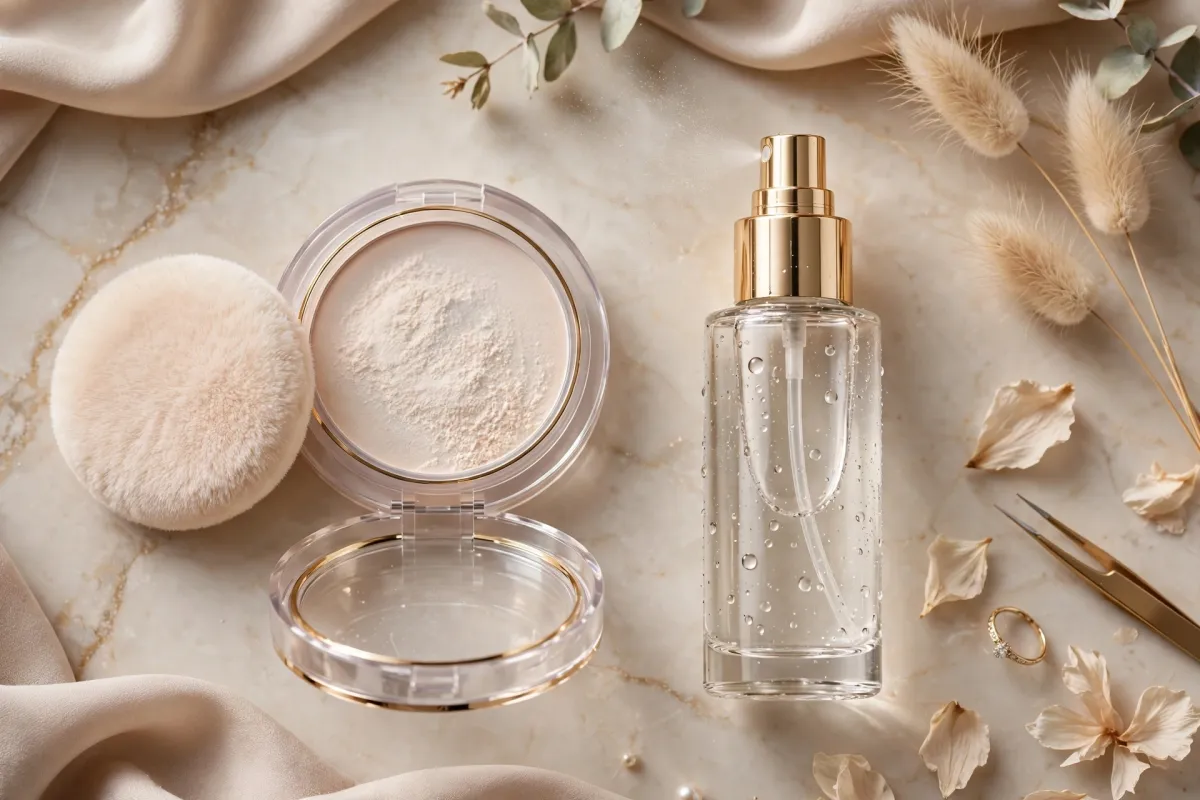
Setting powder and setting spray are often treated as interchangeable, but they solve different makeup problems. Powder can absorb excess oil and reduce shine, while setting sprays can help makeup layers look more cohesive and may improve wear depending on the formula.
- Setting powder is particularly useful for reducing surface shine and setting liquid or cream makeup.
- Setting sprays vary widely, so their performance depends on the formula and ingredients.
- Neither product is automatically better for every skin type.
- Too much powder can emphasize dryness and texture, while some sprays may irritate sensitive skin.
- Applying thin layers usually produces a more natural result than heavily coating the face.
What Does Setting Powder Do?
Setting powder typically contains finely milled powders that absorb some surface oil and reduce the tackiness of liquid or cream makeup. This can help foundation and concealer feel less sticky and improve resistance to movement.
Translucent powder is designed to add little or no visible pigment, while tinted powders can provide additional coverage. A light application can help control shine without creating a heavy finish.
What Does Setting Spray Do?
Setting sprays are liquid cosmetic products applied after makeup. Their formulas vary considerably, with ingredients such as film-forming polymers, humectants, alcohols, or emollients depending on the intended finish and performance.
Some sprays are designed primarily to improve wear, while others focus more on hydration or creating a dewy appearance. The product label and formula matter more than the word “setting” alone.
Setting Powder vs Setting Spray
Powder is generally the more useful choice when excess oil and shine are your main concerns. It can also be helpful around areas where makeup tends to crease, such as under the eyes or around the nose.
Setting spray may be preferable when you dislike a powdery appearance or want makeup layers to look more integrated. Some formulas can also provide a more flexible, natural-looking finish than applying additional powder.
Which Is Better for Oily Skin?
For oily skin, setting powder can be particularly useful because it helps absorb surface oil and reduce shine. Concentrate a thin layer on areas that become oily rather than automatically covering the entire face with powder.
Using excessive powder can create a cakey appearance as oil and makeup accumulate throughout the day. Blotting papers can also help remove excess oil without repeatedly adding more powder.
Which Is Better for Dry Skin?
Dry skin may look more textured when covered with too much powder. A lightweight setting spray may provide a less powdery finish, although a spray cannot replace a suitable moisturizer or other basic skin-care routine.
The American Academy of Dermatology recommends moisturizing dry skin and choosing products appropriate for your skin type rather than relying on cosmetics alone to manage dryness. American Academy of Dermatology: Dermatologist-Recommended Skin Care
Can You Use Setting Powder and Spray Together?
Yes. Using both can make sense when you need oil control from powder but prefer the finish created by a setting spray.
Apply powder selectively rather than heavily, then use setting spray according to the product directions. Allow each layer to settle instead of repeatedly adding product.
What the Science Says About Makeup Wear
Cosmetic performance depends heavily on formulation, skin conditions, environmental exposure, and application technique. There is no universal clinical rule that one setting product works better for everyone.
For people prone to acne, the American Academy of Dermatology recommends choosing makeup labeled “oil-free,” “non-comedogenic,” or “won't clog pores”. American Academy of Dermatology: Can Makeup Cause Acne?
Common Myths About Setting Products
Myth: Setting spray and finishing spray are always the same thing. Not necessarily. Product purposes and formulas vary, so read the label to determine whether a spray is intended to set makeup, refresh it, add moisture, or change the finish.
Myth: More powder means longer-lasting makeup. More product can instead create visible texture and a heavy finish. Strategic application is usually more useful than excessive layering.
Myth: Setting spray hydrates every skin type. No. Some sprays contain hydrating ingredients, but others contain alcohol or film-forming ingredients and are not designed primarily as moisturizers.
Who Should Pay Attention?
People with oily skin may prefer targeted powder application, while those with dry or textured skin may prefer a lighter powder layer and a suitable finishing spray. Combination skin often benefits from using different techniques on different areas of the face.
If a setting product repeatedly causes burning, itching, redness, or swelling, discontinue it. Persistent or severe reactions may require evaluation by a dermatologist.
Evidence Strength Summary
- Strong: Powder can absorb surface oil and reduce visible shine.
- Moderate: Setting products can influence makeup appearance, texture, and wear depending on formulation.
- Individual: The best product depends on skin type, makeup formula, climate, and desired finish.
- Not supported: Claims that one setting method is universally best for every skin type.
Bottom Line
Setting powder and setting spray are tools for different goals. Powder is useful for shine control and setting makeup, while spray can provide a less powdery finish and may improve wear depending on its formulation.
You do not have to choose one. Use powder where you need oil control, spray when you want a more cohesive finish, and keep both layers light for a natural result.