Reviewed by the HyaluFlow Health Editorial Team | Published: June 20, 2026 | Last Updated: August 23, 2026
Quick Answer: The best beginner workout routine combines simple strength training with manageable aerobic activity. Adults should gradually work toward 150–300 minutes of moderate aerobic activity each week plus muscle-strengthening exercise on at least 2 days.
Key Takeaways:
- Start with workouts you can repeat consistently, not exhausting sessions.
- Full-body strength training is an efficient beginner option.
- Walking and other cardio build endurance without requiring advanced skills.
- Bodyweight, bands, dumbbells, and machines can all work.
- Progress by adding a little time, resistance, repetitions, or difficulty.
Why These 10 Workouts Work
Beginners do not need a complicated fitness program. A useful routine covers both aerobic activity and muscle strengthening.
The Physical Activity Guidelines for Americans recommend 150–300 minutes of moderate aerobic activity each week and muscle-strengthening activity on at least 2 days. If you are inactive, build toward that target gradually.
10 Best Beginner Workout Routines
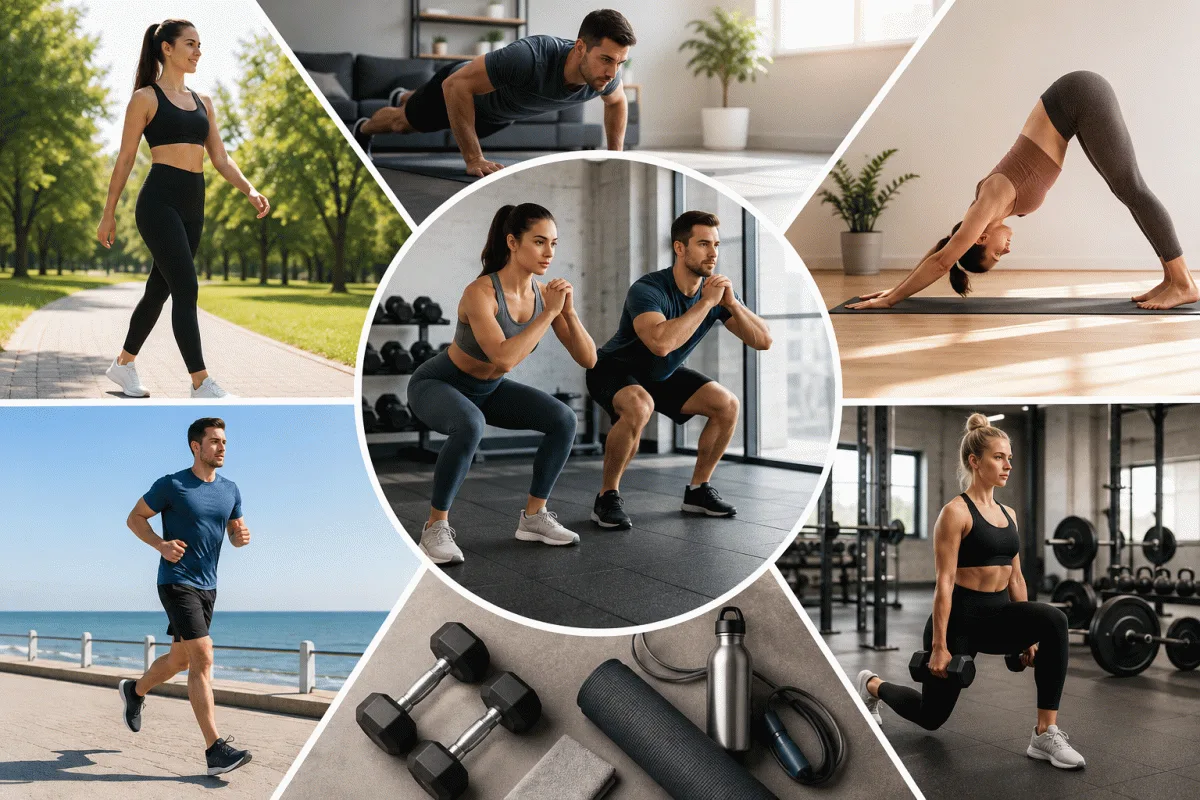
1. Full-Body Strength Training
Best for: Building overall strength.
Why: It trains major muscle groups efficiently.
Start: Try 2 sets of 8–12 controlled repetitions using movements such as squats, rows, push-ups, and glute bridges.2. Brisk Walking
Best for: New exercisers and low-impact cardio.
Why: It is accessible and easy to scale.
Start: Walk 15–30 minutes at a pace that noticeably raises your breathing, then gradually add time.3. Bodyweight Training
Best for: Home workouts without equipment.
Why: It develops basic movement control and muscular endurance.
Start: Use incline push-ups, squats, step-ups, lunges, and glute bridges.4. Beginner Cardio
Best for: Improving endurance.
Why: Cycling, swimming, an elliptical, or brisk walking can provide aerobic training.
Start: Choose a sustainable moderate effort rather than chasing maximum intensity.5. Dumbbell Workouts
Best for: Progressive strength training at home or in a gym.
Why: Resistance can be increased as you become stronger.
Start: Try goblet squats, rows, presses, and Romanian deadlifts with manageable loads.6. Simple Circuit Training
Best for: People who want variety.
Why: Several movements can be combined into one efficient session.
Start: Perform squats, incline push-ups, marching, glute bridges, and planks for 2 rounds.7. Beginner Core Training
Best for: Trunk stability and movement control.
Why: Controlled core exercises complement full-body training.
Start: Use dead bugs, bird dogs, planks, and side planks rather than hundreds of repetitions.8. Yoga and Mobility
Best for: Flexibility, balance, and movement practice.
Why: It can complement strength and aerobic exercise.
Start: Practice comfortable movements for 15–30 minutes without forcing painful ranges.9. Beginner HIIT
Best for: Beginners who already have a basic fitness foundation.
Why: Intervals can make cardio sessions time-efficient.
Start: Use short, controlled intervals with adequate recovery. HIIT is optional, not essential.10. Three-Day Full-Body Routine
Best for: Beginners who want structure.
Why: Three nonconsecutive strength days allow recovery between sessions.
Start: Train Monday, Wednesday, and Friday using simple full-body movements.Best 3-Day Beginner Workout Plan
| Day | Workout |
|---|---|
| Monday | Full-body strength |
| Wednesday | Full-body strength + easy cardio |
| Friday | Full-body strength |
Add comfortable walking or mobility on other days if you feel recovered. The goal is a routine you can repeat, not a workout that leaves you exhausted.
How to Progress
When an exercise becomes comfortable with good technique, increase one variable at a time: repetitions, resistance, duration, or movement difficulty. The 2026 ACSM Resistance Training Position Stand supports different resistance-training methods, including bodyweight, bands, free weights, and machines.
Do not increase everything at once. If you develop chest pain, fainting, severe shortness of breath, or other unusual symptoms during exercise, stop and seek medical guidance.
Common Myths
- Myth: Beginners need to train every day. Fact: Consistent training with appropriate recovery can be enough.
- Myth: You need a gym to get stronger. Fact: Bodyweight and home-based resistance exercises can provide a useful foundation.
- Myth: HIIT is required for fast results. Fact: HIIT is one option, not a requirement for beginner fitness.
Who Should Pay Attention?
These routines provide general guidance for healthy beginners. People with significant medical conditions, recent surgery or injury, or concerning symptoms during exercise should ask a qualified healthcare professional whether modifications or an individualized plan are needed.
What the Science Says
Research consistently supports regular aerobic activity and muscle strengthening as key parts of adult physical activity. The WHO Guidelines on Physical Activity and Sedentary Behaviour recommend 150–300 minutes of moderate aerobic activity weekly, plus muscle-strengthening activity on at least 2 days.
The 2026 ACSM resistance-training position stand also indicates that effective resistance training does not depend on one specific type of equipment or complicated program. For beginners, consistency and an appropriate progression are more practical priorities.
Evidence Strength Summary
- High: Regular aerobic activity and muscle strengthening support health and physical fitness.
- High: Adults should work toward 150–300 minutes of moderate aerobic activity plus strengthening on at least 2 days weekly.
- High: Bodyweight, bands, machines, and free weights can all be used for resistance training.
- Moderate: Yoga and mobility work can complement broader fitness training.
- Moderate: HIIT can improve fitness but is not essential for beginners.
Bottom Line
The best beginner workout routine is not the hardest one. It is a realistic combination of strength training, cardio, and recovery that you can perform consistently.
Start small, learn good technique, and increase the challenge gradually. You do not need expensive equipment or extreme workouts to build a stronger, healthier fitness foundation.