Medically reviewed by the HyaluFlow Health Editorial Team | Published: July 30, 2026 | Last Updated: July 30, 2026
Not every effective workout has to leave you exhausted. Walking yoga combines slow walking with mindful breathing and simple yoga movements, creating a gentle routine that supports both physical and mental well-being. Its growing popularity reflects a shift toward sustainable exercise that people can actually maintain.
Interest in walking yoga has surged in the UK, with PureGym reporting a more than 2,400% increase in Google searches during 2026. While the term itself is relatively new, the science behind its two core components—mindful walking and yoga—has been studied for years.
Quick Answer
Walking yoga is a low-impact exercise that combines mindful walking, yoga breathing, and gentle stretching. Research on mindful walking and yoga independently shows benefits for stress reduction, mood, balance, flexibility, and sleep quality. Although direct research on walking yoga itself is still limited, current evidence suggests it can be an effective and sustainable form of physical activity for many adults.
Key Takeaways
- Walking yoga combines mindful walking with breathing exercises and gentle yoga stretches.
- It may help reduce stress, anxiety, and improve overall mood.
- The practice supports flexibility, balance, and joint mobility.
- Walking yoga is suitable for beginners and people seeking low-impact exercise.
- Current evidence comes mainly from research on mindful walking and yoga separately.
- Consistency matters more than workout intensity for long-term health.
What Is Walking Yoga?
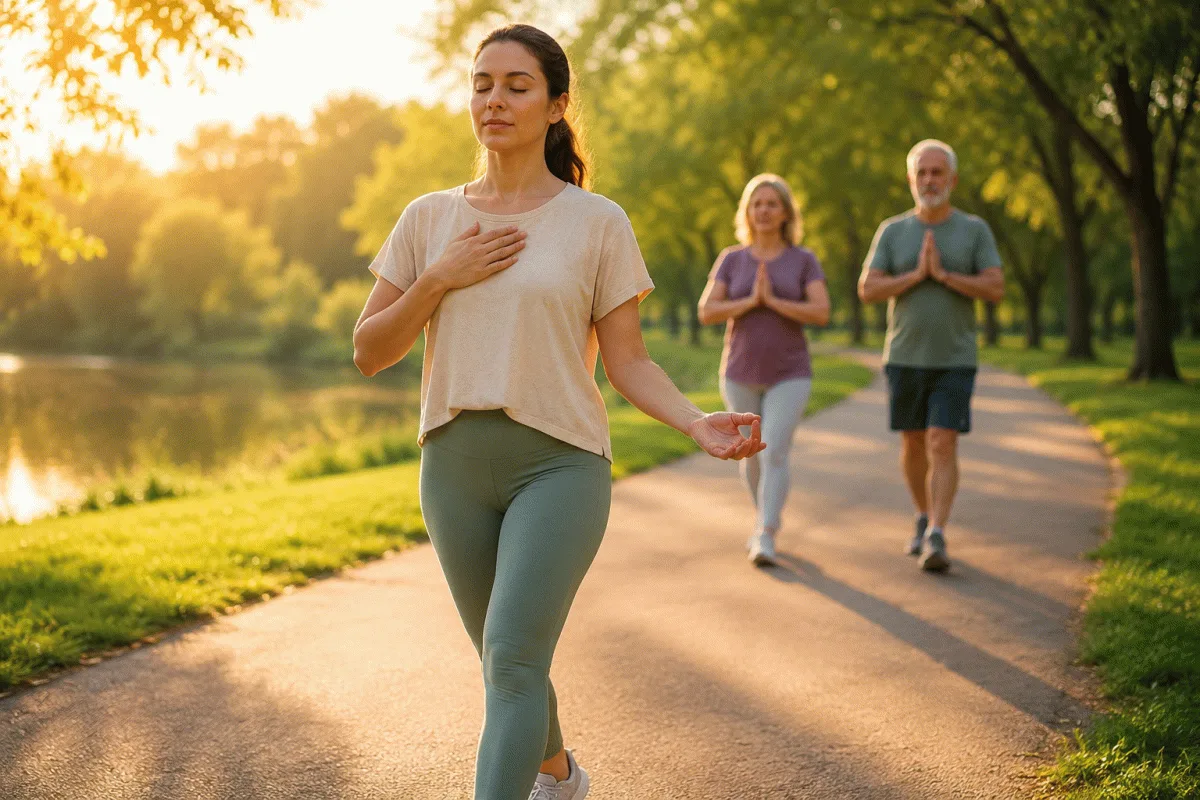
Walking yoga blends three simple practices into one routine: slow walking, controlled breathing, and gentle standing yoga movements. Rather than focusing on speed or distance, participants move with awareness, matching their breathing to each step while occasionally pausing for stretching or balance poses.
Unlike traditional power walking or jogging, walking yoga encourages relaxation alongside movement. The goal is not to burn the maximum number of calories but to improve physical health while calming the nervous system.
Because it requires no gym membership or expensive equipment, walking yoga is accessible to almost anyone with a safe place to walk.
Why Is Walking Yoga Becoming So Popular?
Many people are moving away from high-intensity workouts that feel difficult to maintain. Instead, they are choosing activities that improve health without excessive physical or mental strain.
According to the PureGym UK Fitness Report 2026, online searches for walking yoga increased by more than 2,400% compared with the previous year. This reflects growing interest in gentle fitness trends that support both mental well-being and long-term consistency.
The popularity also aligns with increasing awareness of mindfulness, stress management, and the importance of daily movement instead of occasional intense exercise.
What Does the Research Say?
Walking yoga itself has not yet been extensively studied in clinical trials. However, researchers have investigated mindful walking and yoga independently, and both have consistently demonstrated meaningful health benefits.
A systematic review published in Healthcare concluded that mindful walking may improve stress, anxiety, balance, blood pressure, and overall well-being across different adult populations.[1]
Similarly, multiple systematic reviews have shown that yoga improves flexibility, balance, muscle strength, mood, and quality of life while reducing perceived stress and anxiety.[2][3]
Together, these findings suggest that combining mindful walking with yoga principles is biologically plausible and may provide complementary benefits, although additional research on the combined practice is still needed.
How Walking Yoga May Benefit Your Body and Mind
Walking yoga offers more than gentle movement. By combining steady walking with controlled breathing and mindful awareness, it supports several aspects of physical and mental health simultaneously.
1. Helps Reduce Stress
Slow breathing activates the parasympathetic nervous system, often called the "rest and digest" system. This may lower perceived stress and promote relaxation.
Research on both yoga and mindful walking consistently reports improvements in stress levels and emotional well-being.[1][3]
2. Supports Better Mood
Regular walking increases blood flow, while mindfulness encourages present-moment awareness instead of rumination. Together, they may help reduce anxiety symptoms and improve mood.
Some controlled studies have shown that even a single mindful walking session can produce short-term improvements in emotional well-being.[4]
3. Improves Balance and Flexibility
Gentle yoga poses strengthen stabilizing muscles while improving joint mobility. This combination may help reduce stiffness and improve functional movement, particularly in older adults.
Systematic reviews have found yoga improves balance, flexibility, and lower-body strength compared with minimal exercise.[2]
4. Encourages Daily Physical Activity
Walking remains one of the simplest ways to increase daily movement. Because walking yoga is comfortable for many fitness levels, it may be easier to perform consistently than vigorous exercise.
Long-term consistency often has a greater impact on health than short periods of extremely intense training.
5. May Improve Sleep Quality
Stress reduction and regular physical activity both support healthier sleep. Research on mindful walking has reported improvements in sleep quality, particularly when practiced consistently.[1][4]
Walking Yoga vs. Walking Meditation
| Walking Yoga | Walking Meditation |
|---|---|
| Includes gentle yoga stretches | Focuses mainly on mindful walking |
| Uses breathing with stretching and movement | Uses breathing with walking only |
| Improves flexibility and mobility | Emphasizes mental awareness |
| May include balance poses | Continuous walking without poses |
| Suitable as a light full-body routine | Primarily a mindfulness practice |
How to Start Walking Yoga
- Choose a quiet, safe walking route.
- Begin with one minute of slow nasal breathing.
- Walk at a relaxed pace while matching your breath to your steps.
- Pause every five to ten minutes for gentle standing stretches.
- Focus your attention on your breathing and surroundings.
- Finish with one minute of quiet standing before returning to normal activity.
Science Snapshot: Walking yoga combines two evidence-based activities—mindful walking and yoga. While research on the combined practice is still emerging, studies consistently show that both components support mental well-being, mobility, and overall physical health.
What the Science Says
Although walking yoga itself has only recently gained attention, its individual components are supported by a growing body of scientific evidence.
A 2025 systematic review published in Healthcare concluded that mindful and meditative walking may improve stress, anxiety, depression, balance, blood pressure, and overall quality of life in adults and older adults.[1]
A randomized controlled trial involving university students also found that one week of guided mindful walking significantly improved mood, mindfulness, and sleep quality.[4]
Yoga research is equally encouraging. A systematic review and meta-analysis published in the International Journal of Older People Nursing found that yoga improved balance, flexibility, muscle strength, and depressive symptoms in community-dwelling older adults.[2]
Another 2026 meta-analysis published in Frontiers in Psychology concluded that regular yoga practice significantly reduces perceived stress while improving symptoms of anxiety and depression across different age groups.[3]
The U.S. National Center for Complementary and Integrative Health (NCCIH) also recognizes yoga as a safe complementary practice that may improve quality of life, flexibility, balance, and stress management for many people.[5]
Evidence Strength: Moderate. Strong evidence supports mindful walking and yoga individually. However, direct clinical research specifically evaluating walking yoga as a combined intervention remains limited.
Risks and Limitations
Walking yoga is generally considered safe for most healthy adults because it is low-impact and self-paced.
However, improper stretching or difficult balance poses may increase the risk of minor muscle strains or falls, particularly in older adults or people with existing mobility problems.
People should avoid forcing stretches beyond a comfortable range of motion and wear supportive footwear when practicing outdoors.
It is also important to understand that walking yoga is not designed to replace resistance training or vigorous cardiovascular exercise when those forms of exercise are medically appropriate.
Who Should Be Careful?
- People with significant balance disorders.
- Individuals recovering from recent leg, ankle, knee, or hip injuries.
- Adults with severe arthritis or chronic joint pain.
- People with uncontrolled cardiovascular disease.
- Pregnant individuals should seek advice before performing balance poses.
If you have a chronic medical condition or experience dizziness, chest pain, or severe joint pain during exercise, consult your healthcare provider before beginning a new fitness routine.
Common Myths About Walking Yoga
Myth 1: Walking Yoga Isn't Real Exercise
Fact: Walking yoga combines aerobic movement, flexibility training, balance exercises, and mindfulness. While it is less intense than running or HIIT, it still contributes to overall physical activity.
Myth 2: You Must Be Flexible
Fact: Beginners can perform simple standing stretches without advanced yoga experience.
Myth 3: It Only Benefits Mental Health
Fact: Research shows walking and yoga also improve flexibility, balance, muscle function, and overall physical fitness.
Myth 4: It Replaces All Other Exercise
Fact: Walking yoga complements a healthy lifestyle but does not replace strength training or higher-intensity exercise for people with those fitness goals.
Who Can Benefit Most?
Walking yoga is suitable for many adults because it is gentle, adaptable, and requires very little equipment.
It may be especially beneficial for:
- Beginners starting a fitness routine.
- Older adults looking to improve balance and mobility.
- People returning to exercise after a long break.
- Individuals managing everyday stress or anxiety.
- Office workers who spend long hours sitting.
- Anyone looking for a sustainable, low-impact form of movement.
For people whose goals include significant muscle growth, athletic performance, or rapid cardiovascular improvement, walking yoga should be viewed as a complement rather than a replacement for structured strength and endurance training.
Action Steps
- Start with 20–30 minutes of walking yoga two or three times per week.
- Walk at a comfortable pace instead of rushing.
- Practice slow, controlled nasal breathing throughout your walk.
- Add simple standing stretches every 5–10 minutes.
- Stay consistent rather than focusing on intensity.
- Gradually increase duration as your fitness improves.
- Combine walking yoga with strength training and a balanced diet for overall health.
Pro Tip: The greatest benefit of walking yoga comes from consistency. Even short sessions performed several times each week are likely to provide more lasting health benefits than occasional intense workouts that are difficult to maintain.
Bottom Line
Walking yoga is more than another fitness trend. It combines mindful walking, controlled breathing, and gentle yoga movements into an accessible routine that supports both physical and mental well-being.
Current research strongly supports the benefits of mindful walking and yoga individually for reducing stress, improving mood, enhancing balance, increasing flexibility, and supporting overall quality of life. While direct research on walking yoga itself is still developing, combining these evidence-based practices appears both logical and promising.
Because it is inexpensive, beginner-friendly, and easy to maintain, walking yoga may help more people stay physically active over the long term—an important predictor of lifelong health.
If you're looking for a simple way to move more while also supporting your mental well-being, walking yoga is a practical place to start.
References
- Ngamjarus C, et al. Effects of Buddhist Walking Meditation, Walking Meditation or Mindful Walking on the Health of Adults and Older Adults: A Systematic Review. Healthcare. 2025.
- Ko Y, et al. Effects of Yoga on Physical and Psychological Health Among Community-Dwelling Older Adults: A Systematic Review and Meta-analysis. International Journal of Older People Nursing. 2023.
- Mu X, et al. The Effects of Yoga Exercise on Stress Relief Capacity and Emotional Changes: A Systematic Review and Meta-analysis. Frontiers in Psychology. 2026.
- Randomized Controlled Trial. The Effects of a Guided Mindful Walk on Mental Health in University Students.
- National Center for Complementary and Integrative Health (NCCIH). Yoga: Effectiveness and Safety.
- Yoga Mimamsa. Effect of Walking Meditation on Perceived Stress and Mental Well-being. 2024.
- PureGym UK. UK Fitness Report 2026.