Reviewed by the HyaluFlow Health Editorial Team | Published: June 17, 2026 | Last Updated: August 24, 2026
Quick Answer: Gut health may influence skin and mental well-being through the gut-skin and gut-brain axes, but the science is still developing. A diverse, fiber-rich diet supports a healthy gut microbiome, while evidence for probiotics and fermented foods is promising but varies by condition, strain, and individual.
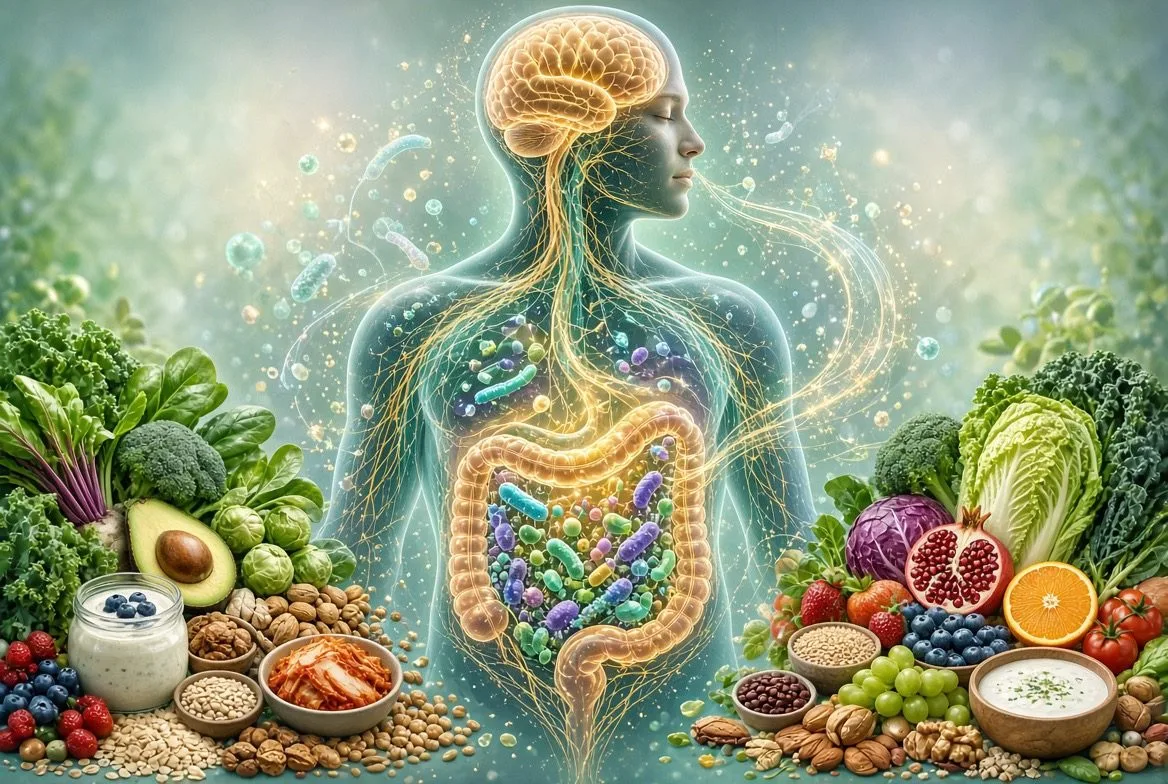
Your gut is not an isolated digestive system. It interacts with your immune system, metabolism, nervous system, and other organs, creating a network of communication that researchers are still learning to understand.
- The gut microbiome communicates with the skin and brain through multiple pathways.
- Gut microbes can influence immune and inflammatory processes.
- A varied, fiber-rich diet helps support a diverse gut microbiome.
- Probiotics may help some mental health or skin outcomes, but effects are strain-specific.
- There is no proven “gut detox” that guarantees clearer skin or better mood.
What Is the Gut-Skin Axis?
The gut-skin axis describes the two-way relationship between the gastrointestinal system and the skin. Researchers are investigating how gut microbes, immune signaling, microbial metabolites, and inflammation may influence skin biology.
A 2024 review of the gut-skin axis and skin diseases describes links between gut microbiota, immune regulation, inflammatory pathways, and conditions including atopic dermatitis and psoriasis.
That does not mean an unhealthy gut automatically causes acne, eczema, or premature aging. Skin conditions have many contributing factors, including genetics, hormones, immune activity, environment, and skincare.
Can Gut Bacteria Affect Skin Health?
Potentially. Gut microbes produce metabolites and interact with immune pathways that can influence inflammation throughout the body, providing one possible route between the gut and skin.
A systematic review of 60 randomized controlled trials on microbiome interventions and skin health found that probiotics, prebiotics, and synbiotics showed potential benefits for some dermatological outcomes, although results varied between conditions and studies.
The evidence is more developed for some inflammatory skin conditions than for general claims about achieving “glowing” skin through gut health alone.
What Does the Gut-Brain Axis Have to Do With Mood?
The gut and brain communicate through several pathways, including neural, immune, metabolic, and hormonal signals. Gut microbes can also produce or influence compounds involved in these pathways.
Research on probiotics and mental health is encouraging but inconsistent. A 2024 meta-analysis of 12 randomized controlled trials found that certain probiotic strains were associated with improvements in some measures of depression, while results differed depending on the assessment method.
This does not mean probiotics can treat depression or replace established mental health care. The effects appear to depend heavily on the specific strains, dose, population, and condition being studied.
How Can You Support a Diverse Gut Microbiome?
Start with variety rather than chasing a single “superfood.” Vegetables, fruits, beans, lentils, whole grains, nuts, and seeds provide different types of dietary fiber and plant compounds that can support gut microbes.
Fermented foods such as yogurt, kefir, kimchi, sauerkraut, and other fermented vegetables can also be part of a balanced diet. However, not every fermented food contains live microbes at the time you eat it, so labels and preparation methods matter.
Does Eating 30 Plants a Week Improve Gut Health?
The popular “30 plants a week” target comes from observational microbiome research rather than an established clinical requirement. Eating a wide range of plant foods is a reasonable way to increase dietary variety, but there is no magic number that guarantees a healthier microbiome.
More important is building a sustainable eating pattern rich in fiber and minimally processed plant foods. If your current diet contains few plants, gradually increasing variety may be more practical than suddenly trying to reach a specific weekly target.
Common Gut Health Myths
Myth: A “leaky gut” is the hidden cause of most skin problems.
Reality: Intestinal barrier function is an active area of research, but it is too simplistic to blame common skin conditions on a single gut problem.
Myth: Probiotics automatically improve your skin and mood.
Reality: Benefits are strain- and condition-specific, and research results are mixed.
Myth: You need a gut detox to remove toxins.
Reality: Your body already has organs responsible for processing and eliminating waste. Detox diets are not a proven shortcut to microbiome health.
Who Should Pay Attention?
Anyone can benefit from a varied, fiber-rich eating pattern, especially when it replaces a diet dominated by highly processed foods. However, people with digestive disorders or significant food intolerances may need a more individualized approach.
If you have persistent skin symptoms, depression, anxiety, or digestive problems, do not assume your microbiome is the cause. A qualified healthcare professional can help identify more likely explanations and appropriate treatment.
What the Science Says
Evidence strength: Moderate for the biological connection; limited to moderate for specific clinical benefits. Research supports communication between the gut, immune system, skin, and brain, but translating microbiome findings into reliable treatments is still an emerging field.
An 2024 umbrella review of 47 meta-analyses found that probiotics, prebiotics, and synbiotics may improve some neuropsychiatric outcomes, while also highlighting inconsistent findings across interventions and outcomes.
Bottom Line
Your gut may matter for more than digestion, but the gut-skin-brain connection is not a simple cause-and-effect story. Microbiome research is revealing plausible pathways involving immunity, inflammation, and microbial metabolites, but many clinical applications are still being investigated.
For now, focus on the basics: eat a diverse, fiber-rich diet, include nutritious fermented foods if you tolerate them, and avoid miracle claims about gut “detoxes” or supplements. A healthier gut is a worthwhile goal, even when the promised glow-up is not guaranteed.