Reviewed by the HyaluFlow Health Editorial Team | Published: June 18, 2026 | Last Updated: August 23, 2026
Copper peptides such as GHK-Cu have become popular in skincare for their potential role in skin repair, collagen biology, and visible signs of aging. But promising laboratory findings do not automatically mean a serum can rebuild skin or deliver “glass skin.”
GHK-Cu is a biologically active copper peptide with promising research involving tissue repair and extracellular-matrix processes. However, clinical evidence for topical copper peptides remains limited, so they should be viewed as an optional skincare ingredient rather than a proven skin-regeneration treatment.
- Copper peptides are short amino-acid sequences with biological signaling properties.
- GHK-Cu has promising laboratory and mechanistic evidence, but stronger human clinical research is needed.
- A healthy skin barrier helps reduce water loss and protect against environmental irritation.
- Ceramides, humectants, and emollients have more established roles in supporting dry or impaired skin.
- There is no scientifically established need for a specific 1% copper peptide concentration or multiple toner layers.
1. Understanding the Skin Barrier
The outer layer of skin helps control water loss and provides protection from environmental exposure. Its barrier function depends on an organized structure of skin cells and lipids, including ceramides, cholesterol, and fatty acids.
When the barrier becomes impaired, transepidermal water loss, or TEWL, can increase. This may contribute to dryness, tightness, sensitivity, and irritation.
“The Skin Barrier and Moisturization: Function, Disruption, and Mechanisms of Repair”
2. Why Ceramides Matter for Skin Hydration
Ceramides are important lipids within the stratum corneum and help maintain the skin's protective barrier. This is why ceramide-containing moisturizers are commonly used for dry and barrier-impaired skin.
Clinical research suggests appropriately formulated ceramide products can improve hydration and aspects of skin-barrier function, although evidence varies between formulations.
3. What Are Copper Peptides?
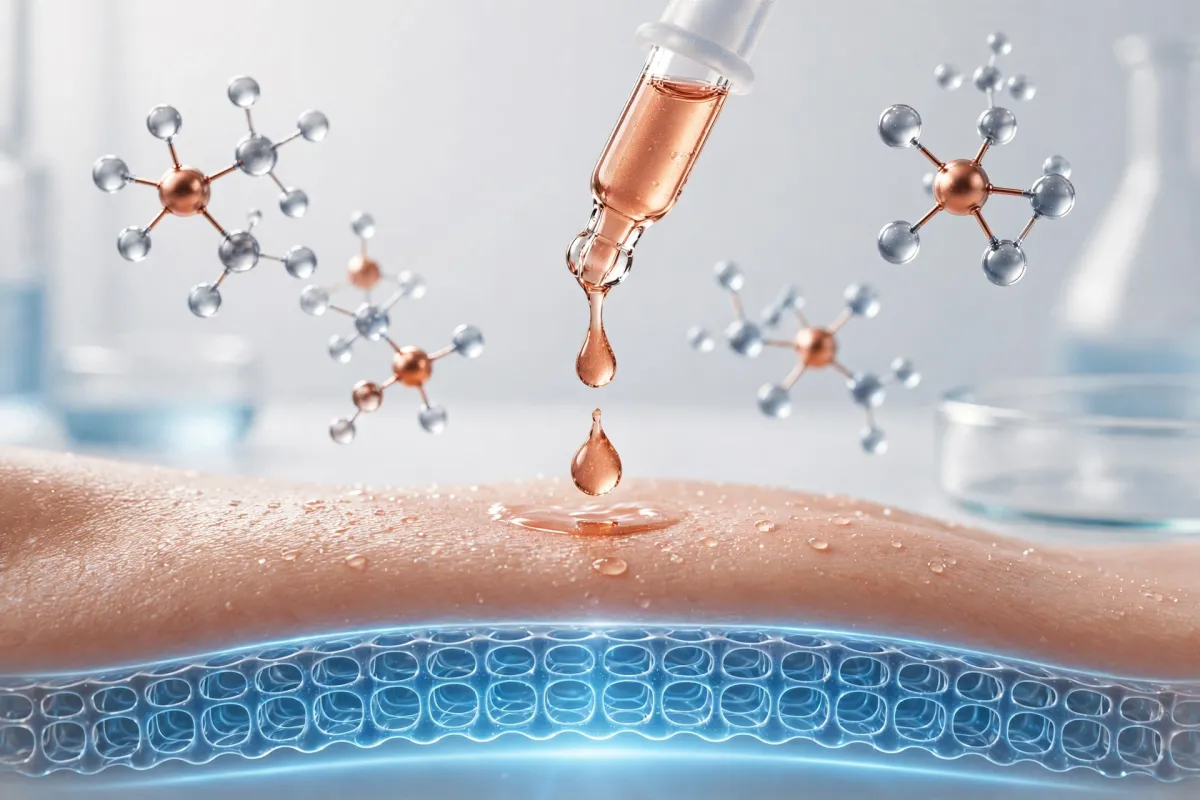
Peptides are short chains of amino acids that can perform different biological functions. GHK-Cu is a copper-associated form of glycyl-L-histidyl-L-lysine that has attracted research interest because of its potential involvement in collagen, glycosaminoglycan, wound-healing, and extracellular-matrix processes.
These mechanisms are scientifically interesting, but laboratory activity does not automatically translate into visible results when an ingredient is applied to human skin.
4. Can GHK-Cu Improve Skin?
Topical GHK-Cu has been studied far less extensively than its popularity in cosmetic marketing might suggest. A recent review described GHK as a promising anti-wrinkle peptide while also highlighting the limited number of clinical studies and challenges involving penetration, stability, and formulation.
This means claims that copper peptides rapidly rebuild collagen or “reprogram” skin cells go beyond what current clinical evidence can establish.
“Topically applied GHK as an anti-wrinkle peptide: Advantages, problems and prospective”
5. What Does Broader Peptide Research Show?
Research on peptides as a broader skincare category is more encouraging. A 2026 systematic review and meta-analysis of randomized controlled trials found that peptide interventions improved some measures of skin hydration and brightness, while wrinkle and elasticity outcomes varied.
Importantly, the studies included different peptide types, formulations, and routes of administration. Therefore, these findings cannot be used as proof that every topical copper peptide serum produces the same effects.
6. Build a Barrier-First Skincare Routine
If your primary concern is dry, tight, or irritated skin, start with basic barrier support before adding multiple active ingredients. Use a gentle cleanser, apply a suitable moisturizer, and consider products containing ceramides, humectants, or emollients.
There is no strong evidence that three toner layers, a particular cleanser pH, or applying copper peptides to damp skin is universally necessary for repairing the skin barrier.
7. Common Myths About Copper Peptides
- Myth: Copper peptides immediately rebuild collagen. Fact: Laboratory evidence is promising, but strong clinical evidence for rapid collagen rebuilding from topical GHK-Cu is lacking.
- Myth: A higher concentration always produces better results. Fact: Effectiveness depends on formulation, stability, delivery, tolerability, and clinical testing.
- Myth: Copper peptides repair every damaged skin barrier. Fact: Barrier care primarily depends on appropriate cleansing, moisturization, and avoiding irritants.
- Myth: More skincare layers mean better hydration. Fact: A simple routine that supports the barrier may be more suitable for sensitive or dry skin.
8. Who Should Pay Attention?
Copper peptide serums may appeal to people seeking an additional anti-aging skincare step, particularly those who already have a stable basic routine. Introduce new products gradually because irritation can occur with cosmetic ingredients.
Persistent redness, burning, scaling, severe dryness, or unexplained skin changes should not be treated solely with cosmetic products. A dermatologist can help identify an underlying skin condition and recommend appropriate treatment.
9. Evidence Strength Summary
- Strong evidence: The skin barrier is essential for limiting water loss and protecting skin.
- Moderate evidence: Appropriately formulated moisturizers, including ceramide-containing products, can support dry or impaired skin.
- Emerging evidence: Some peptides may improve selected measures of skin aging.
- Limited evidence: Topical GHK-Cu specifically for significant anti-aging effects.
- Not established: Claims that copper peptides rapidly rebuild collagen or guarantee “glass skin.”
Bottom Line
Copper peptides are a legitimate area of cosmetic and dermatologic research, but the marketing is currently stronger than the clinical evidence. GHK-Cu has interesting biological properties, yet high-quality human research on topical anti-aging benefits remains limited.
For healthier-looking skin, prioritize the basics: gentle cleansing, consistent moisturization, barrier-supportive ingredients, and daily sun protection. Copper peptides can be an optional addition, but they are not a shortcut to skin regeneration.