Reviewed by the HyaluFlow Health Editorial Team | Published: June 21, 2026 | Last Updated: August 30, 2026
Quick Answer
Dry brushing uses a dry body brush to loosen dead surface skin cells. It may make rough skin feel smoother and temporarily increase local blood flow, but evidence does not support claims that it detoxifies the body, permanently removes cellulite, or meaningfully improves lymphatic function.
Use light pressure for short sessions and moisturize afterward. Vigorous brushing can cause redness, dryness, irritation, or small skin injuries.
Key Takeaways
- Dry brushing mainly provides mechanical exfoliation.
- Skin may look temporarily plumper after brushing.
- Detoxification claims are unsupported.
- It does not permanently reduce cellulite.
- Evidence for lymphatic benefits is limited.
- Avoid damaged or inflamed skin.
- Moisturize after showering.
What Is Dry Brushing?
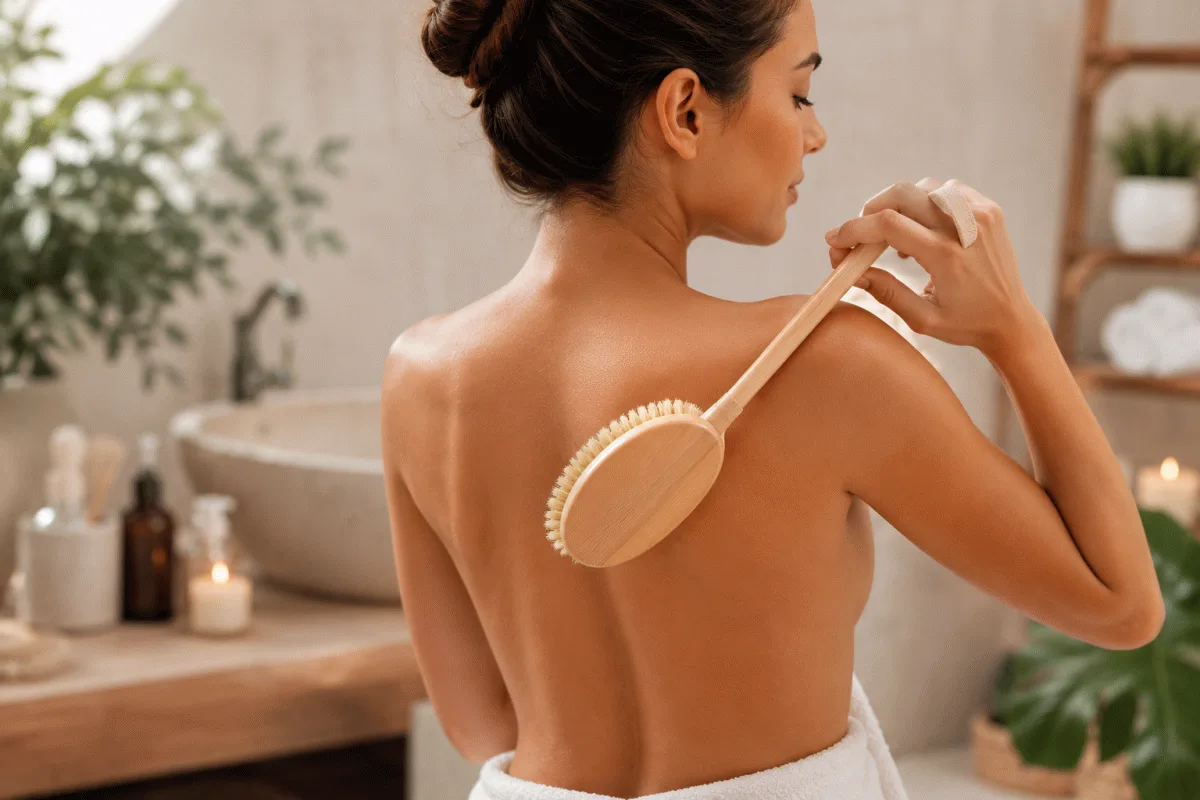
Dry brushing means sweeping a dry brush over the body, usually before showering. The friction removes some loose cells from the outer skin layer, making it a form of mechanical exfoliation rather than a treatment for deeper skin structures.
The American Academy of Dermatology's exfoliation guidance recommends using brushes and similar tools gently because excessive exfoliation can irritate skin.
Dry Brushing Benefits for Skin
The clearest benefit is temporary smoother-feeling skin. Removing loose surface cells can improve the feel of rough or flaky body skin, while brushing may briefly increase blood flow near the surface.
Cleveland Clinic's dermatologist-reviewed guide to dry brushing describes this temporary circulation effect and notes that many popular claims lack strong evidence.
Does Dry Brushing Help Lymphatic Drainage?
Claims about lymphatic drainage are less certain. Evidence on medical lymphatic drainage, including treatment for lymphedema, does not establish that ordinary dry brushing produces the same effects.
A systematic review in Journal of Cancer Survivorship found conflicting results and methodological limitations in research on manual lymphatic drainage.
Can Dry Brushing Reduce Cellulite?
Dry brushing is not a proven cellulite treatment. Cellulite involves structures beneath the skin, so surface brushing cannot permanently change its underlying anatomy.
Cleveland Clinic's cellulite guidance states that there is no evidence dry brushing reduces cellulite. Temporary changes may result from increased blood flow or mild skin swelling.
How to Dry Brush Safely
Use a clean brush with comfortable bristles and light pressure. Start at the feet or ankles, use long strokes on the limbs, and use gentle circular motions on the torso and back.
Do not repeatedly scrub one area. Cleveland Clinic's dermatologist guidance recommends only a few overlapping passes because forceful brushing can cause irritation or bleeding.
Brush before showering, rinse away loosened skin cells, and moisturize afterward.
Who Should Avoid Dry Brushing?
Avoid cuts, scrapes, open wounds, sunburn, active infections, inflamed skin, and irritated areas. Do not brush directly over moles, warts, or suspicious raised lesions.
People with sensitive skin may need gentler exfoliation or may be better off skipping dry brushing. The AAD recommends adjusting exfoliation to skin type and avoiding over-exfoliation.
Common Myths About Dry Brushing
Myth: Dry brushing detoxifies the body.
Fact: There is no strong clinical evidence that brushing removes toxins from the body.
Myth: Harder brushing works better.
Fact: More friction mainly raises the risk of irritation. Exfoliation should not hurt.
Myth: Dry brushing permanently removes cellulite.
Fact: No good evidence supports permanent cellulite reduction from dry brushing.
What the Science Says
Evidence supports surface-level effects such as mechanical exfoliation and a short-lived change in circulation or appearance. Evidence is much weaker for detoxification, major lymphatic effects, and lasting cellulite reduction.
The AAD supports gentle exfoliation and moisturizing afterward, while Cleveland Clinic notes the lack of evidence for cellulite reduction. Dry brushing is therefore best viewed as an optional cosmetic routine, not a medical treatment.
Evidence Strength Summary
| Claim | Evidence Strength |
|---|---|
| Removes surface dead skin cells | Strong |
| Temporarily increases local blood flow | Moderate |
| Makes skin feel smoother | Moderate |
| Meaningfully improves lymphatic function | Limited |
| Permanently reduces cellulite | Insufficient |
| Detoxifies the body | Insufficient |
Bottom Line
Dry brushing can be useful for simple body exfoliation and may temporarily improve skin feel and local blood flow. It should not be expected to detoxify the body, permanently remove cellulite, or replace clinical lymphatic treatment.
Use light pressure, avoid damaged skin, moisturize afterward, and stop if redness, soreness, or irritation persists.