Reviewed by the HyaluFlow Health Editorial Team | Published: June 17, 2026 | Last Updated: August 25, 2026
“Hydrating” and “moisturizing” are often used as if they mean the same thing, but skincare formulas can support the skin in different ways. Hydration focuses on water content, while moisturization generally refers to formulations that help hydrate the skin and reduce water loss.
- Hydration refers primarily to water content in the outer skin layer.
- Humectants help attract and retain water within the stratum corneum.
- Emollients smooth and soften the skin surface.
- Occlusives help reduce transepidermal water loss.
- Dry skin often benefits from a moisturizer containing multiple ingredient types.
- There is no need to choose between “hydrating” and “moisturizing” products if one formula addresses both needs.
Hydration vs Moisture: What Is the Difference?
In skincare science, hydration describes the water content of the skin, particularly the stratum corneum, the outermost layer of the epidermis. Dry skin, meanwhile, commonly refers to a condition in which the skin has reduced lipids and impaired water retention.
A recent review explains that skin hydration depends on water-binding substances within the stratum corneum, while intercellular lipids and the surface hydrolipid film help limit evaporative water loss. Restoring Skin Hydration and Barrier Function
How Humectants Hydrate Skin
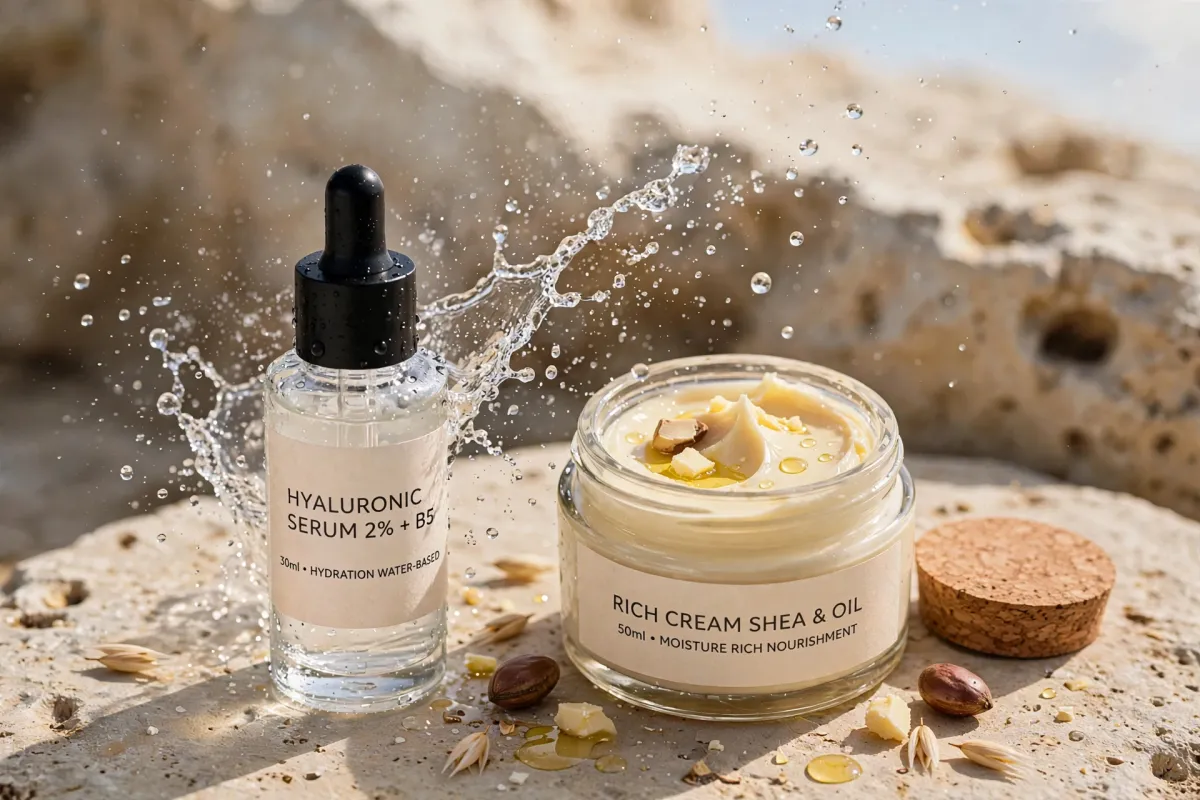
Humectants are ingredients that bind or attract water and can increase hydration in the outer skin layer. Common examples include glycerin, urea, hyaluronic acid, and certain glycols.
Clinical research supports the ability of humectants to increase skin hydration. One controlled study found that formulations containing glycerol and related humectants improved measured skin hydration and influenced barrier function. Effects of 1,3-Propanediol Associated With Glycerol on Skin Hydration and Barrier Function
What Emollients Do for Dry Skin
Emollients help fill spaces between skin cells and smooth the surface, making rough or flaky skin feel softer. They can include fatty substances, oils, lipids, and other ingredients designed to improve the skin’s texture.
Emollients are especially useful when dryness is linked to a weakened outer barrier. Research describes them as part of a broader moisturizing strategy that supports the physical properties of the stratum corneum. The Skin Barrier and Moisturization: Function, Disruption, and Mechanisms of Repair
Why Occlusives Matter
Occlusives form a protective layer that helps reduce water escaping from the skin surface. Petrolatum is a well-established example, while other formulations may use mineral oils, waxes, silicones, or plant-derived lipids.
Reducing transepidermal water loss can help maintain skin hydration, particularly when the barrier is compromised. Reviews of moisturizer technology describe occlusion as one of the central mechanisms used to maintain stratum corneum hydration. Moisturizer Technology Versus Clinical Performance
Do You Need Both Hydration and Moisture?
For many people with dry or dehydrated-feeling skin, combining humectants with emollients and occlusives makes practical sense. The ingredients address different aspects of maintaining water balance rather than competing with each other.
A moisturizer does not need to contain every possible ingredient. The best choice depends on your skin type, climate, tolerance, and whether you are dealing with simple dryness or an underlying skin condition.
How to Build a Hydrating Skincare Routine
Start with a gentle cleanser, then apply a hydrating product or moisturizer while the skin is slightly damp if that feels comfortable. Follow with a moisturizer that provides the combination of humectant, emollient, and occlusive benefits your skin needs.
During the daytime, finish with broad-spectrum sunscreen. For very dry skin, a richer moisturizer or an additional occlusive layer may be useful, while oily or acne-prone skin may feel more comfortable with a lighter formulation.
What the Science Says
Modern moisturizer science does not support a simple “water versus oil” model. Effective formulations can simultaneously increase water availability, soften the stratum corneum, and reduce water loss.
A 2023 review describes humectants, emollients, and occlusives as complementary mechanisms that can strengthen the physical skin barrier and improve transepidermal water loss. The Skin Barrier and Moisturization
Research also shows that skin hydration can influence the appearance and function of the outer skin layer. This is why consistent moisturization can be more useful than repeatedly applying water alone. Hydration of the Stratum Corneum
Common Myths About Skin Hydration
Myth: Dehydrated skin always means dry skin. Not necessarily. Hydration describes water content, while dry skin commonly involves reduced lipids and impaired barrier function.
Myth: Drinking more water automatically fixes dry skin. Adequate fluid intake is important for overall health, but topical moisturization directly targets the outer skin barrier and water loss.
Myth: Hyaluronic acid is enough for every dry skin type. Not always. A humectant can be combined with emollients or occlusives when reducing water loss and improving skin feel are also priorities.
Who Should Pay Attention?
People with persistent tightness, roughness, flaking, or recurrent dryness may benefit from a more barrier-focused moisturizer. Those with eczema, rosacea, psoriasis, or persistent irritation may need individualized skincare and medical treatment.
If dryness is severe, painful, cracked, persistently itchy, or accompanied by a rash, do not assume that adding more skincare products is the answer. An underlying skin condition may need evaluation.
Evidence Strength Summary
- Strong: Humectants, emollients, and occlusives have established roles in topical moisturization.
- Strong: Moisturizers can improve skin hydration and help reduce transepidermal water loss.
- Moderate: Combining different moisturizing mechanisms can provide broader barrier-support benefits.
- Individual: The ideal formulation depends on skin type, climate, tolerance, and underlying skin conditions.
Bottom Line
Hydration and moisture are not competing concepts. Hydrating ingredients help support water content, while emollients and occlusives help soften the skin and limit water loss.
For most dry or dehydrated skin, look beyond a single “hero” ingredient. A well-formulated moisturizer that combines complementary ingredients can provide more complete support for comfortable, healthy-looking skin.