Reviewed by the HyaluFlow Health Editorial Team | Published: June 27, 2026 | Last Updated: August 28, 2026
Red light therapy is a non-invasive skincare treatment studied for wrinkles, inflammation, wound healing, and some hair-loss conditions. Evidence is promising, but results depend on the device, wavelength, dose, and consistent use.
Quick Answer: Red light therapy, also called photobiomodulation, uses red or near-infrared light to influence cellular activity. Research suggests it may modestly improve fine lines, skin texture, inflammation, and tissue repair, but it is not a miracle treatment.
Key Takeaways
- Red light therapy uses non-UV wavelengths.
- Photobiomodulation may influence cellular energy and repair pathways.
- Research supports potential benefits for wrinkles, texture, inflammation, and healing.
- Results usually require repeated treatments over several weeks.
- Red light therapy does not replace sunscreen or proven medical treatments.
- Follow the instructions for your specific device.
What Is Red Light Therapy?
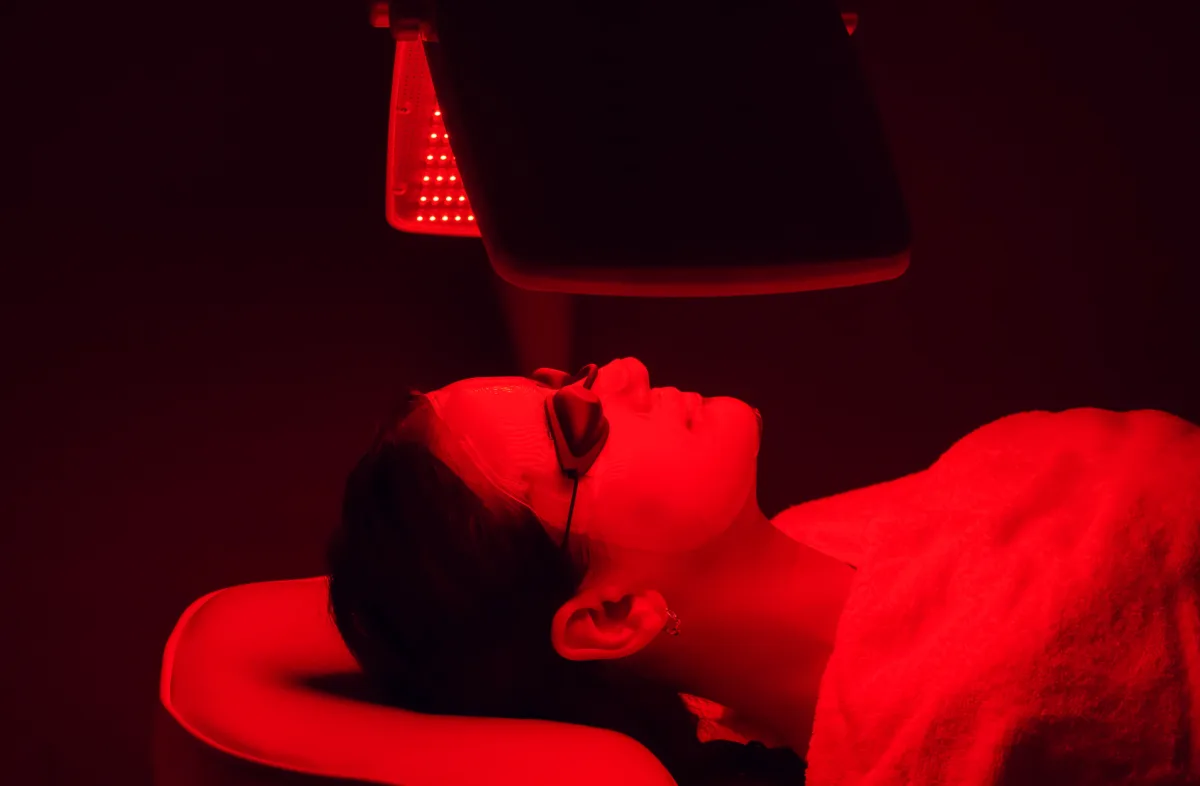
Red light therapy (RLT), photobiomodulation (PBM), and low-level light therapy describe related treatments using controlled red or near-infrared light. Unlike ultraviolet radiation, these wavelengths are not intended to cause sunburn or DNA damage.
Common devices use red wavelengths around 630–660 nm, while some also include near-infrared wavelengths. The biological effects depend on wavelength, irradiance, treatment time, and other device characteristics.
Photobiomodulation or Low-Level Light Therapy review explains the proposed mechanisms and clinical applications of PBM.
How Does Red Light Therapy Work?
PBM is thought to influence mitochondrial activity, cellular energy production, oxidative stress, and signaling involved in inflammation and tissue repair.
These effects may support fibroblast activity and extracellular-matrix remodeling. However, biological mechanisms do not guarantee the same cosmetic result from every consumer device.
Low-Level Laser (Light) Therapy in Skin review discusses these mechanisms and dermatologic applications.
Red Light Therapy Benefits for Skin
Fine Lines and Skin Texture
Clinical research suggests PBM can produce modest improvements in wrinkles, skin texture, and elasticity after repeated treatments. The evidence is encouraging, but studies use different devices and treatment protocols.
A systematic review of randomized trials found LED therapy promising for several dermatologic applications while noting limitations such as small samples and inconsistent treatment parameters. See Light-emitting Diodes in Dermatology: A Systematic Review of Randomized Controlled Trials.
Inflammation and Healing
PBM may influence inflammatory signaling and support tissue repair. Research also supports applications in wound healing, although the appropriate protocol varies by condition.
Acne
Red light may help calm inflammation associated with acne. Some devices combine red and blue light, but their effects should not be assumed to equal prescription acne treatment.
Hair Growth
Low-level light therapy has also been studied for androgenetic alopecia, with some trials reporting improved hair density. Results vary, and treatment generally requires sustained use.
At-Home LED Devices vs. Professional Treatment
| Factor | At Home | Professional |
|---|---|---|
| Intensity | Usually lower | May be higher |
| Supervision | Self-directed | Clinician-guided |
| Convenience | High | Lower |
| Customization | Limited | Greater |
Home devices can be convenient for consistent use, but evidence for specific products varies. A systematic review of home-use PBM found generally encouraging results while emphasizing the need for additional randomized trials. Therapeutic Efficacy of Home-Use Photobiomodulation Devices.
How to Use Red Light Therapy Safely
- Clean your skin: Remove makeup and follow the device instructions.
- Use the correct position: Maintain the manufacturer's recommended distance.
- Follow treatment time: Longer sessions are not automatically better.
- Protect your eyes: Follow the manufacturer's eye-safety instructions.
- Stay consistent: Evaluate results only after following the recommended schedule for several weeks.
Red light therapy should complement, not replace, basic skincare.
Common Mistakes to Avoid
- Expecting immediate wrinkle removal.
- Using devices with unclear specifications.
- Ignoring the manufacturer's exposure limits.
- Skipping sunscreen because you use LED therapy.
- Looking directly into high-intensity LEDs when eye protection is required.
Who Should Use Caution?
People with photosensitivity disorders, photosensitizing medications, suspicious skin lesions, or recent eye procedures should seek appropriate medical advice before using light-based devices.
Device instructions are important because wavelength, intensity, treatment duration, and eye-protection requirements differ between products.
Common Myths About Red Light Therapy
Myth: Red light therapy replaces sunscreen.
Fact: It does not protect against UV radiation. Daily broad-spectrum sunscreen remains essential for preventing photoaging.
Myth: Longer sessions produce better results.
Fact: More exposure is not automatically more effective. Follow the recommended treatment dose.
Myth: Every LED mask works equally well.
Fact: Devices differ in wavelength, irradiance, coverage, and design, so results cannot be generalized across all products.
What the Science Says
Clinical reviews support PBM as a potentially useful adjunct for skin rejuvenation, inflammation, wound healing, and selected hair-loss conditions. However, study protocols vary considerably, and some evidence remains limited.
A 2025 international expert consensus concluded that PBM is generally safe for adults under appropriate parameters and identified several medical applications with clinical evidence. Read the Evidence-Based Consensus on the Clinical Application of Photobiomodulation.
For cosmetic skin rejuvenation, a systematic safety review found no clear clinical signal of significant adverse events in the reviewed trials, although appropriate parameters remain important. See Photobiomodulation: A Systematic Review of the Oncologic Safety of Low-Level Light Therapy.
Evidence Strength Summary:
- Moderate: Skin rejuvenation and improvements in fine lines or texture.
- Moderate: Wound-healing and inflammatory applications.
- Moderate: Low-level light therapy for selected pattern hair-loss cases.
- Emerging: Several other cosmetic applications.
Bottom Line
Red light therapy is a promising non-invasive addition to an evidence-based skincare routine. It may modestly improve fine lines, texture, inflammation, and tissue repair when an appropriate device is used consistently.
For healthier-looking skin, combine it with daily sunscreen, moisturization, proven topical treatments, adequate sleep, and realistic expectations. RLT is a useful tool, not a shortcut around proven skincare.