Reviewed by the HyaluFlow Health Editorial Team | Published: June 18, 2026 | Last Updated: August 23, 2026
Longevity research is exploring how cellular metabolism, oxidative stress, inflammation, and cellular repair change with age. Compounds such as resveratrol, nicotinamide riboside (NR), and nicotinamide mononucleotide (NMN) are especially interesting, but their real-world anti-aging benefits remain an active area of research.
Resveratrol and NAD+ precursors can influence biological pathways involved in cellular metabolism, but they have not been proven to reverse human aging or reliably extend lifespan. For skin aging, sun protection, adequate nutrition, sleep, exercise, and evidence-based skincare remain more established strategies.
- NAD+ is important for cellular metabolism and several biological processes.
- NAD+ precursor supplements can increase NAD-related biomarkers in humans, but meaningful anti-aging benefits remain uncertain.
- Resveratrol has promising laboratory evidence and emerging human skin research, but it is not a proven age-reversal treatment.
- Red-light photobiomodulation has evidence for some applications, but home devices and treatment protocols vary.
- No supplement can currently be considered a scientifically proven way to stop or reverse biological aging.
1. What Happens to Cells During Aging?
Aging involves multiple interacting processes rather than one biological “clock.” Changes can affect cellular metabolism, DNA maintenance, mitochondrial function, inflammation, and the ability of tissues to repair themselves.
Cellular senescence is another important area of research. Senescent cells stop dividing and can release signaling molecules that influence surrounding tissues, but targeting senescence therapeutically is still an evolving field.
2. Why NAD+ Matters for Cellular Function
Nicotinamide adenine dinucleotide, or NAD+, is a molecule involved in energy metabolism, cellular signaling, DNA repair, and mitochondrial function. Researchers are investigating whether changes in NAD+ availability contribute to age-related biological changes.
However, the evidence that NAD+ consistently declines across human tissues with age is less definitive than many longevity advertisements suggest.
Vinten et al., “NAD+ precursor supplementation in human ageing: clinical evidence and challenges”
3. Can NMN and NR Slow Aging?
NMN and NR are NAD+ precursors, meaning the body can use them in pathways involved in NAD+ production. Human trials generally show that oral supplementation can increase NAD-related biomarkers, but improvements in meaningful health or longevity outcomes have been inconsistent.
A 2026 systematic review of human and animal studies concluded that NAD+ augmentation shows biological activity, while clinical effectiveness for anti-aging and wellness outcomes remains inconclusive.
Gallagher and Emmanuel, “NAD+ supplementation for anti-aging and wellness”
4. Resveratrol and the Sirtuin Connection
Resveratrol is a polyphenol found naturally in foods such as grape skins. Laboratory research has linked it with pathways involving oxidative stress, inflammation, and sirtuin signaling, which has made it popular in longevity research.
Human evidence is more limited. A 2025 meta-analysis examined randomized trials of resveratrol supplementation and its effects on SIRT1, but influencing a molecular pathway is not the same as proving that a person will age more slowly.
“Impact of Resveratrol Supplementation on Human Sirtuin 1”
5. What Does Resveratrol Do for Skin?
Resveratrol is being investigated for visible skin aging because of its antioxidant and biological effects. Importantly, topical delivery can be challenging because the outer skin barrier limits penetration.
A recent randomized, placebo-controlled trial in healthy women aged 40 and older found that eight weeks of oral and topical trans-resveratrol was associated with reduced wrinkle scores in the combined treatment group, although many other measured skin parameters did not significantly differ.
Rao et al., “Trans-resveratrol reduces visible signs of skin ageing”
6. Does Red Light Therapy Help Aging Skin?
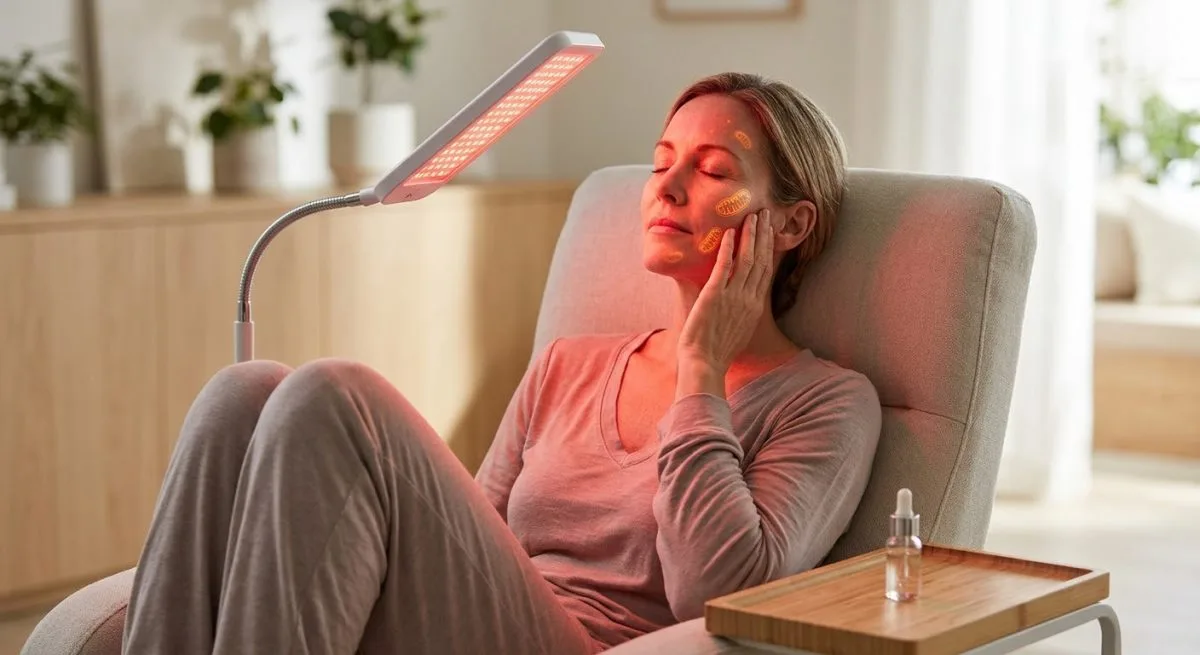
Red and near-infrared light are studied under the broader term photobiomodulation. Research suggests potential benefits for selected dermatologic applications, but results depend on wavelength, dose, device, treatment schedule, and the condition being treated.
Evidence should therefore not be reduced to a universal recommendation such as using exactly 660 nm for a fixed number of minutes every day.
Evidence-Based Consensus on the Clinical Application of Photobiomodulation
7. Common Myths About Cellular Rejuvenation
- Myth: NAD+ supplements reverse aging. Fact: They can affect NAD-related biomarkers, but proven lifespan or broad healthspan benefits in humans are lacking.
- Myth: Resveratrol can “reset” your biological age. Fact: Molecular activity does not establish age reversal in humans.
- Myth: More antioxidant supplementation is always better. Fact: High-dose supplements are not automatically beneficial and can have risks.
- Myth: Red light therapy replaces conventional skincare. Fact: Photobiomodulation is an adjunctive technology, not a substitute for basic skin protection.
8. Who Should Pay Attention?
People interested in longevity supplements should distinguish early-stage research from established clinical benefits. This is especially important when products are marketed with claims about “genetic rejuvenation,” “cellular age reversal,” or guaranteed lifespan extension.
Anyone taking medications, managing a medical condition, pregnant or breastfeeding, or considering high-dose supplements should discuss the product with a qualified healthcare professional.
9. Evidence Strength Summary
- Strong biological evidence: NAD+ participates in essential cellular processes.
- Moderate evidence: NR and NMN can increase NAD-related biomarkers in humans.
- Emerging evidence: Resveratrol may influence selected skin-aging outcomes.
- Emerging evidence: Photobiomodulation may benefit certain dermatologic applications.
- Insufficient evidence: Claims that resveratrol or NAD+ precursors reliably reverse human aging or extend lifespan.
Bottom Line
Resveratrol and NAD+ biology offer genuinely interesting insights into aging, but the science is not yet strong enough to support dramatic “cellular rejuvenation” promises.
For healthier aging, prioritize proven fundamentals such as sun protection, physical activity, nutritious food, adequate sleep, and avoidance of tobacco. Longevity supplements should be viewed as experimental or emerging options rather than guaranteed anti-aging solutions.