Reviewed by the HyaluFlow Health Editorial Team | Published: August 31, 2026 | Last Updated: August 31, 2026
Quick Answer
Screen-free wearables can track sleep, activity, heart rate, and recovery without the constant notifications associated with smartwatches. However, they are not automatically healthier, and their measurements should be treated as wellness information rather than a replacement for medical testing.
The trend is gaining momentum in 2026 as consumers look for health technology that supports wellness without demanding constant attention.
Key Takeaways
- Screen-free wearables collect health data without a display or frequent alerts.
- They can track heart rate, activity, sleep, and recovery.
- Accuracy varies by device, metric, activity, and user.
- Less screen interaction may reduce digital distractions.
- Wearable data should not be used alone to diagnose a medical condition.
What Are Screen-Free Wearables?
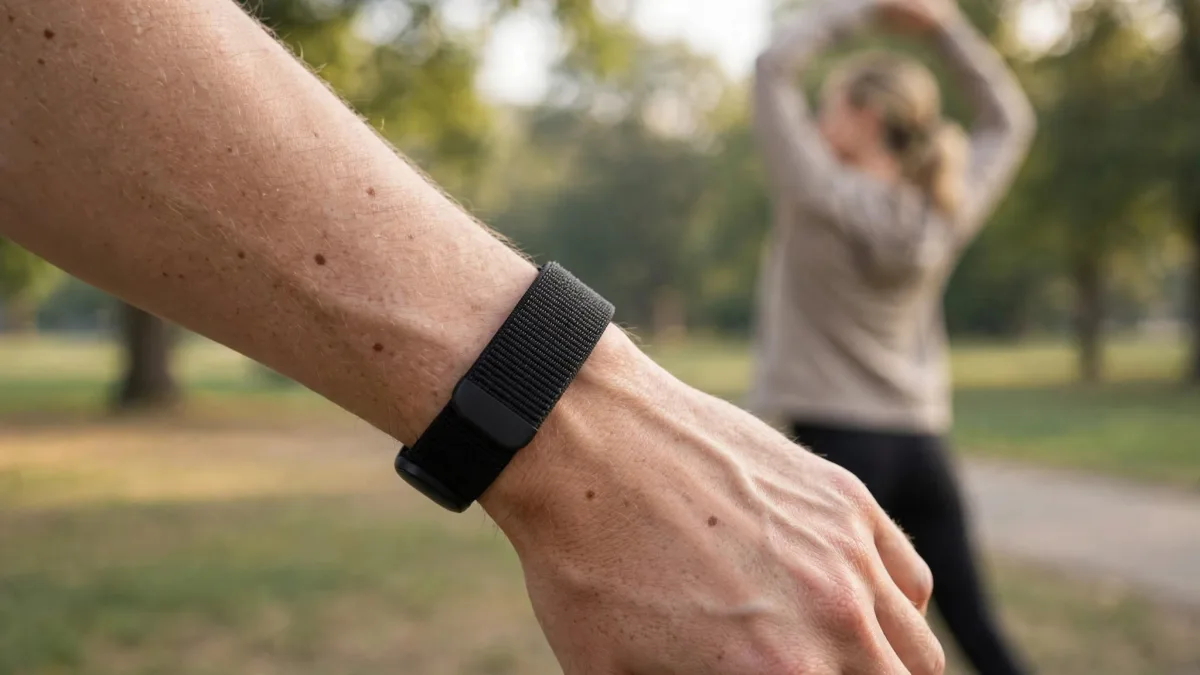
Screen-free wearables are fitness trackers that collect health and activity information without displaying it directly on your wrist or body. Instead, they record data in the background and send it to a smartphone app.
The category includes bands, rings, and other minimalist trackers. A recent WIRED report on screen-free wearables describes the growing shift toward devices users can largely ignore during the day.
Why Are Screen-Free Wearables Trending?
Traditional smartwatches have become miniature smartphones, bringing messages, calls, reminders, workout alerts, and other notifications directly to the wrist.
Screen-free devices take the opposite approach: collect useful health information without encouraging repeated checking. This may appeal to people who want fitness tracking without another screen competing for their attention.
Still, buying a screen-free tracker does not automatically create healthier technology habits. The benefit depends on how intentionally it is used.
What Can They Track?
Depending on the device, screen-free wearables may monitor heart rate, steps, physical activity, sleep patterns, heart-rate variability, temperature-related signals, and other measurements.
Research supports some wearable measurements, but accuracy is not universal. A large living umbrella review in Sports Medicine found that accuracy varies considerably across heart rate, sleep, physical activity, energy expenditure, and other metrics.
Heart-rate measurements may perform well in some situations, while estimates such as energy expenditure and sleep duration can show larger errors.
Step tracking can still be useful when it encourages realistic activity goals. For people using heart rate during exercise, understanding Zone 2 cardio can provide more useful context than simply chasing a daily activity score.
Are Screen-Free Wearables Accurate?
Sometimes—but accuracy depends on what is being measured. A wearable that performs well for heart rate may not provide equally reliable estimates for calories burned, sleep stages, or aerobic capacity.
A systematic review of consumer wearable health devices identified sensors, algorithms, device design, and testing conditions as important factors affecting measurement accuracy.
For that reason, wearables are best viewed as tools for identifying patterns rather than producing perfectly precise numbers. Trends over time can be more useful than obsessing over a single daily score.
Can They Improve Sleep and Recovery?
Wearables can help users notice patterns in bedtime, sleep duration, activity, and recovery. This information may encourage healthier routines when it leads to practical changes rather than chasing a perfect score.
Research on specific devices is evolving. A recent systematic review and meta-analysis of the Oura Ring found comparable performance for certain commonly measured sleep parameters while emphasizing proper interpretation.
Still, a wearable cannot replace clinical sleep evaluation when symptoms suggest a sleep disorder.
Excessive sleep tracking can also become counterproductive. Orthosomnia describes a pattern in which trying too hard to achieve an ideal sleep score may increase anxiety around sleep.
Good sleep habits remain more important than any individual wearable score.
Your circadian rhythm also matters. Understanding how your internal clock affects sleep and energy can help put wearable data into better context.
Common Myths About Screen-Free Wearables
Myth: Screen-free means medically accurate.
Removing the screen changes the user experience, not necessarily sensor accuracy.
Myth: A wearable can diagnose health problems.
Some devices can identify signals that may warrant attention, but consumer wearable data should not be treated as a diagnosis.
Myth: More health data always means better health.
Constantly checking scores can become counterproductive. The goal should be useful information, not data obsession.
Who Should Pay Attention?
Screen-free wearables may suit people who want passive fitness tracking, sleep insights, or recovery trends but dislike smartwatch notifications and displays.
If you're building a healthier routine, combine wearable data with regular physical activity, adequate sleep, balanced nutrition, and stress management.
Recovery deserves attention too. If you exercise regularly, scheduling recovery can help prevent treating every day as a hard-training day.
Deep sleep also plays an important role in physical and cognitive recovery.
Evidence Strength Summary
Overall evidence: Moderate. Research supports consumer wearables for monitoring several health and fitness measures, but accuracy varies between devices, metrics, and circumstances. Evidence is stronger for some measurements than others.
Bottom Line
Screen-free wearables are trending because they offer useful health tracking without another glowing screen demanding attention.
They can help monitor patterns in activity, sleep, and recovery, but they are not magic health devices. Use the numbers as clues rather than absolute truths, and focus on consistent healthy behaviors instead of chasing perfect wearable scores.
For some users, that quieter approach may make it easier to stay consistent with healthy habits while avoiding unnecessary screen time and notification fatigue during the day.