Reviewed by the HyaluFlow Health Editorial Team | Published: June 17, 2026 | Last Updated: August 24, 2026
Quick Answer: You do not need to cook identical meals for an entire week to eat well. Preparing versatile ingredients such as vegetables, whole grains, beans, and proteins ahead of time can make balanced meals faster to assemble when your schedule gets busy.
The best meal-prep routine is one you can actually maintain. Instead of chasing complicated recipes, focus on a few flexible ingredients that can become different meals.
- Meal prep can make healthy choices easier during busy workweeks.
- Ingredient prep offers more flexibility than preparing identical meals.
- Build meals around vegetables, protein, whole grains, and healthy fats.
- Food safety matters when storing cooked meals and prepared ingredients.
- A simple two- or three-day prep cycle may be easier to maintain than preparing a full week at once.
Why Is Healthy Eating Hard When You’re Busy?
After a long workday, cooking can feel like another task on an already crowded schedule. When convenient food is immediately available, ordering takeout or grabbing a highly processed snack can become the default.
Meal preparation does not guarantee healthier eating, but having nutritious ingredients ready can reduce the effort required to make a balanced meal.
What Is Ingredient-Based Meal Prep?
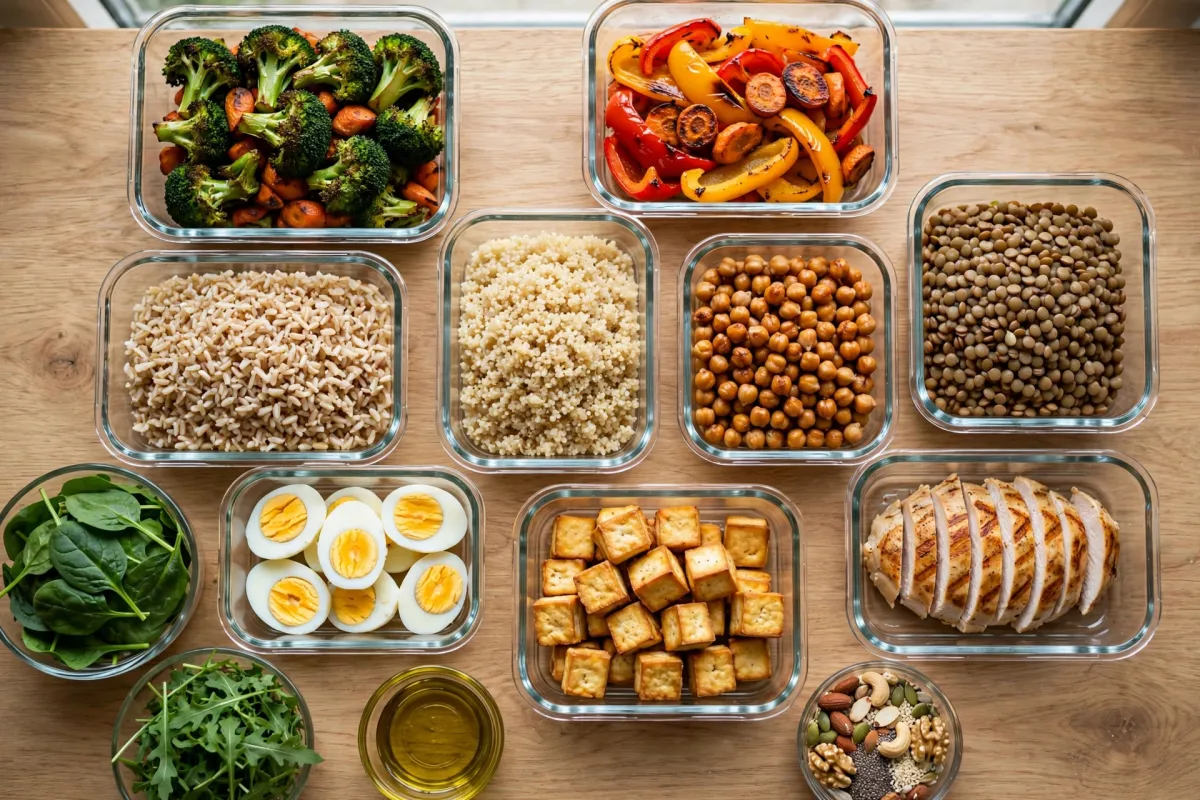
Instead of preparing seven identical containers, cook individual components that can be combined in different ways. For example, roast vegetables, cook brown rice or quinoa, prepare a protein, and make a simple dressing.
One combination can become a grain bowl, another can become a salad, and the same ingredients can work inside a wrap or alongside soup. This variety can make meal prep less repetitive.
How Do You Build a Balanced Meal?
A simple starting point is to combine vegetables or fruit, a protein source, a whole grain or other carbohydrate, and a source of unsaturated fat when appropriate.
The USDA MyPlate guidance emphasizes fruits, vegetables, grains, protein foods, and dairy or fortified alternatives as the foundation of a balanced eating pattern.
You do not need every meal to be perfectly balanced. Looking at your overall eating pattern across the day or week is more useful than obsessing over one plate.
Which Foods Work Best for Busy Meal Prep?
Choose ingredients that store well and can be used in several meals. Examples include roasted broccoli, peppers, carrots, leafy greens, cooked beans, lentils, eggs, chicken, tofu, fish, oats, brown rice, quinoa, and whole-grain wraps.
For healthy fats, consider foods such as nuts, seeds, avocado, or olive oil. Keeping sauces and dressings separate can also help prepared foods maintain better texture.
How Can You Meal Prep Without Getting Bored?
The trick is to change the combination rather than cooking completely different recipes every day. Keep your core ingredients neutral and use different herbs, spices, sauces, or toppings to create variety.
For example, roasted vegetables and chicken can become a Mediterranean-style bowl one day and a spicy grain bowl the next. The ingredients stay familiar while the flavor changes.
How Long Does Healthy Meal Prep Last?
Food safety should be part of your meal-prep plan from the beginning. Refrigerate perishable foods promptly rather than leaving cooked food at room temperature for extended periods.
The USDA guidance on leftovers and food safety recommends using refrigerated leftovers within 3 to 4 days and freezing foods that will not be eaten within that period.
Use clean containers, keep your refrigerator at a safe temperature, and reheat leftovers thoroughly. When in doubt about whether food is safe, throw it out.
Common Meal-Prep Myths
Myth: Healthy meal prep means eating the same food every day.
Reality: Ingredient prep lets you mix and match components for different meals.
Myth: You need to spend your entire Sunday cooking.
Reality: Even 30 to 60 minutes of targeted preparation can make several meals easier during the week.
Myth: Every meal must be perfectly balanced.
Reality: Overall dietary patterns matter more than making every individual meal flawless.
Who Should Pay Attention?
Ingredient-based meal prep can be especially useful for professionals, students, parents, and anyone whose schedule makes regular cooking difficult.
People with diabetes, kidney disease, food allergies, or other conditions requiring specific dietary restrictions should adapt meal preparation to their individual nutritional needs and professional medical advice.
What the Science Says
Evidence strength: Moderate for meal planning as a practical behavior strategy; limited for any single meal-prep method. Research has linked meal planning and home food preparation with aspects of healthier dietary patterns, but observational studies cannot prove that meal prep itself causes better health.
The strongest practical case for meal prep is simple: preparing food in advance can make nutritious choices more convenient when time and energy are limited.
Bottom Line
Healthy meal prep does not need to mean rigid menus, identical containers, or hours in the kitchen. Prepare a few versatile ingredients and turn them into different meals throughout the week.
Make healthy eating easier, not more complicated. A flexible ingredient-prep routine can save time while giving you more control over what ends up on your plate.