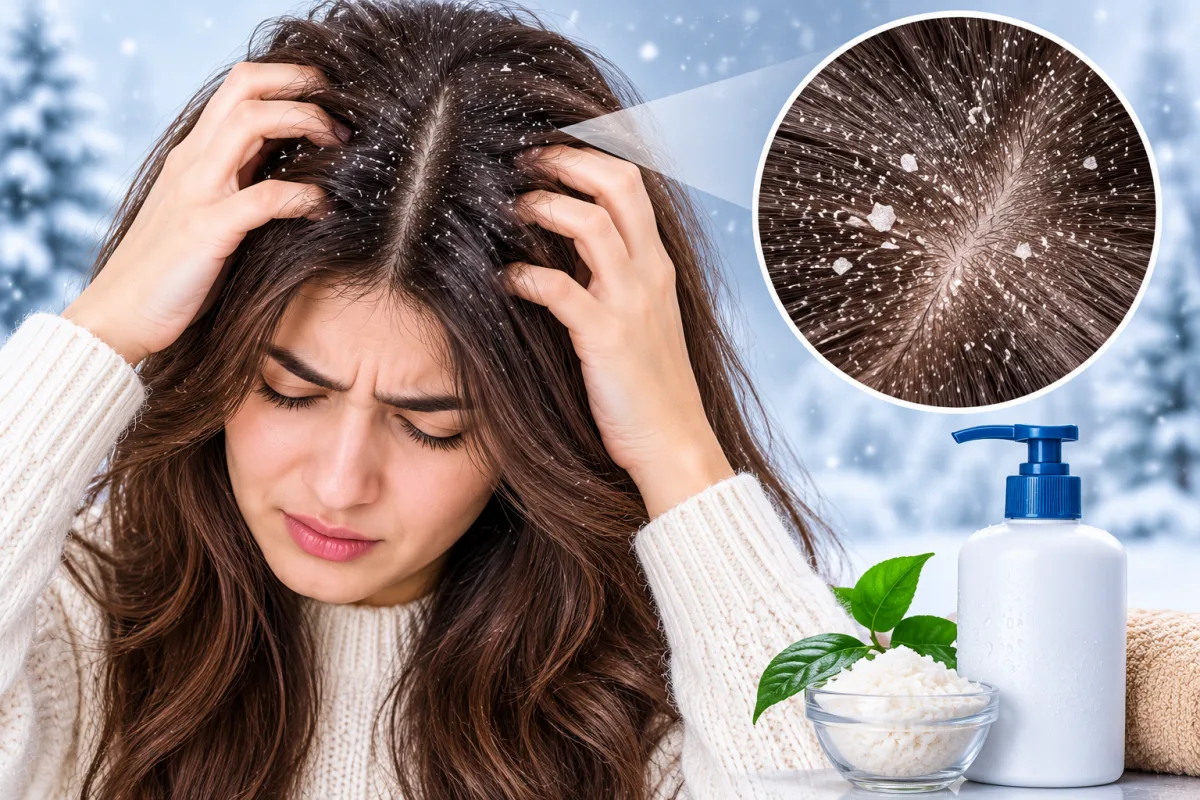
Black sweater, white flakes on the shoulders. If that sounds familiar, you are in good company. As soon as the weather turns cold, searches for dandruff, itchy scalp and winter hair fall climb, because cold air outside and dry heating inside are hard on both skin and hair.
The tricky part is that "flaky scalp" is not one problem. Sometimes it is simple dryness. Sometimes it is dandruff, which involves a yeast that lives on everyone's scalp. And sometimes it is something else entirely. Here is how to tell what is going on and what actually helps.
Why Your Scalp Flakes More in Winter
Your scalp is skin, and it reacts to the season just like your face and hands do. Several winter habits and conditions pile up at once:
- Dry air. Cold air holds little moisture and indoor heating dries it out further, so your scalp loses water quickly and its protective barrier weakens.
- Hot showers. Very hot water strips the natural oils that protect the scalp, leaving it tight, dry and irritated.
- Washing less often. Many people skip washes in winter. Sebum and dead skin cells then build up, which can encourage the yeast that is linked to dandruff.
- Hats and scarves. They can trap sweat and oil against the scalp and cause friction.
- Heavy oiling. Oil feels comforting in cold weather, but during a flare-up it can feed the yeast and make flaking worse.
Dandruff or Dry Scalp? How to Tell the Difference
The two are often confused, and they can overlap, but they usually look and feel a little different.
Dry scalp usually looks like this
- Small, light, powdery flakes
- A tight or itchy feeling, often with dry skin on your body or face too
- Hair that does not look greasy
- Gets worse in cold, dry weather and eases with moisturizing
Dandruff usually looks like this
- Larger, thicker flakes that may look white or yellowish
- Itching, sometimes with a scalp that feels oily
- Flakes that come back soon after washing
- Linked to an overgrowth reaction to Malassezia, a yeast that naturally lives on the scalp
If you have redness, thick scaly patches, a burning feeling or flaking along the hairline, behind the ears or on the eyebrows, it could be seborrheic dermatitis or another skin condition. That is worth a visit to a dermatologist.
What Actually Helps
1. Wash on a steady schedule
Avoiding shampoo does not fix a dry, flaky scalp, and it can make buildup worse. A common guideline is to wash fine or oily hair daily or every other day, and thicker, coarse or curly hair a few times a week. Choose a schedule that keeps your scalp clean without leaving it tight and squeaky.
2. Turn the water down
Use lukewarm water on your scalp and finish with a cool rinse if you like. Hot water feels great in winter, but it is one of the fastest ways to dry out the scalp.
3. Use an active ingredient that matches the problem
- Salicylic acid is a mild exfoliant that helps loosen and lift thick flakes.
- Piroctone olamine, zinc pyrithione, ketoconazole and selenium sulfide are anti-dandruff ingredients that target the yeast linked to flaking. Follow the label, and leave the shampoo on the scalp for the time it recommends before rinsing.
- Hydrating, barrier-supporting scalp products (with ingredients such as glycerin, panthenol or ceramides) can help when the main issue is dryness.
If one anti-dandruff ingredient stops working after a while, rotating between two different ones is a common approach.
4. Be careful with oils and styling products
If you love scalp oiling, keep it light and skip it while you have active dandruff. Heavy oils and thick styling products can build up and make flaking and itching worse.
5. Condition the lengths, not just the scalp
Winter dryness also hits the hair itself. Apply conditioner mostly from mid-lengths to ends, and add a deep conditioning treatment once a week. Take care with heat: a lower setting and a heat protectant help prevent breakage and split ends.
6. Protect your hair from friction
Woolly hats can cause frizz and breakage. A satin or silk lining, or a loosely worn scarf over a tight beanie, is gentler on both your hair and your scalp. Try not to head outside with wet hair.
Is Winter Hair Fall Normal?
Many people notice more hair in the brush or shower drain in colder months. Seasonal shedding, dry air and stress can all play a part. It can also look worse if you wash less often, because the hairs that would have gone down the drain pile up in between.
Gentle habits help: detangle with a wide-tooth comb or wet brush while conditioner is on, avoid very tight hairstyles, eat enough protein, and drink water through the day. Persistent scratching can also damage follicles, so treating an itchy scalp early matters.
Hair loss can have other causes, including stress, low iron or other nutrient deficiencies, thyroid problems, hormonal changes and pattern hair loss. If you are losing a lot of hair, notice bald patches, or the shedding goes on for more than a few months, see a doctor or dermatologist rather than guessing.
Common Winter Scalp Mistakes
- Scratching hard with your nails instead of massaging gently with your fingertips
- Switching products every few days, so nothing has time to work
- Covering flakes with dry shampoo or heavy products instead of treating the cause
- Washing with very hot water
- Skipping washes for a week or more
When to See a Dermatologist
Book an appointment if your scalp is red, painful or has thick scaly patches, if the itching keeps you awake, if you see oozing or crusting, or if flaking does not improve after about four weeks of consistent use of an appropriate shampoo. Conditions such as seborrheic dermatitis, psoriasis, contact dermatitis from hair dye and fungal infections can look like dandruff and need different treatment.
Know Your Hair Better
The right conditioner and treatment also depend on your hair type. Try our Hair Porosity Analyzer to see how well your hair holds moisture. If stress is part of your story, our guide on stress and visible skin changes explains how it can show up on your skin, and our article on hair botox covers one popular smoothing treatment and its risks.
The Takeaway
A flaky scalp in winter is common, and it is usually manageable. Wash regularly with lukewarm water, pick an ingredient that matches your type of flaking, go easy on heavy oils, and protect your hair from heat and friction. If nothing improves, a dermatologist can tell you exactly what is going on.