Reviewed by the HyaluFlow Health Editorial Team | Published: June 27, 2026 | Last Updated: August 29, 2026
Quick Answer: No food can instantly boost collagen or erase wrinkles. Foods rich in vitamin C, protein, zinc, copper, healthy fats, and antioxidants provide nutrients for collagen production and skin health.
Key Takeaways
- Vitamin C is required for normal collagen synthesis.
- Protein provides amino acids used to build collagen.
- Zinc and copper support connective-tissue function.
- Antioxidant-rich foods help combat oxidative stress.
- No single food can stop natural skin aging.
Introduction
Collagen is not created by one "superfood." Your body builds it from amino acids and requires vitamin C for normal biosynthesis.
The NIH Office of Dietary Supplements: Vitamin C Fact Sheet confirms that vitamin C is required for collagen biosynthesis and wound healing.
Why Collagen Nutrition Matters
Collagen provides structural support to skin and connective tissues. Aging changes collagen production, while UV exposure and lifestyle factors can accelerate skin aging.
American Academy of Dermatology recommends sun protection, avoiding smoking, and eating a balanced diet to reduce premature skin aging.
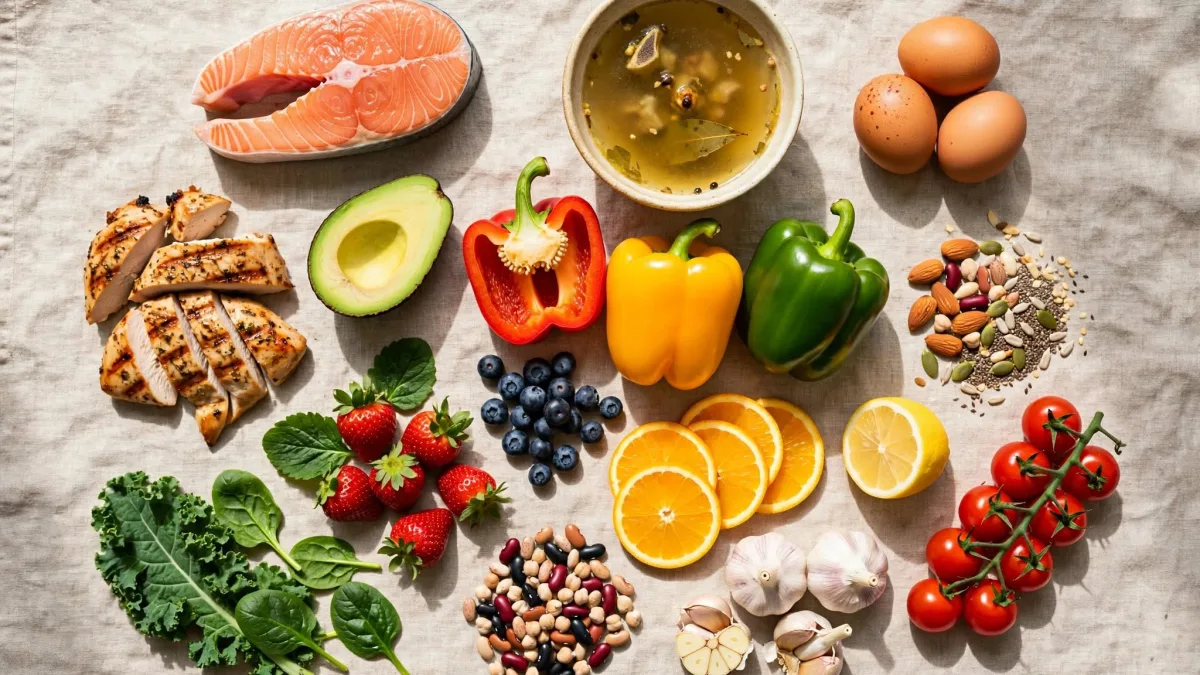
12 Best Foods for Natural Collagen Support
1. Bell Peppers
Bell peppers are excellent vitamin C sources that support normal collagen formation.
2. Citrus Fruits
Oranges, grapefruit, and lemons provide vitamin C.
3. Berries
Berries provide vitamin C and plant polyphenols for an antioxidant-rich diet.
4. Fatty Fish
Salmon, sardines, trout, and mackerel provide high-quality protein and omega-3 fatty acids. Protein supplies amino acids needed to build collagen.
5. Eggs
Eggs provide complete protein and nutrients needed for tissue maintenance.
6. Beans and Lentils
Beans, lentils, and chickpeas provide plant protein, zinc, and copper.
7. Nuts and Seeds
Nuts and seeds provide healthy fats, vitamin E, protein, and minerals. They support overall nutrition rather than directly creating collagen.
8. Tomatoes
Tomatoes contain lycopene and other carotenoids with antioxidant properties. They complement a healthy diet but cannot replace sunscreen.
9. Leafy Greens
Leafy greens provide vitamin C, carotenoids, folate, and other nutrients. Variety matters more than one specific green.
10. Avocados
Avocados provide monounsaturated fats, vitamin E, and other nutrients but do not directly increase collagen production.
11. Garlic
Garlic contains sulfur compounds and antioxidants, but evidence does not show that it dramatically increases skin collagen.
12. Bone Broth
Bone broth can contain collagen-derived proteins, but amounts vary. Evidence for bone broth is limited compared with overall nutrition.
What the Science Says
Evidence for collagen supplements is mixed. A 2021 meta-analysis reported improvements in hydration, elasticity, and wrinkles, but later research raised concerns about study quality and funding.
2021 Systematic Review and Meta-analysis: Hydrolyzed Collagen and Skin Aging
A 2025 meta-analysis of 23 randomized trials found benefits disappeared in non-industry-funded and higher-quality studies. The authors concluded current evidence does not support collagen supplements for skin aging.
2025 Systematic Review and Meta-analysis: Collagen Supplements and Skin Aging
Common Myths
Myth 1: One food can dramatically increase collagen.
Fact: Collagen production depends on multiple nutrients. No single food has been proven to transform aging skin.
Myth 2: Eating collagen automatically becomes skin collagen.
Fact: Dietary collagen is digested into amino acids and peptides that your body uses according to its needs.
Myth 3: Collagen foods replace sunscreen.
Fact: They do not. Dermatologists recommend broad-spectrum SPF 30 or higher to reduce UV-related skin damage.
Who Should Pay Attention?
Adults concerned about skin aging should prioritize adequate protein and varied nutrient-dense foods.
People on restrictive diets or recovering from wounds or surgery may need individualized nutritional guidance.
Simple Habits That Protect Collagen
- Use broad-spectrum SPF 30+. UV exposure is a major driver of premature skin aging.
- Eat adequate protein. Include protein-rich foods regularly.
- Choose colorful produce. Variety provides different protective nutrients.
- Do not smoke. Smoking accelerates visible skin aging.
- Sleep consistently. Adequate sleep supports health and recovery.
- Stay hydrated. Adequate fluids support normal body functions.
Evidence Strength Summary
Strong: Vitamin C is required for collagen biosynthesis, and adequate protein supports normal tissue maintenance.
Moderate: A balanced diet supports skin health and healthy aging.
Limited: Evidence that bone broth or garlic directly increase visible skin collagen.
Bottom Line
No food can stop wrinkles or restore youthful skin overnight. Eat a varied diet providing vitamin C, protein, zinc, copper, healthy fats, and antioxidant-rich plants.
Pair nutrition with sun protection, sleep, physical activity, hydration, and avoiding smoking. This is stronger than chasing a collagen "superfood."