Reviewed by the HyaluFlow Health Editorial Team | Published: June 23, 2026 | Last Updated: August 29, 2026
Introduction
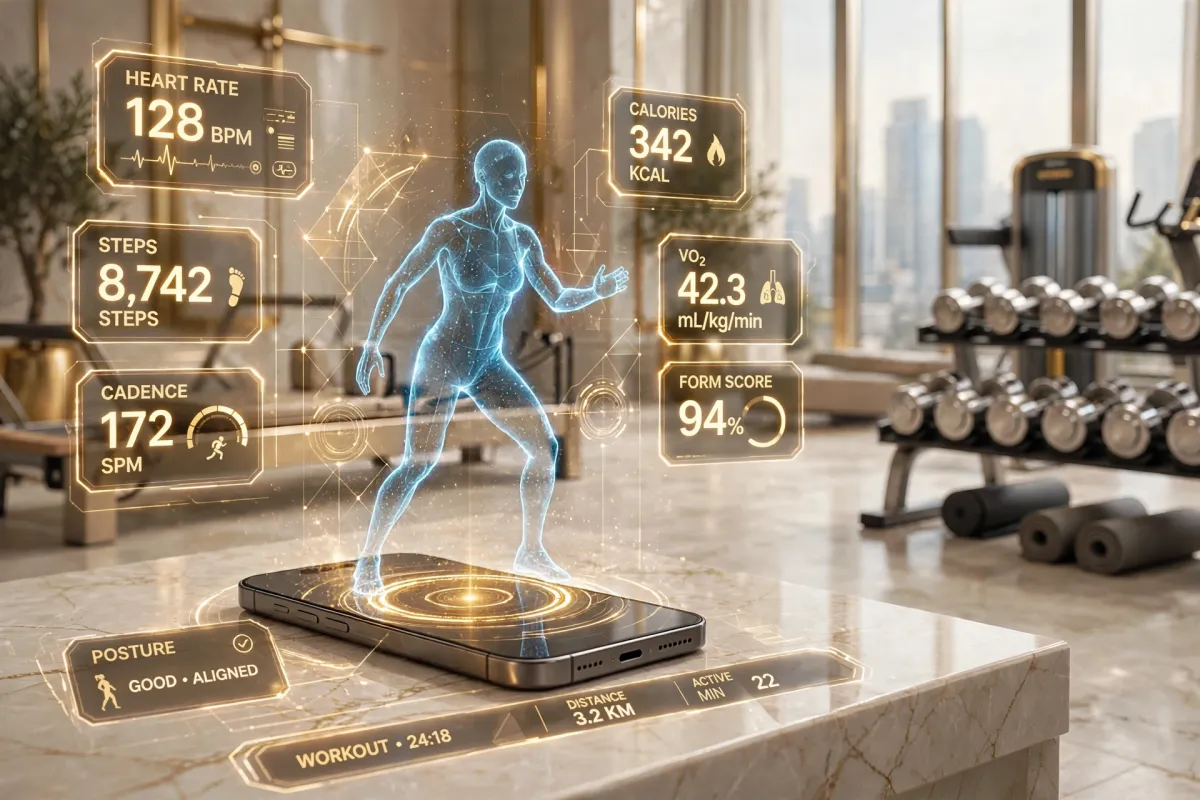
AI fitness coaches are shifting workouts from generic plans toward data-driven training. Apps and wearables can use activity, workout, and physiological data to recommend exercises and adjust training.
However, personalization does not guarantee accuracy or safety. The key question is whether AI coaching improves results compared with conventional digital tools or human expertise.
Quick Answer
AI fitness coaches can help with workout planning, reminders, tracking, and exercise adherence. However, evidence does not support using AI as a complete replacement for qualified fitness or healthcare professionals, especially when injuries or medical conditions are involved.
The 2026 systematic review of large language models in exercise recommendation found substantial variability in AI-generated exercise advice and identified important safety concerns.
Key Takeaways
- AI can personalize workouts using user and wearable data.
- Digital coaching may improve physical activity, but evidence quality varies.
- Wearable measurements are useful but imperfect.
- AI plans can miss important medical or training context.
- Human professionals remain important for complex or higher-risk situations.
What Is an AI Fitness Coach?
An AI fitness coach is software using machine learning, algorithms, or large language models to generate exercise recommendations. Depending on the platform, it may consider goals, training history, equipment, activity levels, and wearable data.
Some systems also analyze movement through cameras or sensors. Personalization depends on data quality and how well the system has been validated.
How AI Fitness Coaching Works
An AI workout app may combine training history, heart rate, activity, sleep estimates, body measurements, and goals. It can then suggest workout frequency, exercises, intensity, or progression.
Wearable-based systems are promising because machine-learning models can process continuous sensor data. A 2025 systematic review found strong performance in many activity-recognition and vital-sign applications, while noting limited external validation and inconsistent long-term testing.
Read the 2025 systematic review of smartwatch-assisted exercise prescription.
Can AI Fitness Coaches Improve Exercise Consistency?
Digital interventions can increase physical activity, although this evidence is broader than AI coaching alone. A 2025 systematic review and meta-analysis of 18 randomized trials found a modest improvement in physical activity from standalone digital behavior-change interventions, with low certainty for that outcome.
See the 2025 systematic review and meta-analysis of digital physical-activity interventions.
An app helping someone exercise more consistently does not prove that its AI-generated plan is better than a well-designed conventional program.
What the Science Says About AI Workout Plans
Research on AI-generated exercise prescriptions remains limited. A 2024 expert evaluation of GPT-4 found generally safety-conscious programs, but recommendations lacked precision for specific medical conditions and training goals.
Read the peer-reviewed GPT-4 exercise-prescription evaluation.
A 2026 systematic review of 24 empirical studies reported substantial limitations in large-language-model exercise recommendations, including safety concerns in clinical populations. The authors concluded that current LLMs should remain assistive tools rather than replacements for human supervision.
Read the 2026 systematic review of AI exercise recommendations.
Are Wearables Accurate Enough for AI Coaching?
Wearables can make coaching more responsive, but their measurements are not perfect. A 2024 living umbrella review found meaningful variation in accuracy across heart rate, sleep, energy expenditure, activity intensity, and other measurements.
Review the evidence on consumer wearable accuracy.
Therefore, an AI system may produce a sophisticated recommendation from imperfect data. More data do not automatically mean better advice.
AI Fitness Coach vs. Personal Trainer
AI is useful for repetitive tasks such as logging workouts, generating options, reminders, and data analysis. A qualified trainer provides observation, professional judgment, contextual decisions, and direct feedback.
AI also cannot reliably perform a complete physical or medical assessment. For complex exercise needs, professional evaluation remains important. The American College of Sports Medicine's preparticipation guidance emphasizes appropriate health evaluation and exercise-safety considerations.
Common Myths and Limitations
- Myth: AI creates a medically personalized program. Most consumer systems do not perform clinical assessments.
- Myth: More wearable data means perfect coaching. Sensors have measurement errors and limitations.
- Myth: AI can replace every personal trainer. Human supervision remains valuable for complex training and safety.
- Myth: AI recommendations are automatically evidence-based. Plausible AI advice can still require expert review.
Who Should Pay Attention?
AI coaching may suit generally healthy adults seeking structured workouts, habit support, or basic progress tracking. Greater caution is appropriate with injuries, significant chronic conditions, pregnancy-related exercise needs, or rehabilitation.
When medical issues affect exercise, discuss an appropriate plan with a qualified healthcare professional before increasing intensity.
For general activity, the World Health Organization recommends 150–300 minutes of moderate aerobic activity or 75–150 minutes of vigorous activity weekly for adults, plus muscle-strengthening activity on at least two days.
Useful Fitness Tool
Want to estimate your daily energy needs before planning workouts? Try the HyaluFlow Metabolic Calculator as a practical starting estimate. It is not a substitute for clinical assessment.
Evidence Strength Summary
- Digital activity support: Moderate evidence, but not specific to AI alone.
- AI-generated exercise prescriptions: Limited and rapidly evolving evidence.
- Wearable data: Useful for monitoring, but accuracy varies.
- Replacing professional coaching: Insufficient evidence with important safety concerns.
Bottom Line
AI fitness coaches can make exercise planning more convenient and personalized, and digital interventions may help some people become more active. Current evidence does not justify treating AI as a replacement for qualified professional coaching.
For healthy adults with straightforward goals, AI can be a useful training companion. For injuries, medical conditions, rehabilitation, or advanced performance, use AI as a support tool rather than the final decision-maker.
AI can organize your training. It cannot reliably replace human judgment.