Reviewed by the HyaluFlow Health Editorial Team | Published: July 4, 2026 | Last Updated: August 27, 2026
AI skin analysis apps can recognize visible features such as acne, pigmentation, wrinkles, and skin texture from photographs. However, they cannot reliably diagnose a medical skin condition from a selfie because diagnosis may require symptoms, medical history, examination, dermoscopy, or biopsy.
- AI recognizes image patterns rather than examining your whole health history.
- Lighting, camera quality, makeup, and image angle can change results.
- AI can be useful for consistent tracking of visible changes over time.
- Medical AI can perform strongly for selected dermatology tasks, but consumer apps vary widely.
- A suspicious or changing skin lesion should be evaluated by a qualified clinician.
How AI Skin Analysis Apps Work
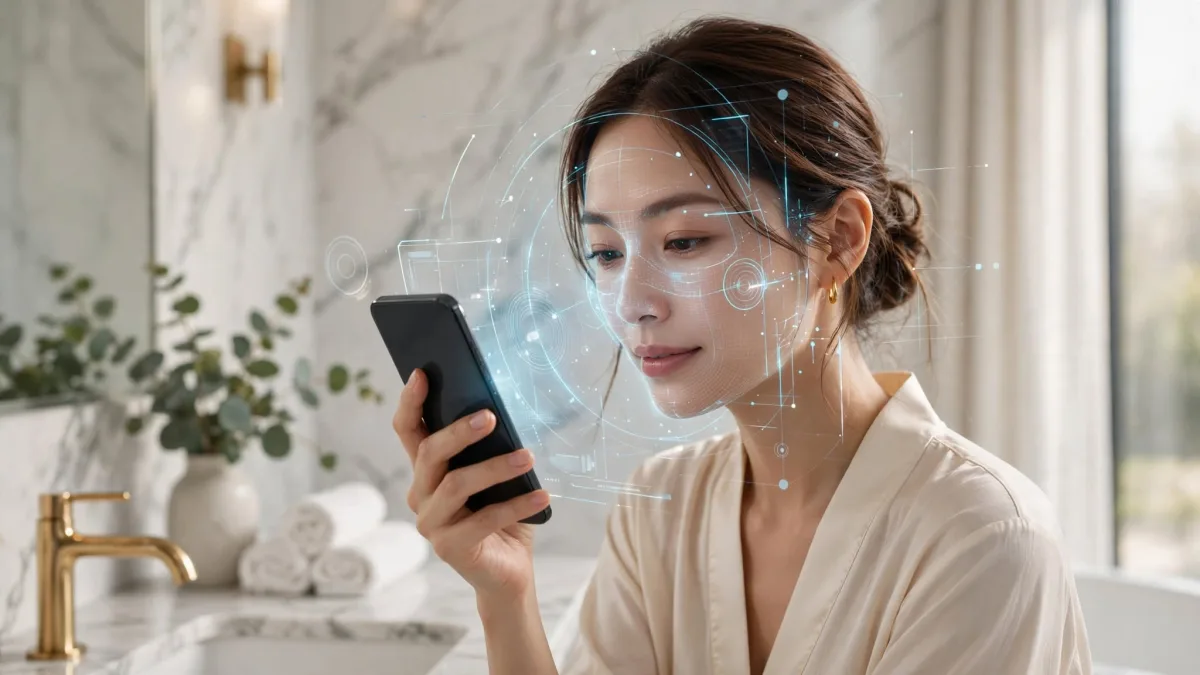
Most systems use machine-learning models trained on labeled photographs. The algorithm learns visual patterns associated with specific features and then estimates which patterns appear in a new image.
That process is fundamentally different from a dermatologist's assessment. A clinician combines the appearance of the skin with symptoms, medical history, medications, examination findings, and sometimes additional testing.
What Can AI Skin Scanners Detect?
AI is most useful when the task is clearly defined and based on standardized images. Depending on the app and its validation, it may estimate:
- Visible wrinkles and fine lines
- Pigmentation and uneven skin tone
- Acne and blemish patterns
- Redness and visible texture
- Pore appearance
- Changes between standardized photographs
However, "can detect" does not mean "can diagnose." A consumer app may identify redness without knowing whether it reflects irritation, rosacea, an allergic reaction, infection, or another condition.
What Does the Research Say?
Medical AI has produced impressive results in selected dermatology tasks. In a landmark Nature study on dermatologist-level skin-cancer classification, a deep-learning system performed comparably with tested dermatologists on specific image-classification tasks.
But performance depends heavily on the task and setting. A Nature Medicine study of human-AI collaboration found that appropriate AI assistance could improve diagnostic performance, while faulty AI could also mislead clinicians.
Smartphone apps are less reassuring. A systematic review in the BMJ found variable and unreliable accuracy among evaluated skin-cancer apps and concluded they could not reliably detect every melanoma or other skin cancer.
Why Your Selfie Can Produce a Wrong Result
AI skin analysis is highly dependent on the image it receives. Poor lighting, shadows, camera processing, filters, makeup, blur, and different camera angles can alter the appearance of skin.
Training data also matter. The World Health Organization's AI guidance emphasizes that systems trained on limited populations may not perform equally well across different settings and groups.
Can AI Diagnose Skin Cancer?
Some specialized medical AI systems can help classify suspicious lesions, but that does not mean a consumer skin scanner can safely rule out cancer.
The research evidence is especially important here. The BMJ review found that smartphone apps could miss skin cancers, meaning a reassuring app result should never override concern about a changing lesion.
See a dermatologist or other qualified clinician if a mole or lesion changes rapidly, bleeds, develops an irregular appearance, persists, or otherwise concerns you.
How to Use AI Skin Analysis Safely
Use AI primarily for education, routine tracking, and observing visible changes. If you want to compare progress, take photos under similar lighting, distance, camera settings, and facial position.
Do not let an app's product recommendations determine treatment for a persistent rash, painful lesion, infection, or unexplained skin change. Medical AI should support appropriate care rather than replace it.
Common Myths About AI Skin Analysis
Myth: AI can replace a dermatologist.
Reality: AI analyzes images, while dermatologists assess the patient and clinical context.
Myth: A high AI score means your skin has a medical problem.
Reality: Cosmetic measurements such as pores or wrinkles are not diagnoses.
Myth: One selfie gives an objective skin diagnosis.
Reality: Image conditions and algorithm design can substantially affect the result.
Who Should Pay Attention?
- People using AI skincare apps to build routines
- Anyone tracking acne, pigmentation, or visible aging
- Users comparing skincare changes over time
- People considering AI-based product recommendations
- Anyone tempted to use an app instead of medical evaluation
Evidence Strength Summary
- AI image recognition: Strong evidence for selected, well-defined dermatology tasks.
- Consumer skin analysis: Accuracy varies by app, image quality, dataset, and intended use.
- AI skin-cancer screening: Promising technology, but smartphone apps should not be relied upon to rule out cancer.
Bottom Line
AI can analyze visible skin patterns surprisingly well, but it cannot turn a selfie into a complete medical diagnosis. Its best role is as a skincare tracking and decision-support tool.
For persistent, painful, suspicious, or rapidly changing skin problems, skip the guesswork and seek professional evaluation. The smartest skincare routine uses AI where it is useful and clinical expertise where it is necessary.