Reviewed by the HyaluFlow Health Editorial Team | Published: June 19, 2026 | Last Updated: September 28, 2026
HyaluFlow's free beauty and wellness tools turn everyday questions about skin, hair, hydration, and fitness into simple, practical starting points.
Use them for education, estimates, and routine planning. They are not substitutes for professional medical diagnosis or treatment.
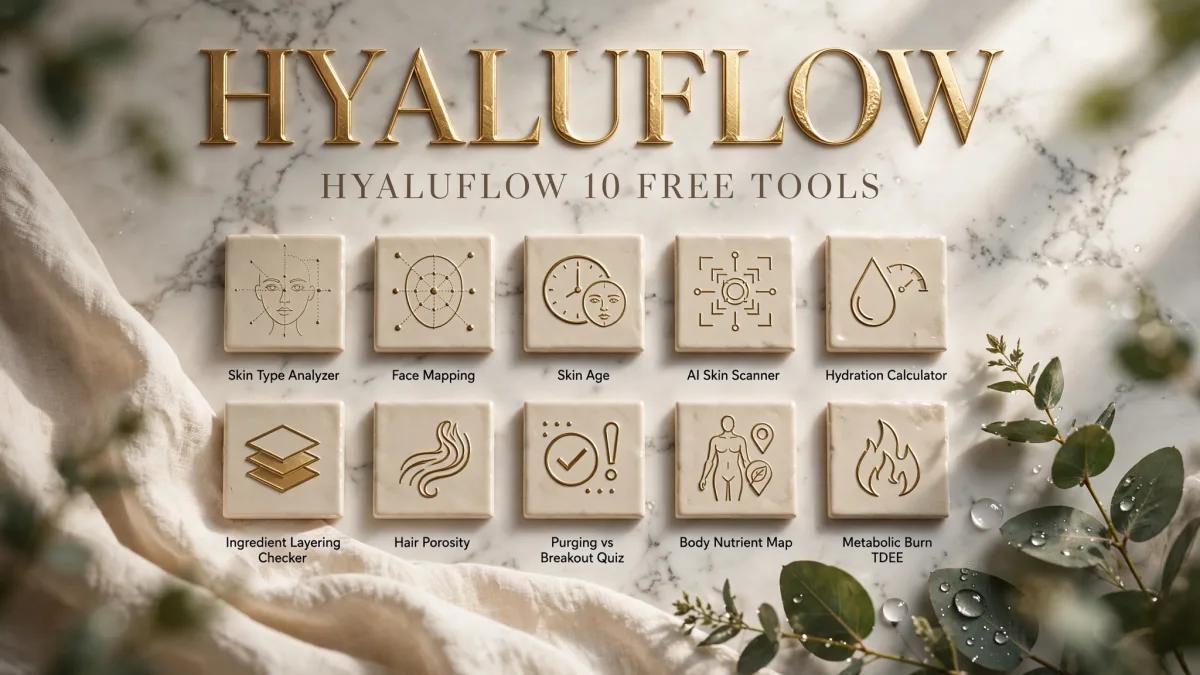
Quick Answer: HyaluFlow offers 10 free tools covering skin type, facial concerns, skin age, AI skin analysis, hydration, skincare ingredients, hair porosity, breakouts, body nutrients, and metabolic estimates. Results are designed for education and self-care planning, not diagnosis.
Key Takeaways
- Choose a tool based on the question you want to answer.
- Calculators provide estimates rather than exact measurements.
- AI and quiz-based results are not medical diagnoses.
- Repeat results can help you notice personal trends.
- Persistent or concerning symptoms need professional assessment.
1. Skin Type Analyzer
The Skin Type Analyzer helps identify whether your skin tends toward dry, oily, combination, normal, or sensitive characteristics. Skin behavior can change with weather, products, age, and other factors.
The American Academy of Dermatology notes that skin types include oily, dry, combination, normal, and sensitive, and recommends choosing skincare according to individual skin needs. American Academy of Dermatology.
2. Interactive Face Mapping
Interactive Face Mapping helps you explore common factors associated with concerns appearing in different facial areas. It is useful for organizing observations, not proving that a specific area has a specific internal cause.
3. Biological Skin Age Test
The Biological Skin Age Test provides an educational estimate based on visible skin characteristics. It should not be interpreted as a clinical measurement of biological aging.
4. AI Skin Care Scanner
The AI Skin Care Scanner analyzes an uploaded or captured facial image to provide estimated skin insights. Lighting, camera quality, angles, and image conditions can affect results.
5. Skin Hydration Calculator
The Hydration Calculator estimates daily fluid needs using personal factors such as body weight and activity. Your actual needs can vary with temperature, exercise, diet, health, and other factors.
The National Academies emphasizes that total water includes fluids and water from food, with needs varying by age, sex, activity, and environment. National Academies: Dietary Reference Intakes for Water.
6. Ingredient Layering Checker
The Ingredient Layering Checker helps you review combinations of common skincare actives such as retinoids, vitamin C, and exfoliating acids. Compatibility does not guarantee that a routine will suit your skin.
The American Academy of Dermatology notes that retinoids can cause irritation and that skincare routines may need to be adjusted according to individual tolerance. American Academy of Dermatology.
7. Hair Porosity Analyzer
The Hair Porosity Analyzer helps you explore how your hair may respond to moisture and products. Hair condition, chemical processing, heat exposure, and physical damage can also influence how hair behaves.
8. Purging vs. Breakout Quiz
The Purging vs. Breakout Quiz helps compare common patterns after introducing certain skincare products. Not every new breakout is skin purging.
9. Body Nutrient Map
The Body Nutrient Map provides an interactive way to explore nutrients associated with different body systems. It is an educational reference and cannot determine whether you have a nutrient deficiency.
10. Metabolic Burn & TDEE Calculator
The Metabolic Burn & TDEE Calculator estimates basal energy needs and total daily energy expenditure for fitness planning. These numbers are mathematical estimates, not direct measurements of metabolism.
What the Science Says
Digital wellness tools can make health information easier to access, but their value depends on the quality of the information, design, and interpretation. The FDA's 2026 General Wellness guidance distinguishes low-risk wellness functions from software intended for medical purposes.
That distinction matters. A calculator, quiz, or AI estimate can support self-care decisions without establishing a medical diagnosis, and unusual or persistent symptoms still warrant appropriate professional evaluation.
Common Myths
- "A calculator is exact." No. Estimates depend on the inputs and calculation method.
- "AI can diagnose my skin." No. Image-based results can be affected by lighting, camera quality, and other variables.
- "One result tells the whole story." No. Context, repeated observations, and professional assessment can matter more.
Who Should Pay Attention?
These tools are useful for adults exploring skincare, haircare, hydration, nutrition, and fitness questions. Anyone with severe, persistent, sudden, or unexplained symptoms should seek qualified medical advice instead of relying on a consumer tool.
Evidence Strength Summary
- Strong: Established clinical and nutrition guidance supports many underlying principles used by these tools.
- Moderate: Calculators can provide useful estimates when their assumptions and inputs are appropriate.
- Important limitation: Consumer wellness tools should not be treated as diagnostic tests.
Bottom Line
These 10 free HyaluFlow tools provide practical starting points for skincare, haircare, hydration, nutrition, and fitness questions.
Use the results as educational guidance rather than medical diagnoses or guaranteed predictions. When something looks persistent, severe, sudden, or unusual, professional evaluation is the smarter next step.