Reviewed by the HyaluFlow Health Editorial Team | Published: June 17, 2026 | Last Updated: August 17, 2026
Inflammation is not automatically harmful. It is a normal immune response, but persistent low-grade inflammation is associated with several chronic health conditions.
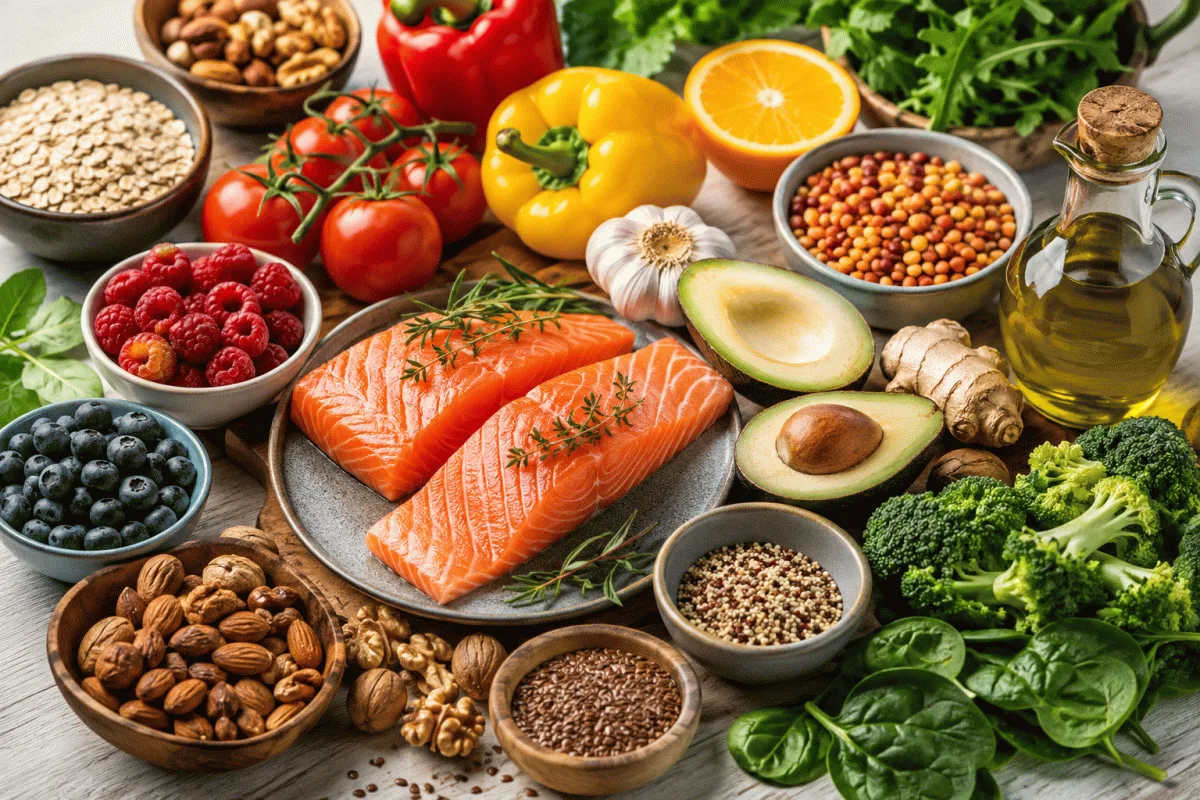
Diet can influence this process, but no single food can “heal” inflammation. The strongest evidence favors overall dietary patterns built around minimally processed foods, vegetables, fruits, whole grains, legumes, fish, nuts, seeds, and healthy fats.
- Mediterranean-style eating has some of the strongest evidence for improving inflammatory markers.
- Fatty fish provides omega-3 fats that can fit well into an anti-inflammatory diet.
- Extra virgin olive oil, nuts, seeds, fruits, vegetables, and whole grains are useful staples.
- One “superfood” cannot cancel out an otherwise poor diet.
- Diet supports health but does not replace medical treatment for inflammatory disease.
What Is Inflammation?
Inflammation is part of the body's defense system. Acute inflammation helps respond to injury or infection, while chronic inflammation can persist when inflammatory activity remains elevated for too long.[1]
Chronic inflammation is associated with conditions including cardiovascular disease and metabolic disorders. It is a biological process, not a single disease with one dietary cure.[1]
What Is an Anti-Inflammatory Diet?
An anti-inflammatory diet is best understood as a dietary pattern rather than a prescription menu. The Mediterranean diet is a leading example because it emphasizes vegetables, fruits, whole grains, beans, nuts, seeds, fish, and olive oil while limiting highly processed foods.[2]
A 2025 meta-analysis of 33 randomized controlled trials involving 3,476 adults found that Mediterranean-style diets significantly reduced some inflammatory biomarkers, including high-sensitivity C-reactive protein, interleukin-6, and interleukin-17.[3]
Best Anti-Inflammatory Foods
1. Fatty Fish
Salmon, sardines, mackerel, and other oily fish provide EPA and DHA omega-3 fatty acids. They fit well into a heart-healthy eating pattern.[2]
2. Colorful Vegetables
Leafy greens, tomatoes, peppers, and broccoli provide fiber, vitamins, minerals, and plant compounds. Eating different colors broadens the nutrient mix.
3. Berries and Other Fruits
Berries, citrus, apples, and other whole fruits provide fiber and polyphenols. Whole fruit is generally preferable to juice because it retains more fiber.
4. Extra Virgin Olive Oil
Extra virgin olive oil provides monounsaturated fat and phenolic compounds. Clinical-trial reviews suggest regular intake may improve some inflammatory biomarkers, although results vary.[4]
5. Nuts and Seeds
Walnuts, almonds, chia seeds, and flaxseeds provide unsaturated fats, fiber, minerals, and other bioactive compounds. They are nutrient-dense, so portions still matter.
6. Whole Grains and Legumes
Oats, barley, brown rice, beans, lentils, and chickpeas provide fiber and complex carbohydrates. Fiber also supports the gut microbiome.
7. Herbs and Spices
Garlic, ginger, turmeric, and cinnamon can add flavor and plant compounds. Their benefits should not be exaggerated into claims that they treat chronic disease.
Foods to Limit
The bigger issue is how often highly processed foods, sugary drinks, refined carbohydrates, processed meats, and foods high in unhealthy fats dominate the diet.
The American Heart Association recommends emphasizing vegetables, fruits, whole grains, beans, fish, nuts, and unsaturated oils while limiting added sugars, sugary beverages, highly processed foods, refined carbohydrates, and saturated fats.[2]
Does an Anti-Inflammatory Diet Help the Skin?
Diet can influence metabolic health and inflammatory pathways, but claims that an anti-inflammatory diet directly cures acne, eczema, or skin aging are too broad. Skin conditions have multiple causes and often require targeted care.
A nutrient-dense diet can still support normal skin function by providing protein, essential fats, vitamins, minerals, and antioxidants. Think of nutrition as part of the foundation, not a replacement for dermatological treatment.
What the Research Says
The evidence is strongest for dietary patterns rather than isolated ingredients. A 2026 umbrella review found that Mediterranean-style diets were associated with improvements in inflammatory markers such as CRP and interleukin-6, although certainty varied across outcomes.[5]
Another 2025 systematic review of 18 randomized trials found anti-inflammatory dietary patterns were associated with modest improvements in hs-CRP, blood pressure, and cholesterol measures.[6]
How to Start an Anti-Inflammatory Diet
- Fill about half your plate with vegetables and fruit.
- Choose whole grains or legumes regularly.
- Eat fish when it fits your diet.
- Use olive oil or other unsaturated oils instead of less healthy fats.
- Choose nuts and seeds as nutrient-dense additions.
- Reduce sugary drinks and heavily processed foods.
- Make changes gradually so the routine is sustainable.
Common Myths
Myth: One Food Can Stop Inflammation
No single food can erase chronic inflammation. The overall dietary pattern matters more than one ingredient.
Myth: All Inflammation Is Bad
Acute inflammation is an important protective response. The concern is persistent or inappropriate inflammation.
Myth: Anti-Inflammatory Foods Replace Medicine
They do not. People with diagnosed inflammatory conditions should follow their clinician's treatment plan.
Bottom Line
The best anti-inflammatory diet is not extreme. It is a Mediterranean-style pattern rich in vegetables, fruits, whole grains, legumes, fish, nuts, seeds, and unsaturated fats.[3,5]
Focus less on “miracle foods” and more on what you eat consistently. That approach is more realistic, better supported by research, and useful for long-term health.
References
- American Heart Association. Inflammation and Heart Disease. Consumer health guidance explaining acute and chronic inflammation and its relationship with cardiovascular health.
- American Heart Association. What Is the Mediterranean Diet? Guidance on vegetables, fruits, whole grains, beans, fish, nuts, seeds, olive oil, added sugars, processed foods, and saturated fats.
- Keshani M, et al. Mediterranean Diet Reduces Inflammation in Adults: A Systematic Review and Meta-analysis of Randomized Controlled Trials. Nutrition Reviews. 2026;84(6):1167–1192. DOI: 10.1093/nutrit/nuaf213.
- Schwingshackl L, et al. Is olive oil good for you? A systematic review and meta-analysis on anti-inflammatory benefits from regular dietary intake. Nutrition. 2019.
- Reyneke GL, Lambert K, Beck EJ. Dietary Patterns Associated With Anti-inflammatory Effects: An Umbrella Review of Systematic Reviews and Meta-analyses. Nutrition Reviews. 2026;84(6):1167–1192. DOI: 10.1093/nutrit/nuaf104.
- Jiang R, Wang T, Han K, et al. Impact of anti-inflammatory diets on cardiovascular disease risk factors: a systematic review and meta-analysis. Frontiers in Nutrition. 2025;12:1549831. DOI: 10.3389/fnut.2025.1549831.