Medically reviewed by the HyaluFlow Health Editorial Team | Published: June 30, 2026 | Last Updated: August 6, 2026
Quick Answer
Smoking generally ages the skin faster than alcohol because it causes long-term collagen destruction, reduces blood flow, and accelerates wrinkle formation. Alcohol mainly contributes to dehydration, inflammation, redness, and puffiness, although heavy, long-term drinking can also lead to premature skin aging.
Key Takeaways
- Smoking causes permanent structural damage by reducing collagen and elastin production.
- Alcohol primarily causes dehydration, inflammation, and damage to small blood vessels.
- Both habits increase oxidative stress and accelerate visible skin aging.
- Quitting smoking and reducing alcohol intake can improve skin health over time.
- Daily sunscreen, antioxidants, and barrier-repair skincare support skin recovery.
Introduction
Premature skin aging is influenced by both genetics and lifestyle. Among the most harmful lifestyle factors, smoking and excessive alcohol consumption consistently rank near the top. Although both can make the skin appear older, they damage the skin through different biological pathways.
Smoking primarily reduces blood flow and exposes the skin to thousands of toxic chemicals that accelerate collagen breakdown. Alcohol, on the other hand, promotes dehydration, increases inflammation, and can weaken the skin barrier over time. Understanding these differences helps explain why each habit produces distinct signs of skin aging.[1,2]
Research shows that long-term tobacco use is strongly associated with deeper wrinkles, reduced skin elasticity, delayed wound healing, and a dull complexion. Chronic heavy alcohol consumption has also been linked to facial redness, broken capillaries, puffiness, and oxidative stress that contributes to premature aging.[3,4]
The encouraging news is that skin can recover to some extent after smoking cessation or reducing alcohol intake. While existing structural damage cannot always be reversed, healthy lifestyle changes and evidence-based skincare can significantly improve the skin's appearance and barrier function.
Quick Fact: Smoking mainly causes permanent collagen damage, while alcohol primarily causes dehydration and inflammation. Both accelerate visible skin aging through oxidative stress.
How Alcohol and Smoking Age the Skin Differently
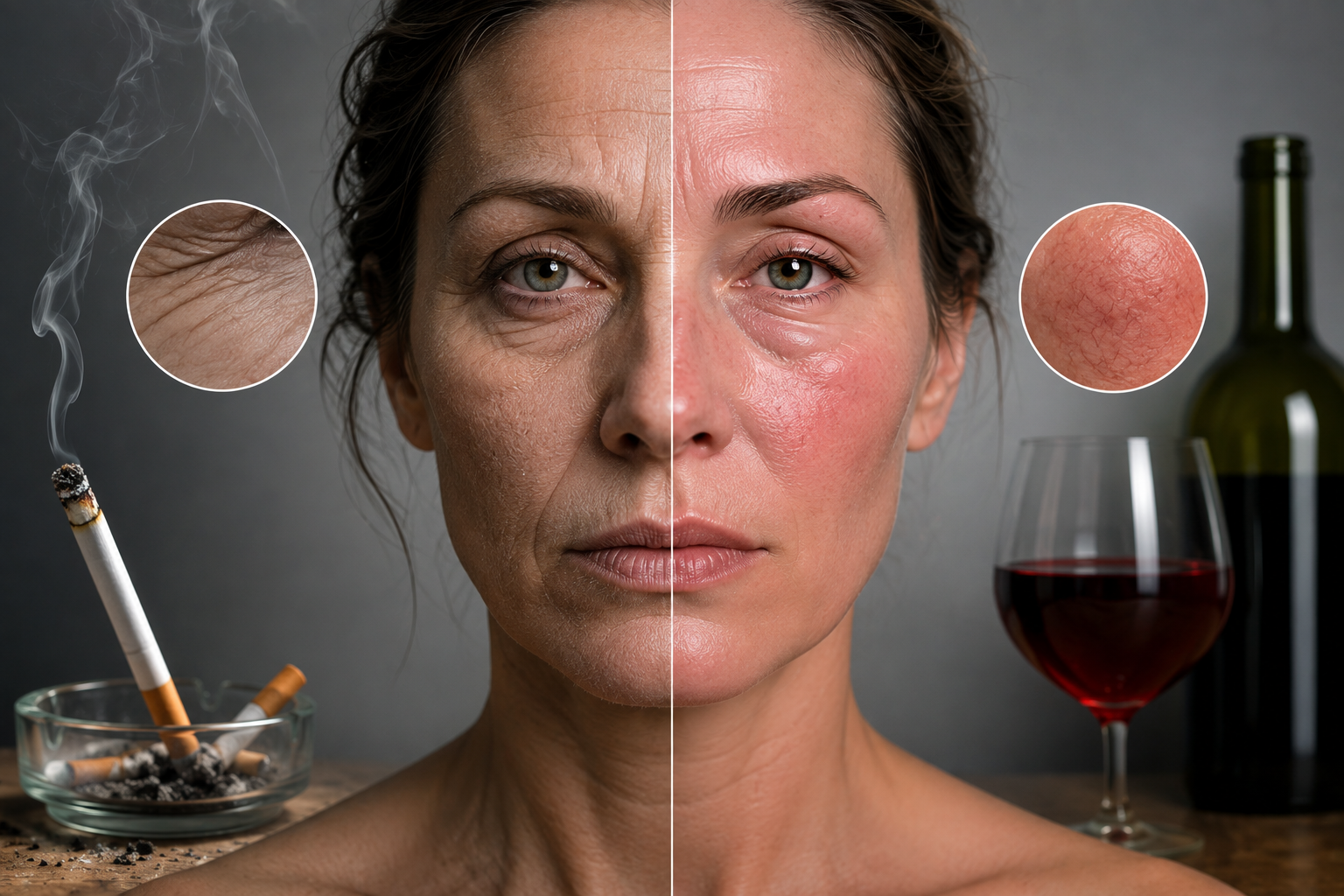
Although both habits contribute to premature aging, they affect different parts of the skin's structure. Smoking primarily damages collagen, elastin, and blood circulation, while alcohol disrupts hydration, blood vessels, and inflammatory pathways.
Because these mechanisms differ, people who smoke often develop deeper wrinkles and firmer signs of structural aging. Heavy alcohol consumption is more commonly associated with redness, puffiness, dullness, and dehydrated-looking skin.
| Factor | Alcohol | Smoking |
|---|---|---|
| Main Effect | Dehydration and inflammation | Collagen destruction and oxygen deprivation |
| Blood Vessels | Widens blood vessels | Narrows blood vessels |
| Hydration | Significantly reduces skin hydration | Minor direct effect |
| Collagen Damage | Moderate with chronic use | Severe and well documented |
| Visible Changes | Puffiness, redness, dullness | Deep wrinkles, sagging, gray complexion |
| Long-Term Impact | Barrier damage and vascular changes | Accelerated structural skin aging |
Alcohol and Skin Aging
Alcohol affects nearly every organ in the body, including the skin. While an occasional drink is unlikely to cause lasting skin damage in healthy adults, frequent or heavy alcohol consumption can gradually accelerate visible signs of aging.
One of alcohol's earliest effects is dehydration. Alcohol suppresses the release of vasopressin, also known as antidiuretic hormone (ADH), causing the body to lose more water through urine. Reduced hydration affects the skin by making it appear less plump, less radiant, and more prone to fine lines.[5]
Alcohol also increases oxidative stress and inflammation, generating free radicals that damage collagen and elastin fibers. Over time, repeated inflammatory episodes may contribute to reduced skin firmness and slower repair processes.[6]
How Alcohol Damages the Skin
Alcohol affects the skin through several biological mechanisms. While occasional drinking is unlikely to cause lasting skin damage in most healthy adults, regular or excessive alcohol consumption can gradually weaken the skin barrier, increase inflammation, and accelerate visible signs of aging.
Dehydration Reduces Skin Plumpness
Alcohol acts as a diuretic by suppressing the release of antidiuretic hormone (ADH), also called vasopressin. This causes the body to lose more water through urine, increasing the risk of dehydration. As skin cells lose water, the skin may appear dull, tight, and less elastic, while fine lines become more noticeable.[5,7]
Inflammation Increases Oxidative Stress
Alcohol metabolism generates reactive oxygen species (ROS), commonly known as free radicals. These unstable molecules damage proteins, lipids, and DNA while increasing inflammation throughout the body. Chronic oxidative stress contributes to collagen degradation and may accelerate premature skin aging.[6,8]
Blood Vessel Changes Cause Facial Redness
Alcohol temporarily widens blood vessels through a process called vasodilation. This often causes facial flushing shortly after drinking. With repeated heavy alcohol use, small facial blood vessels may remain permanently enlarged, contributing to persistent redness and visible broken capillaries, particularly around the nose and cheeks.[9]
Weaker Skin Barrier
Long-term alcohol consumption may impair the skin's natural barrier, allowing more water to escape through transepidermal water loss (TEWL). A weakened barrier leaves the skin more vulnerable to dryness, irritation, and environmental damage.
Clinical Insight: Alcohol mainly accelerates skin aging by increasing dehydration, inflammation, oxidative stress, and damage to small blood vessels rather than directly destroying collagen.
How Smoking Damages the Skin
Smoking is considered one of the strongest preventable risk factors for premature skin aging. Cigarette smoke contains more than 7,000 chemicals, many of which generate oxidative stress and directly damage the skin's structural proteins.[10]
Reduced Blood Flow Starves the Skin
Nicotine causes vasoconstriction, meaning it narrows blood vessels supplying the skin. Reduced circulation limits the delivery of oxygen and nutrients that skin cells need for repair, collagen production, and normal renewal. Over time, this contributes to a pale or gray complexion and slower wound healing.[10,11]
Collagen and Elastin Break Down Faster
Smoking activates enzymes called matrix metalloproteinases (MMPs), which break down collagen and elastin fibers faster than the body can replace them. This loss of structural support leads to sagging skin, reduced firmness, and deeper wrinkles.[11,12]
Free Radicals Damage Skin Cells
Tobacco smoke produces large amounts of free radicals that overwhelm the skin's antioxidant defenses. These molecules damage cell membranes, collagen, elastin, and DNA, accelerating visible aging and reducing the skin's ability to repair itself.
Repeated Facial Movements
Repeated lip puckering while smoking can contribute to vertical lines around the mouth, often called smoker's lines. Although facial expressions alone do not cause wrinkles, repetitive movements combined with collagen loss can make these lines more pronounced.
Smoking vs. Alcohol: Biological Differences
| Skin Aging Mechanism | Alcohol | Smoking |
|---|---|---|
| Skin dehydration | High impact | Low to moderate impact |
| Oxidative stress | High | Very high |
| Collagen breakdown | Moderate | Very high |
| Reduced blood flow | No | Severe |
| Persistent facial redness | Common with chronic heavy use | Less common |
| Deep wrinkle formation | Moderate | Strong clinical association |
| Delayed wound healing | Possible | Strong clinical association |
Which Habit Ages the Skin Faster?
Current evidence suggests that smoking generally causes greater long-term structural damage to the skin than alcohol. Smoking continuously reduces oxygen delivery while accelerating collagen and elastin breakdown, leading to deeper wrinkles, thinner skin, and reduced elasticity.
Alcohol, although harmful, primarily causes dehydration, inflammation, and vascular changes. Some of its visible effects—such as dullness and puffiness—may improve after reducing alcohol intake and restoring hydration. However, chronic heavy drinking can eventually cause lasting damage to blood vessels and contribute to collagen loss.
When smoking and excessive alcohol consumption occur together, their harmful effects are likely to compound. Increased oxidative stress, impaired skin repair, and chronic inflammation can accelerate premature skin aging more than either habit alone.[3,6,10]
Science-Backed Skin Recovery Protocol
Although no skincare routine can completely reverse years of damage from smoking or heavy alcohol use, research shows that quitting smoking, reducing alcohol intake, protecting the skin from ultraviolet (UV) radiation, and following a consistent skincare routine can significantly improve skin hydration, barrier function, and overall appearance over time.[1,3,5]
Step 1: Restore Hydration and Repair the Skin Barrier
Alcohol-related skin aging often begins with dehydration and a weakened skin barrier. Replenishing water and repairing the barrier helps improve skin texture, reduce tightness, and minimize the appearance of dehydration lines.
After cleansing, apply a hydrating serum to slightly damp skin. Follow with a moisturizer that strengthens the skin barrier and reduces transepidermal water loss (TEWL).
Look for products containing:
- Hyaluronic acid
- Glycerin
- Ceramides
- Squalane
- Panthenol
- Niacinamide
Clinical studies show that combining humectants with barrier-repair ingredients provides greater improvements in skin hydration than using either approach alone.[13]
Step 2: Protect Collagen with Antioxidants
Both alcohol and cigarette smoke generate free radicals that contribute to oxidative stress. Antioxidants help neutralize these unstable molecules before they damage collagen, elastin, and skin cells.
Evidence-supported antioxidants include:
- Vitamin C
- Vitamin E
- Ferulic acid
- Coenzyme Q10
- Green tea polyphenols
- Resveratrol
Morning antioxidant serums paired with sunscreen provide additional protection against environmental oxidative damage while supporting collagen production.[14]
Step 3: Use Daily Broad-Spectrum Sunscreen
Smoking and alcohol increase oxidative stress, while ultraviolet radiation further accelerates collagen degradation. Daily sunscreen therefore becomes even more important for people recovering from lifestyle-related skin damage.
Use a broad-spectrum sunscreen with SPF 30 or higher every morning and reapply according to product directions when spending extended periods outdoors.
Step 4: Support Skin Recovery Through Nutrition
Healthy nutrition provides the building blocks needed for collagen production and skin repair. A balanced diet rich in antioxidants, vitamins, minerals, and healthy fats supports overall skin health.
Focus on foods rich in:
- Vitamin C for collagen synthesis.
- Vitamin A for healthy skin renewal.
- Vitamin E to help protect against oxidative stress.
- Omega-3 fatty acids to support the skin barrier.
- Protein to support tissue repair.
- Colorful fruits and vegetables containing natural antioxidants.
Limiting highly processed foods and excessive sugar may also help reduce inflammation associated with premature skin aging.
Step 5: Quit Smoking and Reduce Alcohol Intake
The most effective anti-aging strategy is removing the source of ongoing damage. Research shows that smoking cessation improves blood circulation and supports healthier skin function over time. Likewise, reducing heavy alcohol consumption helps improve hydration, decrease inflammation, and reduce facial redness in many individuals.[10,15]
Healthy Habit: No skincare product can fully compensate for continued smoking or heavy alcohol use. Lifestyle changes provide the greatest long-term benefits for healthier, younger-looking skin.
Recommended Morning Routine
- Cleanse with a gentle, non-stripping cleanser.
- Apply a vitamin C antioxidant serum.
- Use a hydrating serum containing hyaluronic acid.
- Apply a ceramide-rich moisturizer.
- Finish with broad-spectrum SPF 30 or higher.
Recommended Evening Routine
- Remove sunscreen and cleanse gently.
- Apply a hydrating serum.
- Use a retinoid if appropriate and well tolerated.
- Seal with a nourishing barrier-repair moisturizer.
Best Ingredients for Skin Recovery
| Ingredient | Main Benefit | Evidence Strength |
|---|---|---|
| Vitamin C | Supports collagen production and antioxidant protection | Strong |
| Hyaluronic acid | Improves skin hydration | Strong |
| Ceramides | Repairs the skin barrier | Strong |
| Niacinamide | Strengthens barrier function and improves skin texture | Strong |
| Retinoids | Promote collagen production and cell turnover | Strong |
| Ferulic acid | Enhances antioxidant protection | Moderate to Strong |
| Green tea extract | Helps reduce oxidative stress | Moderate |
Clinical evidence indicates that combining healthy lifestyle changes with evidence-based skincare produces greater improvements in skin appearance than topical products alone. Consistency is essential, as collagen remodeling and skin barrier recovery typically occur gradually over several weeks to months rather than overnight.[1,12,13]
What the Science Says
Research consistently shows that both smoking and excessive alcohol consumption accelerate skin aging, but smoking has the stronger association with permanent structural damage. Cigarette smoke contains thousands of chemicals that increase oxidative stress, activate matrix metalloproteinases (MMPs), reduce collagen synthesis, and impair blood flow. These changes contribute to deeper wrinkles, reduced skin elasticity, delayed wound healing, and a dull complexion.[10,11,12]
Alcohol affects the skin through different mechanisms. It promotes dehydration by suppressing antidiuretic hormone (ADH), increases oxidative stress, and triggers inflammation. Chronic heavy alcohol consumption has also been linked to facial flushing, persistent redness, enlarged blood vessels, and impaired skin barrier function.[5,6,9]
Studies suggest that quitting smoking can gradually improve skin oxygenation and reduce ongoing collagen damage, while reducing alcohol intake may improve hydration, decrease facial puffiness, and lessen inflammatory skin changes. Although some structural damage cannot be fully reversed, healthy lifestyle changes can significantly improve overall skin health.[3,15]
Evidence Summary: Current clinical evidence indicates that smoking causes greater long-term structural skin aging than alcohol, while alcohol mainly contributes to dehydration, inflammation, and vascular damage.
Common Myths About Alcohol, Smoking, and Skin Aging
Myth: Alcohol ages the skin more than smoking.
Fact: Current evidence suggests smoking has a stronger impact on permanent wrinkle formation and collagen loss, although chronic heavy alcohol use also contributes to premature skin aging.
Myth: Only heavy smokers develop premature wrinkles.
Fact: Research indicates that wrinkle severity generally increases with smoking duration and intensity, but even lighter smoking exposes the skin to oxidative stress and reduced blood flow.
Myth: Drinking extra water completely reverses alcohol-related skin damage.
Fact: Rehydration improves temporary dehydration, but it cannot fully reverse chronic inflammation, broken capillaries, or collagen damage caused by long-term excessive alcohol consumption.
Myth: Expensive skincare can completely repair smoking damage.
Fact: Evidence-based skincare supports skin recovery, but no topical product can fully undo years of collagen destruction while smoking continues.
Myth: Quitting smoking has no effect because the damage is already done.
Fact: Smoking cessation reduces ongoing collagen breakdown, improves circulation, and allows the skin to begin recovering, although existing deep wrinkles may remain.
Who Should Pay Attention?
Anyone can experience lifestyle-related skin aging, but certain individuals have a higher risk of developing premature wrinkles and reduced skin quality.
- Current smokers and long-term former smokers.
- People who regularly consume large amounts of alcohol.
- Adults over 30 experiencing early signs of skin aging.
- Individuals with significant sun exposure.
- People with poor dietary habits or chronic sleep deprivation.
- Anyone noticing persistent dullness, deepening wrinkles, facial redness, or slower wound healing.
If you experience persistent facial redness, non-healing skin lesions, rapidly changing pigmentation, or unexplained skin changes, consult a board-certified dermatologist for proper evaluation.
Bottom Line
Both alcohol and smoking contribute to premature skin aging, but they do so through different biological pathways. Smoking primarily causes permanent collagen and elastin damage by reducing blood flow and increasing oxidative stress, making it the stronger contributor to deep wrinkles and loss of skin elasticity.
Alcohol mainly accelerates skin aging by causing dehydration, inflammation, and damage to small blood vessels. Although some of its early effects are reversible with healthier habits, chronic heavy drinking can still contribute to long-term skin damage.
The most effective strategy for healthier, younger-looking skin is to avoid smoking, limit alcohol consumption, protect your skin from ultraviolet radiation, maintain a nutrient-rich diet, and follow a consistent skincare routine that supports hydration, collagen production, and skin barrier repair.
Evidence Strength Summary
| Recommendation | Evidence |
|---|---|
| Stop smoking to reduce premature skin aging | Strong |
| Limit excessive alcohol consumption | Strong |
| Use daily broad-spectrum sunscreen | Strong |
| Apply antioxidants such as vitamin C | Strong |
| Repair the skin barrier with ceramides | Strong |
| Maintain adequate hydration and balanced nutrition | Moderate |
| Use retinoids for collagen support when appropriate | Strong |
Medical References
- American Academy of Dermatology Association. Premature skin aging: Causes and prevention.
- National Institute on Aging. Skin care and aging.
- Farage MA, Miller KW, Elsner P, Maibach HI. Characteristics of the aging skin. Advances in Wound Care.
- Morita A. Tobacco smoke causes premature skin aging. Journal of Dermatological Science.
- Lieber CS. Relationships between nutrition, alcohol use, and liver disease. Alcohol Research & Health.
- Poljšak B, Dahmane R. Free radicals and extrinsic skin aging. Dermatology Research and Practice.
- Yaar M, Gilchrest BA. Photoaging: Mechanism, prevention, and therapy. British Journal of Dermatology.
- Kennedy C, Bastiaens MT, Bajdik CD, et al. Effect of smoking and sun on skin aging. Journal of Investigative Dermatology.
- Draelos ZD. The science behind moisturizers. Clinics in Dermatology.
- U.S. Centers for Disease Control and Prevention (CDC). Health effects of cigarette smoking.