- Collagen production starts declining naturally from your mid-20s.
- Vitamin C is essential because your body cannot make collagen without it.
- Protein, zinc, copper, and antioxidants help build and protect collagen fibers.
- No single food prevents wrinkles, but an overall healthy diet can support firmer, healthier-looking skin.
- Daily sunscreen, quality sleep, exercise, and avoiding smoking are just as important as nutrition.
Introduction
Most people start worrying about collagen after they notice wrinkles. By then, collagen has already been declining for years. Starting in your mid-20s, your body naturally produces less collagen each year, while everyday habits like sun exposure, smoking, excess sugar, chronic stress, and poor nutrition accelerate its breakdown. The encouraging news? Some of the most effective ways to support healthy collagen aren't found in expensive creams or trendy supplements—they're already in your kitchen.
Social media often promises that collagen powders or luxury skincare products are the secret to youthful skin. While some collagen peptide supplements have shown benefits in clinical studies, your body still needs the right vitamins, minerals, amino acids, and antioxidants to build collagen efficiently. Without those nutrients, collagen production simply cannot function at its best.[2–5]
Here's what current medical research says about the foods that naturally support collagen production and how they fit into a healthy skincare routine.
Why This Matters
Collagen is the most abundant protein in the human body, accounting for nearly one-third of your total protein. It provides structure and strength to your skin, bones, muscles, tendons, ligaments, blood vessels, and other connective tissues. In the skin, collagen works alongside elastin and hyaluronic acid to maintain firmness, elasticity, hydration, and resilience.[1,2]
Beginning around age 25, collagen production gradually slows. At the same time, ultraviolet (UV) radiation, smoking, air pollution, chronic inflammation, oxidative stress, and excess sugar accelerate collagen degradation through enzymes known as matrix metalloproteinases (MMPs). The result is thinner skin, fine lines, wrinkles, reduced elasticity, and slower wound healing.[3,5,6]
Although aging is inevitable, research consistently shows that a nutrient-rich diet combined with healthy lifestyle habits can help support your body's natural collagen production and reduce premature collagen breakdown.[2–6]
Quick Facts: Nutrients Your Body Needs to Build Collagen
| Nutrient | Why It Matters | Best Food Sources |
|---|---|---|
| Vitamin C | Essential for collagen synthesis | Citrus fruits, strawberries, bell peppers |
| Protein | Supplies glycine, proline, and lysine | Eggs, fish, poultry, beans |
| Zinc | Supports tissue repair and collagen formation | Pumpkin seeds, beans, nuts |
| Copper | Helps strengthen collagen fibers | Seeds, legumes, nuts |
| Omega-3 Fatty Acids | Help reduce inflammation that damages collagen | Salmon, sardines, mackerel |
| Antioxidants | Protect collagen from oxidative stress | Berries, tomatoes, leafy greens |
What the Science Says
Scientists now understand that collagen production depends on much more than simply consuming collagen itself. Fibroblasts—the cells responsible for producing collagen in the skin—require vitamin C, amino acids, zinc, copper, and sufficient protein to build new collagen fibers. Meanwhile, antioxidants help defend existing collagen from oxidative damage caused by UV exposure, pollution, and normal metabolism.[2–7]
Multiple systematic reviews have concluded that while collagen peptide supplements may improve skin hydration and elasticity in some individuals, maintaining an overall nutrient-rich dietary pattern remains the foundation of long-term skin health.[8,9]
Evidence-Based Insight:
Current dermatology research supports focusing on an overall healthy dietary pattern rather than relying on a single "superfood" or supplement. Consistently eating foods rich in vitamin C, protein, healthy fats, zinc, copper, and antioxidants provides the strongest nutritional foundation for collagen production and healthier skin.[2–9]
The 12 Best Foods That Naturally Boost Collagen
1. Citrus Fruits
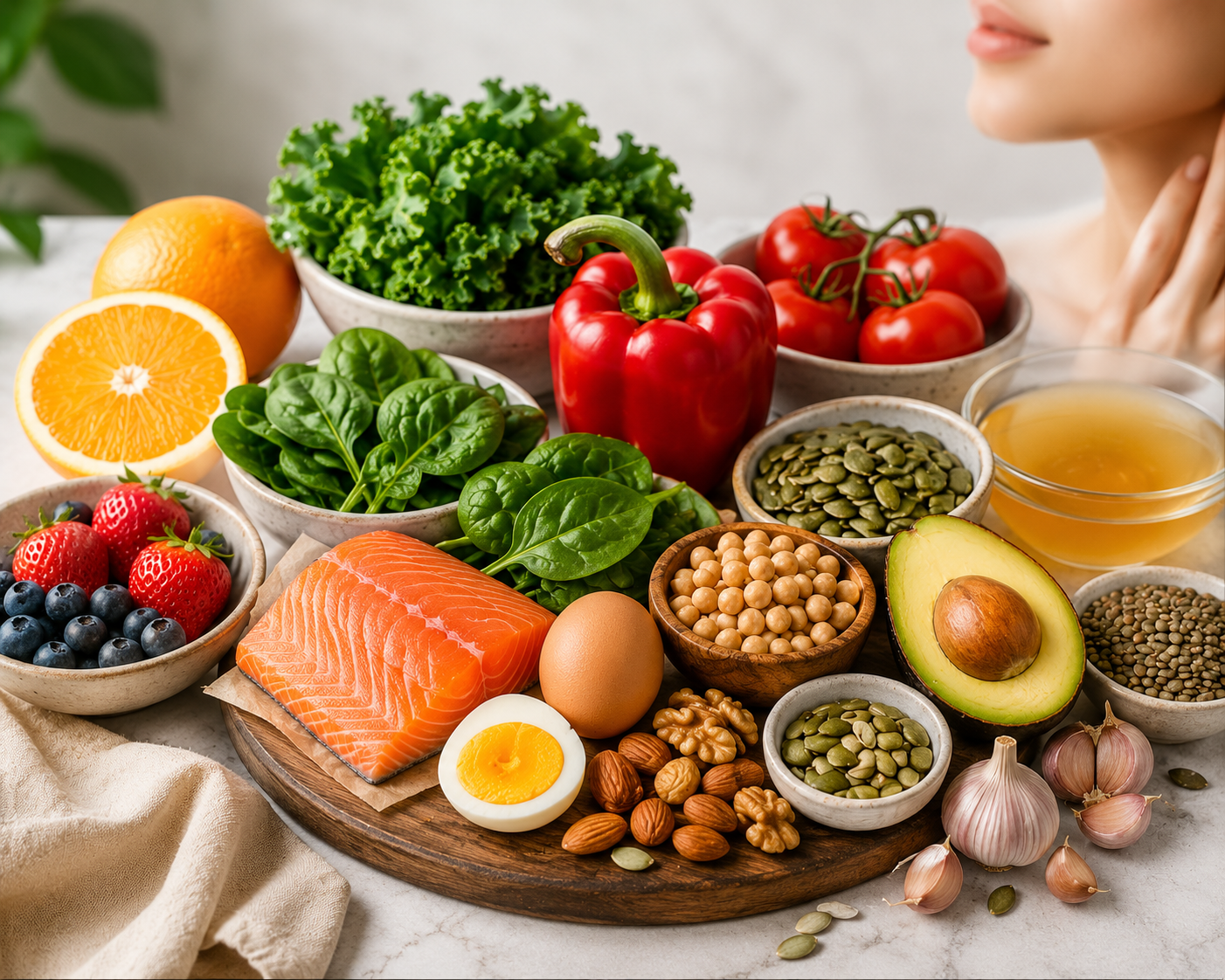
Oranges, lemons, grapefruits, limes, and mandarins are among the richest natural sources of vitamin C. This vitamin is indispensable for collagen synthesis because it activates enzymes that stabilize and strengthen newly formed collagen fibers. Without adequate vitamin C, collagen production slows dramatically, and wound healing becomes impaired.[2,4]
- Supports natural collagen synthesis.
- Protects collagen from free-radical damage.
- Promotes healthier, brighter-looking skin.
2. Berries
Blueberries, strawberries, raspberries, and blackberries supply vitamin C along with anthocyanins and other polyphenols that help protect collagen from oxidative stress. Research suggests these antioxidants may help reduce environmental damage that contributes to premature skin aging.[4,7]
- High in vitamin C.
- Rich in antioxidant polyphenols.
- Helps protect existing collagen.
3. Leafy Green Vegetables
Spinach, kale, Swiss chard, and similar vegetables are packed with chlorophyll, carotenoids, vitamins A and C, and antioxidants. Experimental studies suggest chlorophyll may stimulate procollagen production, while antioxidants help reduce oxidative stress that accelerates collagen degradation.[5,7]
- Supports collagen maintenance.
- Rich in skin-friendly antioxidants.
- Promotes overall skin health.
4. Fatty Fish
Salmon, sardines, mackerel, trout, and herring are rich in high-quality protein and omega-3 fatty acids. While omega-3s don't directly produce collagen, they help reduce chronic inflammation and support the skin's protective barrier, creating a healthier environment for collagen maintenance. The protein in fish also supplies amino acids such as glycine and proline that your body uses to build collagen.[3,6,8]
- Provides complete protein for collagen synthesis.
- Rich in anti-inflammatory omega-3 fatty acids.
- Supports skin hydration and elasticity.
5. Eggs
Eggs are an excellent source of complete protein and contain amino acids including glycine, proline, and lysine, which serve as building blocks for collagen. Egg yolks also provide biotin, selenium, lutein, and vitamin D, nutrients that contribute to overall skin health and repair. Although eggs don't contain large amounts of collagen, they provide many of the raw materials needed to produce it.[2,3]
- Supplies collagen-building amino acids.
- Provides complete, highly bioavailable protein.
- Supports healthy skin repair.
6. Bone Broth
Bone broth contains collagen, gelatin, glycine, proline, and minerals released during slow cooking. While collagen peptides have demonstrated benefits for skin hydration and elasticity in several clinical trials, evidence specifically supporting bone broth remains limited because nutrient concentrations vary considerably depending on preparation. Think of bone broth as one useful addition to a balanced diet rather than a miracle anti-aging food.[8,9]
- Contains naturally occurring collagen peptides.
- Provides amino acids used in connective tissues.
- Best combined with a nutrient-rich diet.
7. Tomatoes
Tomatoes are one of the richest dietary sources of lycopene, a powerful antioxidant that helps protect the skin from UV-induced oxidative stress. Studies suggest lycopene may help reduce collagen degradation caused by sun exposure, making tomatoes an excellent addition to a skin-friendly diet. However, they should never replace daily sunscreen.[4,6]
- Rich in lycopene.
- Helps defend collagen against UV damage.
- Supports healthier skin aging.
8. Bell Peppers
Red, yellow, and orange bell peppers contain exceptionally high amounts of vitamin C—often more than oranges per serving. They also provide carotenoids that support healthy skin and help defend collagen against oxidative damage. Regularly including bell peppers in your meals is one of the easiest ways to increase vitamin C intake naturally.[2,4]
- Excellent source of vitamin C.
- Supports collagen production.
- Provides antioxidant carotenoids.
Comparison: Which Foods Support Collagen the Most?
| Food | Key Nutrient | Primary Benefit |
|---|---|---|
| Citrus Fruits | Vitamin C | Essential for collagen synthesis |
| Berries | Polyphenols | Protect existing collagen |
| Leafy Greens | Vitamin A, C, chlorophyll | Support collagen maintenance |
| Fatty Fish | Protein, Omega-3 | Supports skin barrier and reduces inflammation |
| Eggs | Complete protein | Provides collagen-building amino acids |
| Bone Broth | Collagen peptides | May support skin hydration |
| Tomatoes | Lycopene | Protects collagen from UV damage |
| Bell Peppers | Vitamin C | Boosts collagen production |
Did You Know?
Healthy collagen isn't built by one nutrient alone.
Your body requires vitamin C to assemble collagen fibers, amino acids from protein to build them, zinc and copper to strengthen them, and antioxidants to protect them from damage. That's why eating a variety of whole foods consistently is far more effective than relying on a single "superfood" or supplement.[2–9]
9. Nuts and Seeds
Almonds, walnuts, sunflower seeds, pumpkin seeds, chia seeds, flaxseeds, and sesame seeds are packed with nutrients that help maintain healthy skin. Vitamin E acts as an antioxidant that protects collagen from free radical damage, while zinc and copper support collagen formation, tissue repair, and normal wound healing. Regularly including a variety of nuts and seeds in your diet may help preserve skin elasticity over time.[2,4,6]
- Rich in vitamin E, zinc, and copper.
- Help protect collagen from oxidative stress.
- Support healthy skin barrier function.
10. Garlic
Garlic contains sulfur-containing compounds that play a role in collagen production and connective tissue maintenance. Sulfur is required for forming and stabilizing collagen fibers, while garlic also provides antioxidants that may help reduce oxidative stress. Although garlic alone won't dramatically increase collagen, it can contribute to an overall collagen-supporting diet.[3,4]
- Provides sulfur for collagen formation.
- Contains protective antioxidants.
- Supports overall connective tissue health.
11. Beans and Legumes
Beans, lentils, chickpeas, and peas are excellent plant-based sources of protein, zinc, copper, and amino acids involved in collagen synthesis. They also contain polyphenols and fiber that support overall metabolic health. For people following vegetarian or vegan diets, legumes are among the most important foods for supporting the nutrients required for collagen production.[2,6]
- Excellent plant-based protein source.
- Rich in zinc and copper.
- Supports collagen production naturally.
12. Avocados
Avocados provide heart-healthy monounsaturated fats, vitamin E, vitamin C, and carotenoids that help protect skin from oxidative damage. Their healthy fat content also supports the skin barrier, helping maintain hydration and softness. While avocados don't directly increase collagen, they create an environment that helps preserve existing collagen and supports healthier-looking skin.[4,7]
- Supports skin hydration.
- Provides antioxidant protection.
- Helps maintain healthy skin elasticity.
Benefits of Eating Collagen-Supporting Foods
- Supports your body's natural collagen production.
- May improve skin elasticity and firmness over time.
- Helps protect collagen from oxidative stress and UV-related damage.
- Supports normal wound healing and connective tissue repair.
- Provides nutrients important for healthy hair and nails.
- May support joint, bone, tendon, and ligament health.
- Contributes to healthier aging through improved overall nutrition.
Risks and Limitations
Although these foods provide nutrients involved in collagen synthesis, it's important to keep expectations realistic.
- No food can stop or reverse the natural aging process.
- Most evidence supports an overall healthy dietary pattern rather than one specific food.
- Results develop gradually over months, not days or weeks.
- UV exposure, smoking, chronic stress, and poor sleep can accelerate collagen breakdown despite a healthy diet.
- Individual genetics, hormonal changes, and medical conditions also influence collagen production.
- Collagen-supporting foods work best alongside sunscreen, regular exercise, adequate sleep, and proper skincare.
Common Myths About Collagen Foods
Myth 1: One superfood can dramatically increase collagen.
Fact: Your body requires multiple nutrients working together. A balanced diet consistently outperforms relying on any single "miracle" food.[2,3]
Myth 2: Eating collagen automatically becomes skin collagen.
Fact: Dietary collagen is broken down into amino acids during digestion. Your body then decides where those amino acids are needed, including skin, muscles, bones, or other tissues.[8,9]
Myth 3: Collagen supplements replace healthy eating.
Fact: Supplements may offer benefits for some people, but they cannot replace vitamin C, protein, minerals, healthy fats, and antioxidants obtained from a balanced diet.[8,9]
Myth 4: Only older adults need collagen-supporting foods.
Fact: Natural collagen production begins declining in your mid-20s, making healthy nutrition beneficial throughout adulthood.[1,6]
Who Should Pay Attention?
Everyone loses collagen with age, but certain groups may benefit the most from prioritizing collagen-supporting foods and healthy lifestyle habits:
- Adults over 25: Natural collagen production begins to decline gradually in the mid-20s.
- People with frequent sun exposure: Ultraviolet (UV) radiation is one of the leading causes of premature collagen breakdown and photoaging.
- Smokers and former smokers: Smoking increases oxidative stress, reduces blood flow to the skin, and accelerates collagen degradation.
- Postmenopausal women: Declining estrogen levels are associated with faster collagen loss, reduced skin thickness, and decreased elasticity.
- People recovering from wounds or surgery: Adequate protein, vitamin C, zinc, and copper are essential for normal collagen formation during tissue repair.
- Individuals following restrictive diets: Low-protein or nutrient-deficient diets may reduce the nutrients needed for healthy collagen synthesis.
Simple Daily Habits That Help Protect Collagen
Nutrition is only one part of maintaining healthy collagen. Research consistently shows that lifestyle habits have a major influence on how quickly collagen breaks down over time.
- Wear broad-spectrum sunscreen every day. UV exposure is the leading external cause of premature collagen loss and skin aging.
- Eat enough protein. Include high-quality protein with each meal to provide the amino acids required for collagen production.
- Fill half your plate with colorful fruits and vegetables. These provide vitamin C and antioxidants that help protect collagen from oxidative stress.
- Stay physically active. Regular exercise supports healthy circulation, reduces chronic inflammation, and contributes to overall skin health.
- Prioritize quality sleep. Skin repair and recovery occur primarily during sleep, making consistent sleep an important part of healthy aging.
- Avoid smoking and limit alcohol. Both increase oxidative stress and accelerate collagen degradation.
- Limit excess added sugar. High sugar intake promotes glycation, a process that damages collagen and elastin fibers, contributing to skin aging.
- Stay hydrated. While water doesn't directly increase collagen production, proper hydration supports skin barrier function and overall skin appearance.
Bottom Line
Healthy, youthful-looking skin isn't built by a single superfood, supplement, or skincare product. The strongest scientific evidence supports a balanced diet rich in vitamin C, high-quality protein, healthy fats, zinc, copper, and antioxidant-rich fruits and vegetables to provide the building blocks your body needs for collagen production. Combined with daily sunscreen, regular exercise, quality sleep, hydration, and avoiding smoking, these habits can help preserve skin elasticity, support connective tissue health, and promote healthier aging over the long term. While no food can stop the natural aging process, consistently nourishing your body from the inside out remains one of the most effective—and sustainable—ways to support healthy collagen and resilient skin.[1–11]
References
- Proksch E, Schunck M, Zague V, et al. Oral collagen peptide supplementation for skin aging: A systematic review. Journal of Drugs in Dermatology. (Systematic Review)
- Pullar JM, Carr AC, Vissers MCM. The roles of vitamin C in skin health. Nutrients. 2017;9(8):866. doi:10.3390/nu9080866. (Peer-reviewed Review)
- National Institutes of Health (NIH). Office of Dietary Supplements. Vitamin C Fact Sheet for Health Professionals. (Government Health Authority)
- Schagen SK. Topical and nutritional antioxidants in skin health. Nutrients. 2017. (Peer-reviewed Review)
- American Academy of Dermatology (AAD). Premature skin aging: Causes and prevention. (Professional Organization)
- National Institute on Aging (NIA). Skin Care and Aging. (Government Health Authority)
- Stahl W, Sies H. Bioactive compounds and skin protection. Molecular Biotechnology. (Peer-reviewed Review)
- de Miranda RB, Weimer P, Rossi RC. Effects of hydrolyzed collagen supplementation on skin aging: A systematic review and meta-analysis. International Journal of Dermatology. 2021. (Systematic Review & Meta-analysis)
- Choi FD, Sung CT, Juhasz MLW, Mesinkovska NA. Oral collagen supplementation: A review of dermatologic applications. Journal of Drugs in Dermatology. (Peer-reviewed Review)
- World Health Organization (WHO). Healthy Diet Guidelines. (International Health Authority)
- Institute of Medicine. Dietary Reference Intakes for Vitamin C. National Academies Press. (Expert Consensus)