Medically reviewed by the HyaluFlow Health Editorial Team | Published: August 11, 2026 | Updated: August 11, 2026
Key Takeaways
- Molluscum contagiosum is caused by a poxvirus.
- It typically causes small, smooth, firm bumps with central umbilication.
- The infection spreads through skin-to-skin contact and contaminated items.
- Scratching or picking can spread lesions to other parts of the body.
- Many healthy people clear molluscum without treatment.
- Natural clearance commonly takes about 6 to 18 months.
- Treatment may be appropriate for persistent, bothersome, extensive, genital, or infected lesions.
- Self-removal can increase the risk of spreading, infection, and scarring.
What Is Molluscum Contagiosum?
Molluscum contagiosum is a viral skin infection caused by the molluscum contagiosum virus, a member of the poxvirus family.
It usually produces multiple small bumps and is generally mild in people with healthy immune systems. It is particularly common in children but can affect people of any age. American Academy of Dermatology Association
What Does Molluscum Look Like?
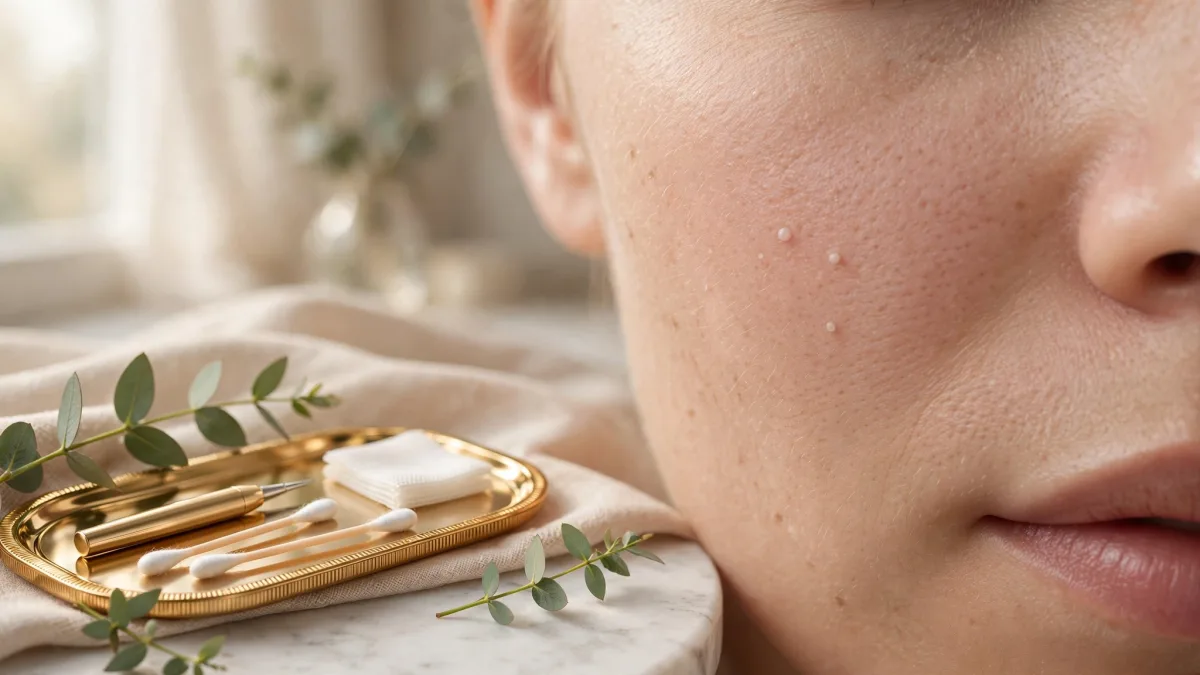
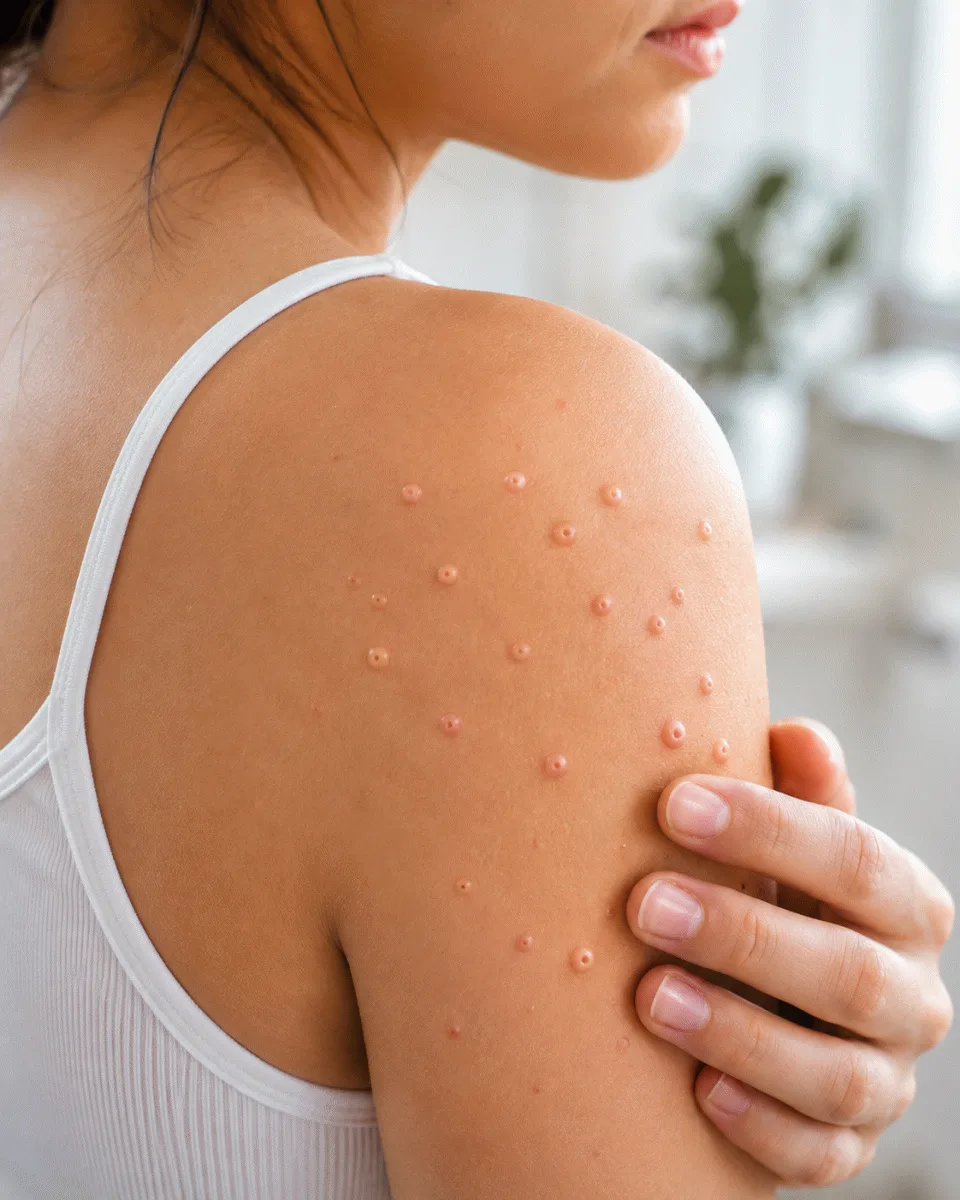
Molluscum bumps are usually small, firm, smooth, and flesh-colored, pink, or white. Many have a small depression in the center called umbilication.
Lesions can appear alone or in clusters on areas such as the arms, legs, torso, face, or groin. They rarely occur on the palms or soles. AAD: Molluscum Contagiosum Signs and Symptoms
How Does Molluscum Spread?
Molluscum spreads when the virus reaches another person's skin through direct contact with an active lesion. It can also spread through contaminated items such as towels and shared equipment.
Scratching or picking can transfer the virus to another area of the same person's body, a process called autoinoculation. AAD: Tips for Managing Molluscum Contagiosum
How Long Does Molluscum Last?
Molluscum often lasts longer than people expect. For many healthy individuals, the bumps clear naturally within about 6 to 18 months, although some cases persist longer.
New bumps may appear while older ones disappear, making the infection seem more persistent. There is no reliable way to predict exactly when an individual's lesions will clear. AAD: Signs and Symptoms
Does Molluscum Need Treatment?
Not always. If the immune system is healthy, a dermatologist may recommend observation while the infection clears naturally.
Treatment may be considered when lesions are painful, itchy, repeatedly irritated, infected, extensive, cosmetically bothersome, or located in the genital area. People with weakened immune systems may also need medical evaluation. AAD: Molluscum Contagiosum Diagnosis and Treatment
How Is Molluscum Treated?
Treatment depends on factors such as age, lesion number, location, symptoms, and overall health. Dermatologists may use procedures or prescription medicines rather than trying to remove the bumps at home.
Cantharidin
Cantharidin can be applied by a healthcare professional to create a controlled blistering reaction that helps treated lesions clear. In the United States, YCANTH 0.7% cantharidin topical solution is FDA-approved for adults and children aged 2 years and older. U.S. FDA: Ycanth Approval
Cryotherapy and Curettage
Cryotherapy uses liquid nitrogen to destroy individual lesions, while curettage physically removes them. Both should be performed by trained healthcare professionals because irritation, discomfort, pigment changes, or scarring can occur. American Academy of Dermatology Association
Berdazimer Gel
Berdazimer is a prescription topical treatment approved by the FDA for molluscum contagiosum in patients aged 1 year and older. It is applied once daily for up to 12 weeks as directed. AAD: Treatment Options
What You Should Not Do
- Do not squeeze or pop the bumps.
- Do not cut, scrape, or remove lesions yourself.
- Do not repeatedly scratch affected skin.
- Do not share towels, clothing, or personal items.
- Avoid shaving directly over active lesions.
- Do not use unapproved online molluscum treatments without medical advice.
Self-removal can spread the virus and damage the skin. The FDA has also warned about unapproved products marketed for molluscum that may cause irritation, burns, or scarring. AAD: Molluscum Treatment Guidance
How to Reduce the Spread
Keep active lesions clean and covered when practical, wash your hands after touching affected skin, and avoid scratching or picking.
Do not share towels or personal items, and take precautions around shared recreational equipment. These steps can reduce transmission but cannot eliminate the risk completely. AAD: Managing Molluscum
Molluscum vs Other Skin Bumps
| Condition | Typical Appearance | Common Clue |
|---|---|---|
| Molluscum contagiosum | Small, smooth, firm bumps | Often centrally indented |
| Common warts | Rough or irregular growths | Rough surface |
| Acne | Pimples, blackheads, or pustules | Clogged pores |
| Folliculitis | Red or pus-filled bumps | Often surrounds hair follicles |
Several skin conditions can resemble molluscum. A dermatologist can often diagnose it by examining the bumps, although additional testing may occasionally be necessary. American Academy of Dermatology Association
Common Myths About Molluscum
Myth: Molluscum is just acne.
Fact: Molluscum is a viral infection with characteristic lesions that differ from typical acne.
Myth: You should pop the bumps.
Fact: Squeezing or opening lesions can spread the virus and increase skin damage.
Myth: Everyone needs immediate treatment.
Fact: Many healthy people clear molluscum without treatment, although treatment can be useful in selected cases.
Who Should See a Dermatologist?
Seek professional evaluation if you are unsure whether new bumps are molluscum, especially when lesions are rapidly spreading, painful, infected, persistent, or located around the genitals.
People with weakened immune systems should also seek medical advice because the infection can become more extensive or persistent. AAD: Diagnosis and Treatment
What the Science Says
The evidence supports molluscum contagiosum as a generally self-limited viral infection in people with healthy immune systems. Observation is reasonable for many patients, while treatment can help selected people clear bothersome lesions sooner. AAD: Molluscum Contagiosum Overview
FDA-approved treatments have stronger regulatory evidence than unapproved home remedies. YCANTH's approval was supported by randomized, placebo-controlled clinical trials, while treatment decisions should still be individualized. U.S. FDA: Ycanth Clinical Evidence
Evidence Strength Summary
| Claim | Evidence Strength |
|---|---|
| Molluscum is caused by a virus | Strong |
| It spreads through skin contact | Strong |
| Scratching can spread lesions | Strong |
| Many healthy people clear it naturally | Strong |
| YCANTH is FDA-approved in the U.S. | Strong |
| Unapproved home remedies reliably cure molluscum | Unsupported |
Bottom Line
Molluscum contagiosum is a common viral skin infection that produces small, smooth bumps, often with a central indentation. Most healthy people eventually clear it, but the process can take months.
The safest approach is to avoid picking or squeezing lesions, reduce opportunities for transmission, and seek professional diagnosis when the bumps are persistent, extensive, infected, genital, or difficult to identify.