Reviewed by the HyaluFlow Health Editorial Team | Published: June 29, 2026 | Last Updated: August 28, 2026
Quick Answer: Menopause can contribute to dry, thin, and crepey-looking skin on the arms and legs as estrogen declines. Gentle cleansing, rich moisturization, careful exfoliation, appropriate retinoids, and sun protection can improve texture and comfort, although they cannot fully reverse hormonal aging.
Key Takeaways
- Estrogen decline is associated with changes in collagen, skin thickness, hydration, and elasticity.
- Menopausal skin can also develop changes in ceramides and barrier function.
- Moisturizers can reduce dryness and support the skin barrier.
- Sun protection helps limit additional collagen damage.
- Retinoids and alpha-hydroxy acids may improve texture when tolerated.
- Evidence for topical phytoestrogens remains limited.
Why Menopause Changes Arm and Leg Skin
Estrogen affects skin cells involved in maintaining collagen and connective tissue. When estrogen declines, skin may become thinner, less elastic, and drier.
Estrogens and aging skin reviews menopause-associated changes in collagen, elasticity, and hydration. Age, genetics, sun exposure, smoking, and other factors also influence skin aging.
How Estrogen Decline Affects Hydration
Menopausal skin can lose some of its ability to maintain a smooth, hydrated surface. Lower water content can make roughness, flaking, and fine lines more noticeable.
Drinking adequate water supports overall health, but excess water cannot rebuild collagen or reverse estrogen-related structural changes. A topical moisturizer directly addresses surface dryness.
For persistent dryness, choose a fragrance-free cream containing ingredients such as glycerin, ceramides, or petrolatum.
Menopause, Ceramides, and the Skin Barrier
Ceramides help the outer skin barrier retain water. Research has found altered ceramide levels and structure in postmenopausal skin.
A 2022 study found lower stratum-corneum ceramides and shorter ceramide chains in postmenopausal participants than in premenopausal participants.
Menopause induces changes to the stratum corneum ceramide profile supports a biological connection between estrogen status and skin-barrier lipids.
What Causes Crepey Skin on Arms and Legs?
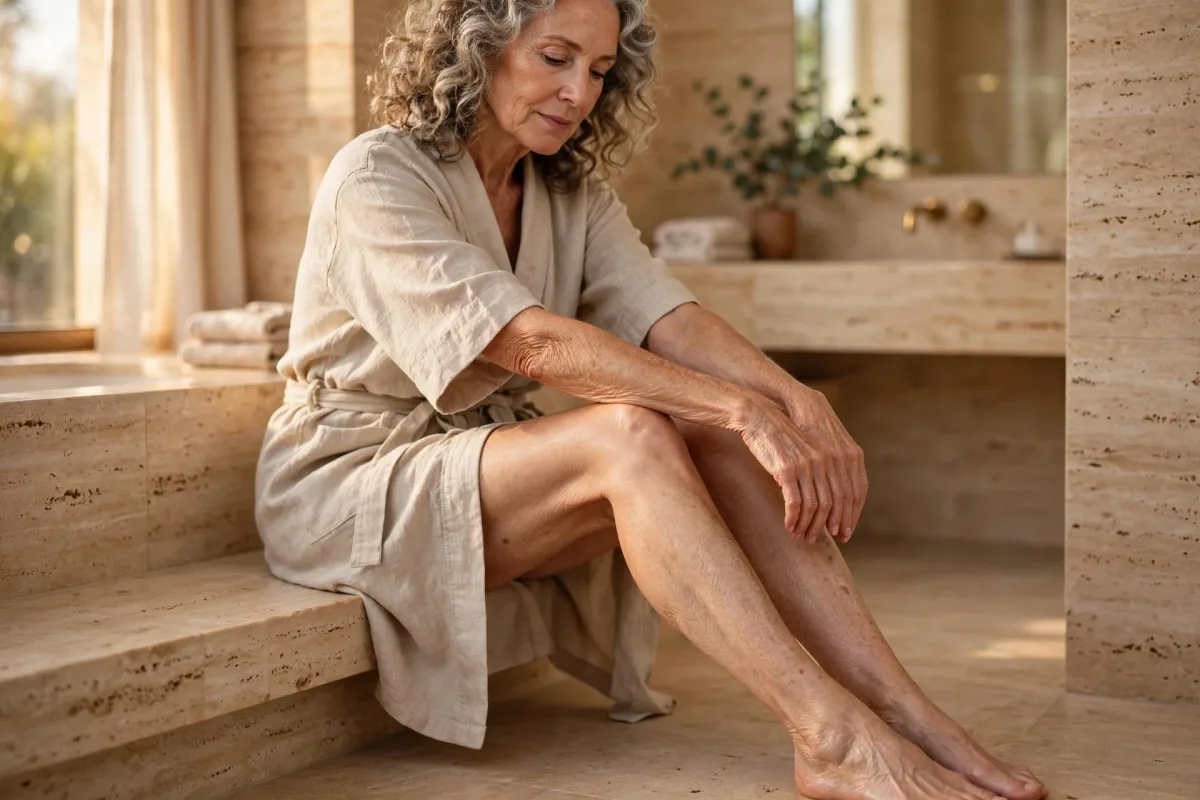
Crepey skin is usually not caused by dryness alone. Reduced collagen, lower elasticity, thinner skin, dehydration, age, and cumulative ultraviolet exposure can all contribute.
| Skin Change | Possible Contributors | Helpful Approach |
|---|---|---|
| Dryness | Barrier changes | Rich moisturizer |
| Crepey texture | Collagen and elasticity loss | Sun protection |
| Roughness | Dryness and buildup | Gentle exfoliation |
| Thin-looking skin | Age and hormonal changes | Consistent skin care |
How to Improve Menopause Skin
Moisturize consistently. Apply a fragrance-free cream after bathing while skin is slightly damp. Ceramides, glycerin, and petrolatum can help reduce moisture loss.
Exfoliate carefully. Lactic or glycolic acid may improve rough texture, but overuse can irritate dry skin. Start slowly and stop if persistent irritation develops.
Consider a retinoid. Topical retinoids are established photoaging treatments and may improve texture over time. Introduce them gradually and moisturize to reduce irritation.
Protect exposed skin from UV. Sun exposure contributes to collagen breakdown. Broad-spectrum sunscreen, protective clothing, and shade can reduce cumulative exposure.
Avoid harsh cleansing. Very hot showers, harsh soaps, and vigorous scrubbing can worsen dryness. Use a gentle cleanser and pat skin dry.
What the Science Says About Estrogen
Clinical research supports a relationship between estrogen and collagen production, but estrogen treatment is not appropriate for everyone or solely for cosmetic aging.
A small clinical study found that topical oestradiol increased collagen-related measures in postmenopausal skin.
The effect of topical oestradiol on skin collagen of postmenopausal women studied only 12 women, so its findings should be interpreted cautiously.
A systematic review and meta-analysis found menopausal hormone therapy was associated with improvements in some measures of skin elasticity, thickness, and collagen.
Skin Rejuvenation in Women using Menopausal Hormone Therapy also noted the need for better clinical trials.
Common Myths About Menopause Skin
Myth: Crepey skin is only dry skin.
Reality: Dryness can emphasize crepey texture, but collagen loss, reduced elasticity, thinning, and UV exposure also matter.
Myth: Drinking more water rebuilds collagen.
Reality: Adequate hydration is important, but excess water cannot replace structural collagen loss.
Myth: Phytoestrogens work exactly like estrogen.
Reality: Their estrogen-receptor activity is different. Evidence for treating menopausal body skin remains limited.
Who Should Pay Attention?
Women in perimenopause or menopause who develop new dryness, roughness, itching, thinning, or crepey texture may benefit from a barrier-focused routine.
Do not automatically blame every skin change on menopause. Seek medical evaluation for severe itching, persistent scaling, open sores, unusual pigmentation, a new rash, or rapidly changing skin.
Evidence Strength Summary: Evidence linking estrogen decline with changes in collagen, thickness, hydration, and elasticity is strong. Evidence for ceramide changes is moderate, while evidence for topical phytoestrogens remains limited.
Bottom Line
Menopause can make arm and leg skin drier, thinner, and less elastic because estrogen influences collagen, hydration, and barrier function.
Focus on consistent moisturization, gentle cleansing, controlled exfoliation, appropriate retinoid use, and protection from excessive UV exposure.