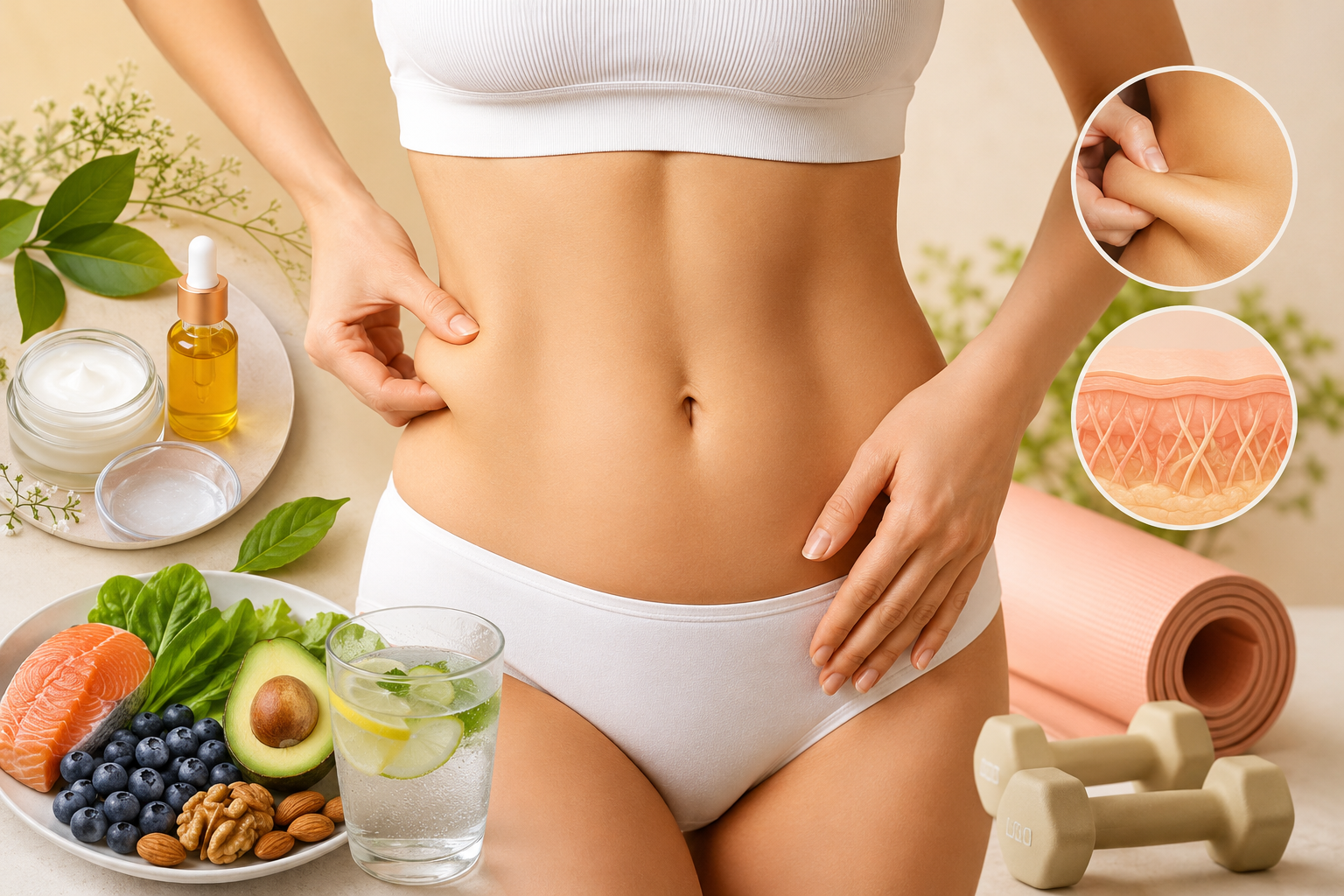
Loose belly skin can be frustrating, especially after achieving a major weight-loss goal or recovering from pregnancy. While social media often promises "instant skin tightening," the reality is more complex. Skin elasticity depends on collagen, elastin, age, genetics, nutrition, lifestyle, and how long the skin has been stretched.
The good news is that your skin is a living organ that continually repairs itself. Although severe skin laxity may not disappear completely without medical treatment, healthy habits and evidence-based skincare can improve skin texture, hydration, and firmness over time. This guide explains the science behind belly skin elasticity and the practical steps that can help support healthier-looking skin.
Quick Answer
Belly skin loses elasticity when collagen and elastin fibers become stretched or damaged due to pregnancy, weight changes, aging, and sun exposure. While no cream can completely remove excess skin, combining collagen-supporting skincare, resistance training, balanced nutrition, gradual weight loss, and healthy lifestyle habits can significantly improve skin firmness and overall appearance over time.[1–5]
Key Takeaways
- Collagen and elastin are the two primary proteins responsible for skin firmness and elasticity.
- Pregnancy, rapid weight loss, aging, and prolonged skin stretching are common causes of loose belly skin.
- Retinoids, peptides, ceramides, and daily moisturizers can improve skin quality but cannot eliminate excess skin.
- Strength training improves body contour by building muscle beneath the skin.
- Consistency is essential because collagen remodeling takes several months.
Quick Facts
| Best For | Loose belly skin after weight loss, pregnancy, or aging |
| Time to See Results | Approximately 8–24 weeks with consistent care |
| Evidence Level | Strong for retinoids, resistance training, healthy nutrition, and sun protection |
| Difficulty | Moderate. Requires consistent skincare and lifestyle habits. |
Did You Know?
Your skin contains more collagen than any other protein. Beginning in your mid-20s, collagen production gradually declines each year, making skin less firm and more prone to sagging over time.[2]
Belly Skin Elasticity at a Glance
| Factor | Supports Healthy Skin | Reduces Elasticity |
|---|---|---|
| Collagen | Healthy collagen production | Age-related collagen loss |
| Elastin | Flexible elastic fibers | Long-term overstretching |
| Weight Changes | Gradual weight loss | Rapid weight gain or rapid weight loss |
| Nutrition | Protein, vitamin C, zinc, healthy fats | Poor diet and nutrient deficiencies |
| Daily Habits | Exercise, hydration, SPF, quality sleep | Smoking, UV exposure, inactivity |
Why Does Belly Skin Become Loose?
Your skin is remarkably flexible. During pregnancy, weight gain, or muscle growth, collagen and elastin fibers stretch to accommodate changes in body size. Normally, these fibers allow the skin to expand and then return close to its original shape.
Problems develop when the skin remains stretched for extended periods or expands faster than collagen and elastin can adapt. Over time, these structural proteins become fragmented and lose their ability to recoil efficiently, leaving the skin less firm once body size decreases.[1,2]
The amount of loose skin varies widely from person to person. Genetics, age, smoking, sun exposure, overall health, and the amount of weight gained or lost all influence how well the skin recovers. Younger skin generally contains more functional collagen and elastin, allowing it to regain firmness more effectively than older skin.
Stretch marks often appear during rapid stretching because the dermis develops microscopic tears as collagen fibers become disrupted. Although stretch marks usually fade with time, they indicate that the skin's supporting framework has been altered.[3]
Can Loose Belly Skin Tighten Naturally?
Yes—but the degree of improvement depends on the cause and severity of the skin laxity.
Mild to moderate loose skin often becomes firmer over several months after weight stabilizes because collagen remodeling continues even after body fat decreases. This gradual repair process is influenced by age, nutrition, genetics, hormone levels, and healthy lifestyle habits.
However, if the skin has been stretched significantly for many years or after substantial weight loss, complete tightening without medical procedures is unlikely. This does not mean improvement is impossible. Better hydration, increased collagen production, improved muscle tone, and healthier skin barrier function can all enhance the skin's appearance and texture.[2,4]
Science Spotlight
Clinical research suggests that collagen remodeling continues for months after major weight loss. This is why healthcare professionals often recommend maintaining a stable weight before considering procedures for excess skin removal.[4,5]
Can Exercise Improve Belly Skin Elasticity?
Exercise cannot directly tighten loose skin, but it plays an important role in improving overall body contour. Building muscle beneath the skin provides better structural support, making mild skin laxity less noticeable.
Resistance training also helps preserve lean muscle during weight loss, reducing the risk of a "deflated" appearance. Compound exercises such as squats, deadlifts, rows, push-ups, and core-strengthening movements contribute to better overall body composition than abdominal exercises alone.
For women recovering after pregnancy, deep core rehabilitation is especially important. The transverse abdominis acts like a natural corset, while conditions such as diastasis recti may require guidance from a qualified healthcare professional or pelvic health physiotherapist before beginning intensive abdominal training.[5]
Which Skincare Ingredients Actually Improve Belly Skin Elasticity?
Many body-firming products make bold claims, but only a handful of ingredients have meaningful scientific evidence behind them. While topical skincare cannot remove excess skin, certain ingredients can improve hydration, support collagen production, strengthen the skin barrier, and enhance the overall appearance of the abdomen when used consistently.
Retinoids
Retinoids are considered the gold standard among topical anti-aging ingredients. They increase cell turnover, stimulate collagen production, and may improve skin thickness and texture over time. Prescription retinoids generally produce greater results than cosmetic retinol products but may also cause irritation, especially when first introduced.[6]
Important: Retinoids should not be used during pregnancy or while trying to conceive unless specifically recommended by your healthcare provider.
Peptides
Peptides are short chains of amino acids that act as signaling molecules within the skin. Certain peptides, including signal peptides and copper peptides, may encourage collagen synthesis and support skin repair. While research is promising, results depend on the formulation and regular long-term use.[7]
Hyaluronic Acid
Hyaluronic acid is a naturally occurring molecule that attracts and binds water. Well-hydrated skin often appears smoother, healthier, and temporarily firmer. Although it cannot tighten loose skin directly, maintaining hydration improves skin quality and supports normal barrier function.
Ceramides
Ceramides are naturally occurring lipids that strengthen the skin barrier and reduce transepidermal water loss. A healthy barrier allows the skin to retain moisture more effectively, making it feel softer and more resilient.
Vitamin C
Vitamin C plays an essential role in collagen formation and functions as a powerful antioxidant. Both dietary intake and well-formulated topical products may help support healthier skin by protecting collagen from oxidative damage and supporting normal collagen synthesis.[8]
Science Spotlight
Dermatology research consistently shows that no topical product can permanently remove excess skin. Products that promise dramatic skin tightening within days are not supported by high-quality clinical evidence. Real improvements require time, consistency, and realistic expectations.[2,6]
What Does an Effective Daily Routine Look Like?
A consistent routine is far more effective than frequently switching between products. Supporting your skin every day allows collagen remodeling and barrier repair to occur gradually.
1. Moisturize Twice Daily
Apply a moisturizer containing ceramides, hyaluronic acid, glycerin, or peptides after bathing and before bed. Moisturized skin is better able to maintain its barrier function and appears smoother and healthier.
2. Use Retinoids at Night
If appropriate for your skin and approved by your healthcare provider, apply a retinoid several nights per week before moisturizing. Start slowly to reduce irritation and always follow product instructions.
3. Massage While Applying Skincare
Gentle massage helps spread products evenly and encourages consistency in your skincare routine. Although massage alone does not rebuild collagen, it complements regular skincare by improving product application.
4. Protect Exposed Skin from UV Damage
If your abdomen is exposed during outdoor activities or at the beach, apply a broad-spectrum sunscreen with SPF 30 or higher. Ultraviolet radiation accelerates collagen breakdown and contributes to premature skin aging.[2]
Can Nutrition Help Improve Skin Elasticity?
Absolutely. Healthy skin depends on adequate nutrition because collagen, elastin, and other structural proteins require amino acids, vitamins, and minerals for normal production and repair.
Protein provides the building blocks needed to synthesize collagen. Vitamin C is required for collagen formation, while zinc and copper contribute to connective tissue health. Healthy fats, particularly omega-3 fatty acids, help maintain the skin barrier, and adequate hydration supports normal skin function.[8,9]
Crash dieting can work against your skin. Rapid weight loss often leaves the skin with less time to adapt, increasing the likelihood of visible laxity. Gradual, sustainable weight loss generally produces better long-term cosmetic outcomes than repeated cycles of rapid weight gain and loss.
Which Lifestyle Habits Affect Belly Skin Firmness?
Daily habits have a significant impact on long-term skin health. Protecting collagen is often just as important as stimulating new collagen production.
- Avoid smoking and vaping, which accelerate collagen breakdown and reduce blood flow to the skin.
- Maintain a stable, healthy weight whenever possible.
- Prioritize seven to nine hours of quality sleep each night.
- Stay physically active with regular resistance training.
- Eat enough protein and antioxidant-rich foods.
- Protect exposed skin from excessive ultraviolet (UV) radiation.
- Stay well hydrated throughout the day.
Smoking deserves special attention because it increases oxidative stress while reducing oxygen delivery to skin cells. Over time, this combination accelerates collagen degradation and contributes to premature skin aging throughout the body, including the abdomen.[10]
What Does the Science Say About Improving Belly Skin Elasticity?
Current evidence suggests that no single product or exercise can completely restore loose skin. Instead, the best outcomes come from combining evidence-based skincare, healthy nutrition, resistance training, weight stability, and long-term healthy habits. Topical retinoids have the strongest clinical evidence for improving collagen production, while moisturizers help maintain the skin barrier and hydration. Resistance training improves muscle tone and body composition, making mild skin laxity less noticeable, although it does not directly tighten excess skin.[1–10]
Evidence Level
| Intervention | Evidence | Research Summary |
|---|---|---|
| Topical Retinoids | Strong | Consistently shown to stimulate collagen production and improve skin texture with regular use.[6] |
| Daily Moisturizing | Strong | Improves skin hydration, strengthens the skin barrier, and reduces transepidermal water loss but does not remove excess skin.[2] |
| Resistance Training | Strong | Improves muscle tone and body contour, helping loose skin appear less prominent.[5] |
| Adequate Protein Intake | Strong | Provides essential amino acids needed for collagen synthesis and tissue repair.[8,9] |
| Vitamin C | Strong | Essential for normal collagen formation and protects against oxidative stress.[8] |
| Collagen Peptide Supplements | Moderate | Some clinical trials report modest improvements in skin hydration and elasticity after consistent supplementation.[11] |
| Copper Peptides | Emerging | Early research is encouraging, but larger human studies are still needed.[7] |
Common Myths About Loose Belly Skin
Myth: Exercise tightens loose skin.
Fact: Exercise builds muscle underneath the skin and improves body shape, but it cannot directly tighten excess skin.
Myth: Firming creams permanently remove loose skin.
Fact: Topical products can improve hydration, skin texture, and firmness, but no cosmetic cream can permanently eliminate excess skin.
Myth: Drinking more water tightens loose skin.
Fact: Staying hydrated supports healthy skin function, but water alone cannot restore damaged collagen or elastin fibers.
Myth: Only pregnancy causes loose belly skin.
Fact: Aging, significant weight changes, genetics, and prolonged skin stretching can all contribute to reduced skin elasticity.
Who Should Pay Attention?
- People who have recently lost a significant amount of weight.
- Women recovering after pregnancy.
- Adults noticing age-related skin laxity.
- People with visible stretch marks and reduced skin firmness.
- Individuals planning a major weight-loss journey.
- Anyone looking to maintain healthy skin as they age.
Clinical Pearls
- Gradual weight loss gives your skin more time to adapt than rapid weight loss.
- Protein intake is just as important as topical skincare for collagen production.
- Daily sunscreen helps protect collagen from UV-related damage.
- Consistency matters more than buying expensive skincare products.
- Healthy skin improves gradually over months, not days.
When Should You See a Doctor?
Consult a healthcare professional if loose belly skin causes persistent rashes, skin infections, pain, hygiene difficulties, or significantly affects your quality of life. If you recently gave birth and suspect diastasis recti, or if you have severe excess skin after major weight loss, a dermatologist, pelvic health physiotherapist, or board-certified plastic surgeon can recommend appropriate treatment options based on your individual needs.[5]
3 Simple Things You Can Do Today
- Apply a moisturizer containing ceramides, peptides, or hyaluronic acid after showering and before bedtime.
- Strength train at least two to three times per week while eating enough protein to support muscle and collagen production.
- Protect your skin from excessive sun exposure, avoid smoking, and aim for gradual, sustainable weight management.
Bottom Line
Loose belly skin is a normal consequence of pregnancy, weight loss, and aging, but its appearance can often be improved with patience and consistency. While no cream or exercise can completely remove excess skin, combining evidence-based skincare, resistance training, balanced nutrition, and healthy lifestyle habits supports stronger collagen, better hydration, and healthier-looking skin over time. Focus on long-term skin health rather than quick fixes, and remember that lasting improvements happen gradually.
References
- Krutmann J, et al. The Skin Aging Exposome. Journal of Dermatological Science. 2017.
- American Academy of Dermatology Association. Preventing Premature Skin Aging.
- Oakley A. Striae Distensae (Stretch Marks). DermNet NZ.
- Baumann L. Skin Ageing and Its Treatment. Journal of Pathology. 2007.
- American College of Obstetricians and Gynecologists (ACOG). Physical Activity and Exercise During Pregnancy and the Postpartum Period.
- Mukherjee S, et al. Retinoids in the Treatment of Skin Aging. Clinical Interventions in Aging. 2006.
- Schagen SK. Topical Peptides in Skin Care. Cosmetics. 2017.
- Pullar JM, Carr AC, Vissers MCM. The Roles of Vitamin C in Skin Health. Nutrients. 2017.
- National Institutes of Health Office of Dietary Supplements. Vitamin C Fact Sheet for Health Professionals.
- Morita A. Tobacco Smoke Causes Premature Skin Aging. Journal of Dermatological Science.
- de Miranda RB, et al. Effects of Oral Collagen Supplementation on Skin Aging: A Systematic Review and Meta-analysis. International Journal of Dermatology. 2021.