Medically reviewed by the HyaluFlow Health Editorial Team | Published: June 20, 2026 | Last Updated: August 11, 2026
The Physiology of Cold Therapy
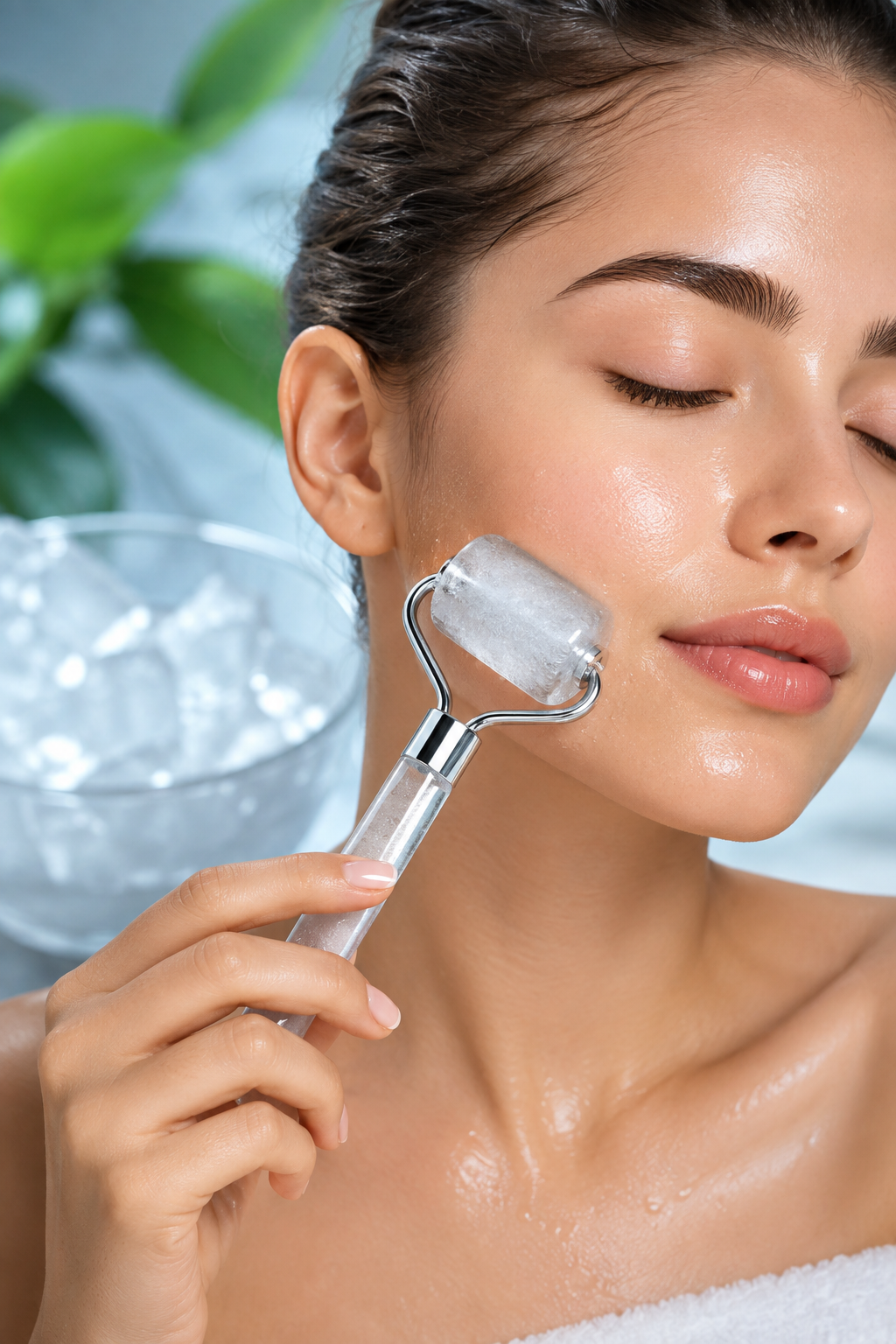
Ice rolling is a simple form of localized cold therapy. When cold reaches the skin, blood vessels constrict, reducing cutaneous blood flow for a period of time. This is called vasoconstriction.
Research on human skin shows that local cooling can significantly reduce skin blood flow. Facial cooling has also been shown to decrease facial skin blood flow during short periods of exposure. [1][2]
That mechanism explains why an ice roller can make the face look temporarily less flushed or puffy. However, this does not mean cold therapy permanently tightens the skin or changes facial structure.
- Cold causes temporary vasoconstriction and lowers skin blood flow.
- Facial cooling may temporarily reduce the appearance of puffiness and redness.
- Ice rolling does not permanently tighten skin or reshape the face.
- Short, gentle applications are safer than prolonged exposure.
- Never hold ice directly against the skin for extended periods.
Reducing Inflammation and Redness
Cold therapy can have a calming effect on skin that looks flushed or irritated. Reduced blood flow during cooling may temporarily decrease visible redness.
Clinical research also supports the ability of localized cooling to influence swelling in certain medical settings. For example, controlled cooling has been studied for reducing postoperative facial and periorbital edema. [3][4]
But there is an important distinction. These studies do not prove that an ordinary ice roller treats chronic inflammatory skin diseases.
For everyday skincare, the most realistic benefit is temporary cosmetic relief. Your face may look calmer, less puffy, and more refreshed after cooling.
"Cold therapy can temporarily change skin blood flow, but temporary de-puffing should not be confused with permanent skin tightening."
Can Ice Rolling Make Skin Look Tighter?
Cold can create a short-term tightening sensation because cooling changes blood flow and skin temperature. This may make the surface appear smoother or more toned immediately after use.
However, there is no strong evidence that ice rolling permanently tightens loose skin, stimulates meaningful collagen production, or produces a lasting facelift effect.
That distinction matters because many beauty claims confuse a temporary visual effect with a structural change in the skin.
Facial massage rollers have been studied separately. One randomized controlled study found that short-term facial roller massage increased facial skin blood flow, while five weeks of daily use altered the vascular response to heat. [5]
Those findings involve massage and mechanical stimulation, not the specific effects of a frozen ice roller. More research is needed to determine whether combining cold with facial rolling provides additional long-term skin benefits.
How to Use an Ice Roller
Start with a clean face and a clean ice roller. If the manufacturer recommends refrigeration rather than freezing, follow those instructions.
Move the roller gently across the cheeks, forehead, jawline, and other areas where you notice temporary puffiness. Avoid pressing hard or repeatedly cooling one small area.
For the delicate under-eye area, use very light pressure and avoid dragging the skin. The goal is gentle cooling, not aggressive massage.
Do not apply bare ice directly to the skin for prolonged periods. Excessive cold exposure can cause cold injury, including frostbite in severe cases. The American Academy of Dermatology warns that extreme cold can damage skin tissue. [6]
Stop immediately if the skin becomes intensely painful, numb, pale, hard, or unusually discolored. Persistent symptoms after cold exposure should be medically assessed.
Ice Rolling vs. Professional Cryotherapy
Ice rolling at home is not the same as medical cryotherapy or whole-body cryotherapy.
Medical cryotherapy uses controlled freezing techniques for specific conditions, often under professional supervision. Whole-body cryotherapy involves much more extreme temperatures and carries documented risks.
The American Academy of Dermatology notes that whole-body cryotherapy has been associated with frostbite and other skin injuries, while its promoted cosmetic and medical benefits remain unproven. [6]
An at-home ice roller is far less extreme, but the same basic principle still applies: colder and longer is not automatically better.
What the Science Says About Facial Cooling
The strongest evidence supports the physiological effect of cold on blood vessels. Local skin cooling produces vasoconstriction and changes cutaneous blood flow. [1][2]
Research specifically on consumer ice rollers for long-term cosmetic outcomes is much more limited. There is therefore a gap between what cold therapy can physiologically do and what skincare marketing often claims.
| Claim | Evidence |
|---|---|
| Temporarily reduces skin blood flow | Supported |
| May temporarily reduce visible puffiness | Reasonable, but direct ice-roller evidence is limited |
| May temporarily reduce visible redness | Physiologically plausible |
| Permanently tightens skin | Not established |
| Reshapes the face | Not established |
| Provides a permanent anti-aging effect | Not established |
Common Myths About Ice Rolling
Myth: Ice rolling permanently shrinks pores
Cold can temporarily alter the appearance of the skin, making pores look less noticeable. It does not permanently change pore size.
Myth: More cold means better results
Not true. Excessive cold increases the risk of irritation and cold injury without guaranteeing better cosmetic results.
Myth: Ice rolling removes facial fat
There is no good evidence that an ice roller melts or removes facial fat. Any immediate slimming effect is temporary and cosmetic.
Myth: Ice rolling treats every type of inflammation
Cold may temporarily soothe some forms of redness and swelling, but it is not a universal treatment for inflammatory skin conditions.
Who Should Be Careful With Facial Cold Therapy?
People with very sensitive skin or conditions triggered by cold should be cautious. Cold exposure can produce abnormal skin reactions in susceptible individuals.
If you have a known cold sensitivity, a history of cold-induced skin reactions, or a circulation problem, ask a healthcare professional before using intense facial cooling.
Cold should also be avoided over broken skin or areas with reduced sensation because numbness can make it harder to recognize excessive exposure.
If facial swelling is persistent, severe, painful, one-sided, or associated with other symptoms, an ice roller is not the answer. The underlying cause should be evaluated.
Bottom Line
Ice rolling can be a useful short-term skincare technique for making the face look less puffy and flushed. Its main physiological effect is cold-induced vasoconstriction, which temporarily changes blood flow near the skin surface.
But don't confuse a temporary cosmetic effect with permanent skin tightening. There is currently limited evidence that at-home ice rolling produces lasting anti-aging or skin-firming results.
Use a clean roller, keep the pressure gentle, avoid prolonged exposure, and stop if the skin becomes painful or numb. Used sensibly, facial cooling can be a refreshing addition to a skincare routine without pretending to be a miracle treatment.
References
- Rasch W, Cabanac M. Vasomotor response of the human face: laser-Doppler measurements during mild hypo- and hyperthermia. Acta Physiologica Scandinavica. 1993;147(4):431-436. PMID: 8493876. DOI: 10.1111/j.1748-1716.1993.tb09518.x.
- Miyazawa T, Horiuchi M, Ichikawa D, et al. Face cooling with mist water increases cerebral blood flow during exercise: effect of changes in facial skin blood flow. Frontiers in Physiology. 2012;3:308. PMID: 22934059. DOI: 10.3389/fphys.2012.00308.
- Ilce A, et al. Effects of Two Different Cold Application Methods After Rhinoplasty: A Randomized Clinical Trial. Plastic and Aesthetic Nursing. 2024. PMID: 38166308.
- The effect of periorbital cooling on pain, edema and ecchymosis after rhinoplasty: a randomized, controlled, observer-blinded study. PMID: 26713321.
- Miyaji A, Sugimori K, Hayashi N. Short- and long-term effects of using a facial massage roller on facial skin blood flow and vascular reactivity. Complementary Therapies in Medicine. 2018;41:271-276. PMID: 30477852. DOI: 10.1016/j.ctim.2018.09.009.
- American Academy of Dermatology. Whole-body cryotherapy can be hazardous to your skin. Updated 2023.