Reviewed by the HyaluFlow Health Editorial Team | Published: July 1, 2026 | Last Updated: August 16, 2026
Healthy aging is not about keeping your skin wrinkle-free. It is about protecting your skin, supporting your health, and building habits that remain useful for years.
Some beauty trends disappear within months. These 21 habits are different because they focus on proven skin care, nutrition, sleep, movement, and everyday health.
- Daily broad-spectrum SPF 30+ is one of the strongest defenses against premature skin aging.
- Gentle cleansing and regular moisturizing help protect the skin barrier.
- Sleep, nutrition, exercise, and stress management also influence skin health.
- Smoking and excessive UV exposure can accelerate visible skin aging.
- A simple routine used consistently can outperform an unnecessarily complicated one.
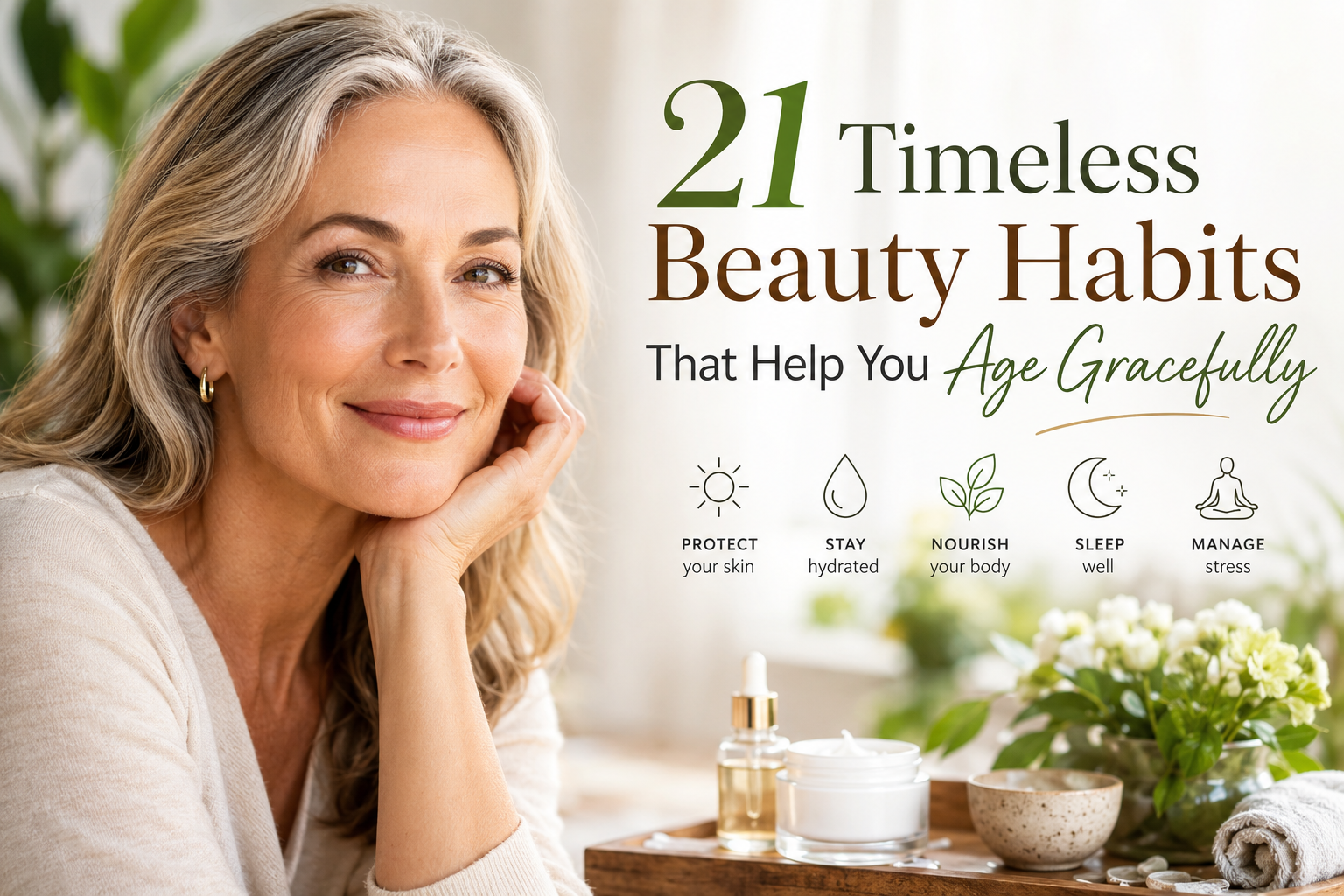
21 Timeless Beauty Habits for Healthy Aging
1. Protect Your Skin From the Sun
UV exposure is a major driver of premature skin aging. Use broad-spectrum, water-resistant SPF 30 or higher and add shade, protective clothing, and sunglasses when outdoors.[1,2]
2. Cleanse Gently
Harsh cleansing can leave skin dry and irritated. Choose a gentle cleanser suited to your skin type and avoid aggressive scrubbing.[3]
3. Moisturize Every Day
Moisturizers help reduce water loss and improve the appearance of dry, rough skin. Apply after cleansing while the skin still has some moisture.[3,4]
4. Stay Hydrated
Water supports normal body function and overall health. Combine adequate fluids with water-rich foods rather than relying on water alone as a beauty treatment.
5. Eat a Colorful Diet
Fruits, vegetables, whole grains, legumes, nuts, and seeds provide nutrients that support normal skin function. A varied diet is more useful than chasing a single “beauty food.”[5]
6. Prioritize Quality Sleep
Sleep supports tissue repair, immune function, and overall health. Most adults should aim for at least seven hours of sleep each night.[6]
7. Exercise Regularly
Physical activity supports circulation, metabolic health, and cardiovascular fitness. Regular movement also helps reduce some of the effects of chronic stress.[5]
8. Do Not Smoke
Smoking exposes the body to oxidative stress and can impair blood flow. It is strongly associated with premature skin aging and other serious health problems.[5,7]
9. Limit Excessive Alcohol
Heavy alcohol use can negatively affect overall health and may contribute to dehydration and inflammatory stress. Moderation is a better long-term strategy.
10. Include Healthy Fats
Foods such as fatty fish, walnuts, chia seeds, and flaxseeds provide essential fats and other nutrients. Include them as part of a balanced eating pattern rather than relying on supplements.
11. Manage Chronic Stress
Long-term stress can affect sleep, inflammation, and skin barrier function. Exercise, relaxation techniques, hobbies, social connection, and mindfulness can help support healthier stress management.[5]
12. Keep Your Routine Consistent
Skin care does not need to be complicated. Dermatologists emphasize consistency and recommend starting with essential products before adding targeted treatments.[3]
13. Avoid Over-Exfoliating
Exfoliation can improve surface texture, but excessive use may cause irritation and dryness. If your skin repeatedly burns, stings, or becomes unusually sensitive, scale back.
14. Support Collagen With Good Nutrition
Your body needs protein and several micronutrients to maintain connective tissue. Include protein-rich foods and vitamin C sources such as citrus, berries, peppers, and vegetables.
15. Protect Your Neck and Hands
The neck and hands receive substantial environmental exposure but are often forgotten during skin care. Extend moisturizer and sunscreen to these areas whenever appropriate.[2]
16. Remove Makeup Before Bed
Leaving makeup and accumulated products on the skin overnight can contribute to irritation and clogged pores. A gentle evening cleanse provides a cleaner starting point for nighttime skin care.
17. Stop Picking Your Skin
Picking pimples or irritated areas can increase inflammation and raise the risk of discoloration and scarring. Let targeted treatments work instead of repeatedly touching the area.
18. Choose Products for Your Skin Type
Dry, oily, combination, acne-prone, and sensitive skin can respond differently to the same product. Choosing suitable formulations reduces unnecessary irritation and improves consistency.[3]
19. Pay Attention to Posture
Good posture supports comfortable movement and confident body language. It is not an anti-aging skin treatment, but it can improve how you carry yourself at any age.
20. Do Not Fear Natural Aging
Wrinkles, fine lines, and changes in skin texture are normal parts of aging. The goal should be healthier skin, not unrealistic perfection.
21. Make Self-Care a Lifestyle
No moisturizer can compensate for consistently poor sleep, smoking, excessive UV exposure, or an unhealthy lifestyle. Long-term skin health comes from combining small habits rather than searching for one miracle product.[5]
A Simple Daily Beauty Routine
- Morning: Gentle cleanse, moisturizer if needed, and broad-spectrum SPF 30+.
- During the day: Reapply sunscreen when outdoors and use shade or protective clothing.
- Evening: Remove makeup, cleanse gently, and moisturize.
- Every week: Prioritize exercise, nutritious meals, adequate sleep, and stress recovery.
What Matters Most?
You do not need 21 products to follow 21 healthy habits. The highest-value foundation is simple: protect your skin from UV radiation, keep the barrier comfortable, eat well, move regularly, sleep adequately, and avoid smoking.[1,3,5]
Research increasingly supports viewing skin aging through both dermatology and lifestyle medicine. Nutrition, physical activity, sleep, stress, and substance use can all influence skin physiology, although many lifestyle studies show associations rather than proving direct cause and effect.[5]
Final Thoughts
Graceful aging is not about stopping time. It is about giving your skin and body the conditions they need to remain healthy as you age.
Start with the basics and stay consistent. Daily sun protection, gentle skin care, balanced nutrition, movement, sleep, and healthy lifestyle choices will do far more for long-term skin health than constantly chasing the newest beauty trend.
References
- American Academy of Dermatology. 11 Ways to Reduce Premature Skin Aging. Dermatologist guidance on daily sun protection, lifestyle habits, and prevention of premature aging.
- American Academy of Dermatology. Sunscreen FAQs. Recommendations for broad-spectrum, water-resistant SPF 30+ sunscreen and additional sun-protection measures.
- American Academy of Dermatology. How to Select Anti-Aging Skin Care Products. Guidance on sunscreen, moisturizers, skin type, product selection, and avoiding unnecessary irritation.
- National Institute on Aging. Skin Care and Aging. Information on UV exposure, dryness, moisturization, smoking, and age-related skin changes.
- Nwaopara A, et al. A Review of the Effects of Lifestyle Factors on Skin Aging. 2026. Review of human and preclinical evidence involving nutrition, physical activity, stress, sleep, smoking, alcohol, and skin aging.
- Centers for Disease Control and Prevention. About Sleep and Your Health. Guidance on recommended sleep duration and the role of adequate sleep in overall health.
- U.S. Food and Drug Administration. Smoking and Tobacco Use. Evidence and public-health information concerning the systemic effects of tobacco exposure.