Medically reviewed by the HyaluFlow Health Editorial Team | Published: June 29, 2026 | Last Updated: August 9, 2026
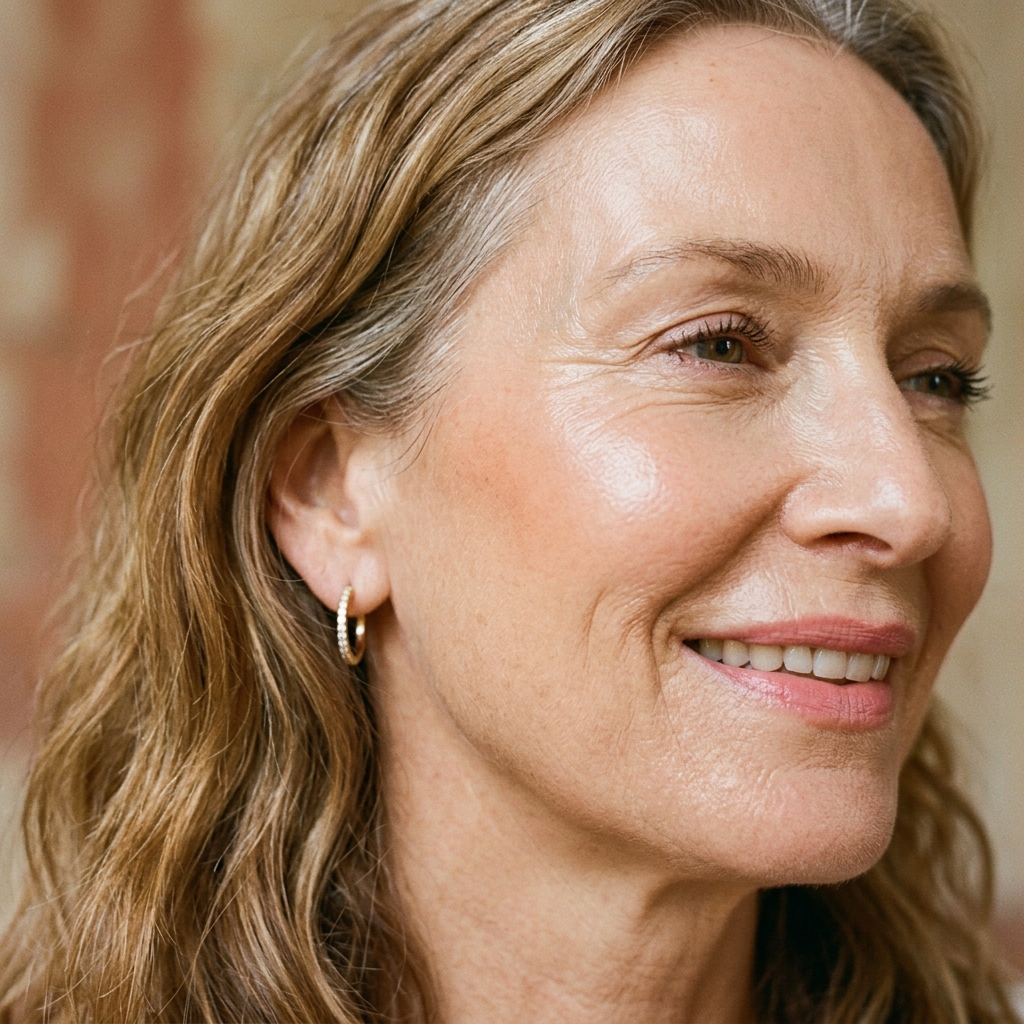
Your lips can reveal signs of aging earlier than you might expect. Over time, they may look thinner, less defined, drier, or more lined around the edges.
These changes are not caused by one process. Natural aging alters the structure of the lips and surrounding tissues, while cumulative sun exposure, smoking, repeated facial movement, and chronic irritation can accelerate visible changes.
The good news is that lip aging is not completely outside your control. Sun protection, barrier-supporting lip care, avoiding tobacco, and consistent skin care can help protect the lips and surrounding skin.
Quick Answer: Lips become thinner and less defined with age because changes occur in collagen, elastin, skin structure, soft tissue volume, hydration, and the surrounding perioral tissues. UV exposure and smoking can accelerate visible aging. Daily SPF lip protection, regular moisturization, avoiding tobacco, and evidence-based anti-aging care can help maintain healthier-looking lips.
Key Takeaways
- Lip aging involves changes in skin structure, connective tissue, soft-tissue volume, and the surrounding mouth area.
- Lip height and visible wrinkles tend to change progressively with age.
- UV exposure contributes to photoaging and can damage the delicate lip area.
- Smoking is associated with premature skin aging and can worsen perioral lines.
- Daily broad-spectrum SPF lip protection helps reduce UV-related damage.
- Moisturizers and occlusive ingredients can improve dryness and support the lip barrier.
- Hyaluronic acid can improve hydration, but topical products do not permanently restore lost lip volume.
- Peptides may offer cosmetic benefits, but evidence varies substantially by peptide and formulation.
- Healthy lifestyle habits, especially avoiding tobacco and excessive sun exposure, support long-term skin health.
Did You Know?
The visible red portion of the lip, called the vermilion, has distinctive structural and physiological characteristics that differ from typical facial skin. Research shows that lip dimensions and wrinkle visibility change with age, making the lips a unique area of facial aging.[1][2]
Lip Aging at a Glance
| Feature | Younger Lips | Aging Lips |
|---|---|---|
| Volume | Generally fuller | May gradually decrease |
| Lip Height | More pronounced | May become reduced |
| Definition | Vermilion border is clearer | Border may become less distinct |
| Fine Lines | Usually less visible | Perioral lines may become more noticeable |
| Texture | Generally smoother | Dryness and surface lines may increase |
| Color | Often more pronounced | May become less vivid with age or photodamage |
Why Do Lips Age Faster Than the Rest of Your Face?
The lips are structurally different from ordinary facial skin. The vermilion has distinctive barrier, pigmentation, vascular, and tissue characteristics that make it particularly sensitive to environmental exposure and changes associated with aging.[1][2]
The lips also have a weaker barrier than many areas of facial skin. This helps explain why they can become dry, irritated, or chapped more easily.
Unlike typical skin, the vermilion has limited protective pigmentation. This means the lips can be particularly vulnerable to chronic environmental exposure, including ultraviolet radiation.
Long-term UV exposure contributes to photoaging by causing molecular and structural damage within the skin. It can affect collagen, elastic fibers, pigmentation, and the overall appearance of exposed tissues.
The surrounding perioral area also changes with age. Research has linked aging in this region to skin changes, repeated muscle contraction, gravitational effects, changes in underlying tissues, and environmental exposure.[3]
That combination can make the lips and the skin around them appear thinner, flatter, or more lined over time.
What Happens Beneath the Surface as Lips Age?
Lip aging is a gradual process involving several structures rather than a single loss of collagen.
- Collagen and connective-tissue structure change.
- Skin elasticity gradually decreases.
- Lip dimensions can change with age.
- Soft-tissue volume may decrease.
- The vermilion border can become less distinct.
- Perioral wrinkles can become more visible.
- Dryness and barrier problems may become more noticeable.
A clinical study of 100 women found that lip height decreased and the number and visibility of perioral wrinkles increased with age. The changes became particularly noticeable during the fifth decade.[4]
These findings show why lip aging is more complicated than simply saying that the lips “lose collagen.” Changes occur across the skin, vermilion, soft tissues, and surrounding facial structures.
Science Spotlight
Current research describes lip aging as a combination of intrinsic aging and environmental exposure. Changes in barrier function, tissue structure, soft-tissue volume, and the surrounding perioral anatomy all contribute to the visible result.[1][3]
Why Do Vertical Lip Lines Develop?
Vertical lines around the mouth are commonly called perioral lines. They can occur in smokers and nonsmokers alike.
Repeated contraction of the muscles around the mouth creates temporary skin folds. With aging, reduced elasticity and structural changes can make these folds more persistent.
The orbicularis oris is the circular muscle surrounding the mouth. It is active during everyday actions such as speaking, eating, smiling, drinking, and making facial expressions.
Repeated movement is therefore one part of the process, but it is not the only cause of perioral wrinkles.
Sun exposure, intrinsic aging, tissue-volume changes, and smoking can also contribute to the appearance of lines around the mouth.[3]
Smoking deserves particular attention because tobacco exposure is associated with premature skin aging. It also exposes the mouth area to repeated puckering and chemicals that can contribute to oxidative stress and tissue damage.
The Best Ingredients for Healthier-Looking Lips
No topical cosmetic can permanently replace lost lip volume. However, certain ingredients can improve hydration, barrier function, and the appearance of fine surface lines.
Hyaluronic Acid
Hyaluronic acid is a naturally occurring molecule that binds water. Used topically, it can improve skin hydration and make the surface appear smoother and temporarily more plump.
That effect should not be confused with permanent volume restoration. A topical hyaluronic acid product cannot replicate the structural volume increase produced by injectable fillers.
Peptides
Peptides are short chains of amino acids used in many anti-aging formulations.
Some peptides may influence processes involved in skin structure and collagen production. However, the evidence depends heavily on the specific peptide, concentration, formulation, and study design.
A 2026 systematic review and meta-analysis of randomized trials found that peptide-based interventions showed potential benefits for several skin-aging outcomes, but effects on elasticity and other measures were inconsistent. More standardized research is still needed.[5]
Ceramides
Ceramides are lipids that help support the skin barrier and reduce moisture loss.
They can be useful when lips are dry or prone to irritation, particularly when combined with other barrier-supporting ingredients.
Glycerin and Panthenol
Glycerin is a humectant that attracts water, while panthenol can help support hydration and soothe irritated skin.
These ingredients are particularly useful when the main concern is dryness rather than loss of structural volume.
Antioxidants
Antioxidants are used in skin care to help counter oxidative stress caused by environmental exposure.
However, antioxidant products should complement rather than replace sunscreen. UV protection remains the foundation of preventing photoaging.
Science Spotlight
Improving hydration can make lips look smoother and temporarily reduce the appearance of fine surface lines. However, hydration does not permanently restore the structural volume lost during aging.
A Daily Lip Care Routine That Actually Works
You do not need a complicated lip-care routine. A few consistent habits are more useful than constantly changing products.
1. Protect Your Lips Every Morning
Use a lip product with broad-spectrum SPF 30 or higher when your lips will be exposed to sunlight.
Reapply after eating, drinking, swimming, or prolonged outdoor exposure according to the product directions.
Photoprotection is particularly important because chronic UV exposure contributes to lip damage and conditions such as actinic cheilitis.[6]
2. Keep Lips Hydrated
Choose a fragrance-free lip product containing ingredients such as petrolatum, glycerin, ceramides, or other barrier-supporting ingredients.
For very dry lips, an occlusive product can help reduce water loss and protect the surface while it recovers.
3. Support Overnight Barrier Repair
Apply a bland, moisturizing lip treatment before bed if your lips become dry overnight.
This is especially useful during cold weather, in dry indoor environments, or when frequent lip licking is contributing to irritation.
4. Protect the Skin Around Your Lips
Lip aging is not limited to the vermilion. The surrounding perioral skin develops wrinkles and structural changes too.
A well-tolerated facial anti-aging routine can therefore include the skin around the mouth. Introduce active ingredients gradually because the perioral area can be sensitive.
Habits That Can Make Lips Age Faster
Daily habits can influence both the health and appearance of your lips.
- Skipping lip sunscreen.
- Smoking tobacco.
- Frequent unprotected sun exposure.
- Repeatedly licking the lips.
- Picking or peeling dry skin.
- Using irritating fragrances or flavoring agents on sensitive lips.
- Ignoring persistent dryness or inflammation.
Frequent lip licking can create a cycle of temporary relief followed by increased dryness. Saliva evaporates quickly and repeated wetting and drying can irritate already compromised lips.
Tobacco exposure is a particularly important modifiable factor because it is associated with premature skin aging and contributes to damage around the mouth.
Can Lifestyle Slow Lip Aging?
Lifestyle habits cannot stop biological aging, but they can reduce avoidable environmental stress on the lips and surrounding skin.
A balanced diet provides the protein, vitamins, minerals, and other nutrients required for normal tissue maintenance. Adequate nutrition is important for healthy skin, but no single food or supplement can reliably restore youthful lip volume.
Avoiding tobacco is one of the most meaningful lifestyle changes for long-term skin health.
Sun protection also matters every day, particularly for people who spend substantial time outdoors.
It is worth being skeptical of supplements marketed as guaranteed anti-aging solutions. For example, a 2025 meta-analysis of collagen supplements found that apparent benefits were not maintained in higher-quality or non-industry-funded subgroup analyses, leading the authors to conclude that current clinical evidence does not establish collagen supplements as a reliable treatment for skin aging.[7]
What the Science Says
Current research supports the idea that lip aging is a distinct process rather than simply a smaller version of facial skin aging.
Recent reviews describe changes in lip barrier function, tissue structure, pigmentation, soft-tissue distribution, and perioral anatomy as important components of aging.[1][2]
Clinical observations also show that lip height decreases and perioral wrinkle visibility increases with age.[4]
UV exposure is another major concern. Chronic sunlight can damage exposed lip tissue, and research into actinic cheilitis highlights the importance of lip photoprotection.[6]
Peptides remain an interesting area of cosmetic research. A 2026 systematic review of randomized controlled trials found potential improvements in hydration and some wrinkle outcomes, but the evidence was not equally strong across all outcomes or peptide types.[5]
For consumers, the practical message is simple: prioritize sun protection, barrier care, and tobacco avoidance before spending heavily on unproven “lip-plumping” products.
Common Myths About Lip Aging
Myth: Only smokers develop vertical lip lines.
Fact: Nonsmokers can also develop perioral lines. Aging, repeated facial movement, UV exposure, genetics, and changes in supporting tissues all contribute.
Myth: Lip balm permanently makes lips fuller.
Fact: Hydrating products can temporarily make lips look smoother and slightly fuller by improving surface hydration. They do not permanently restore lost volume.
Myth: Lips do not need sunscreen.
Fact: Exposed lip tissue can receive significant UV radiation. Lip photoprotection is particularly important for people with frequent sun exposure.[6]
Myth: Expensive lip products work better.
Fact: Price does not determine effectiveness. A simple product with appropriate barrier-supporting ingredients and SPF can be more useful than an expensive formula built around unsupported claims.
Myth: Collagen supplements can stop lip aging.
Fact: There is currently insufficient high-quality evidence to claim that collagen supplements prevent or reverse lip aging. Evidence for oral collagen and skin aging remains mixed.[7]
Who Should Pay Attention?
- Adults noticing thinner or less defined lips.
- People developing new or increasingly visible perioral lines.
- People who spend substantial time outdoors.
- Current or former smokers.
- Anyone with chronically dry or chapped lips.
- People who frequently lick or pick their lips.
- Anyone building a long-term anti-aging skin-care routine.
Persistent dryness, scaling, crusting, bleeding, sores, or changes that do not heal should not automatically be attributed to normal aging.
Especially on the lower lip, persistent sun-related changes can require medical assessment because actinic cheilitis can be associated with chronic UV damage and may carry a risk of progression to squamous cell carcinoma.[6]
3 Simple Things You Can Do Today
- Apply a broad-spectrum SPF 30+ lip product whenever your lips are exposed to sunlight.
- Use a bland, moisturizing lip product containing ingredients such as petrolatum, glycerin, or ceramides when your lips feel dry.
- Avoid tobacco and reduce unnecessary sun exposure to help protect the lips and surrounding skin from premature aging.
Bottom Line
Lip aging is a natural process, but it is not caused by one simple loss of collagen. Changes in lip structure, connective tissue, soft-tissue volume, skin barrier function, facial movement, UV exposure, and lifestyle habits all contribute.
You cannot permanently stop your lips from getting older, but you can reduce avoidable damage.
Daily lip sunscreen, consistent moisturization, tobacco avoidance, and sensible anti-aging skin care offer a more evidence-based strategy than relying on expensive “plumping” products or miracle supplements.
Evidence Strength Summary:
- Strong: Lip structure and perioral anatomy change measurably with age.
- Strong: Chronic UV exposure contributes to premature skin and lip damage.
- Strong: Tobacco exposure is associated with premature skin aging and perioral changes.
- Moderate: Moisturizing and occlusive ingredients can improve lip hydration and barrier function.
- Emerging: Some peptide formulations show potential anti-aging benefits, but results vary by formulation and evidence quality.
- Limited: No topical cosmetic can permanently restore age-related lip volume.
- Insufficient: Collagen supplements should not be presented as a proven way to prevent or reverse lip aging.
Medical Research References:
- Wang Y, et al. Aging of the Human Lip: Current Knowledge and Clinical Implications. Journal of Cosmetic Dermatology. 2025. PMID: 40735924. PubMed
- Wang Y, et al. Human lip vermilion: Physiology and age-related changes. Journal of Cosmetic Dermatology. 2024. PMID: 38590116. PubMed
- González-Mariscal G, et al. Anatomy and Aging of the Perioral Region. Facial Plastic Surgery. 2021. PMID: 33845492. PubMed
- Rogers J, et al. Influence of age on the lips and perioral skin. Journal of Dermatological Science. 2004. PMID: 15178912. PubMed
- Nukaly HY, et al. Oral and topical peptides for skin aging: systematic review and meta-analysis of randomized controlled trials. Frontiers in Medicine. 2026. PMID: 41924746. PubMed
- Rodriguez-Blanco I, et al. Use of lip photoprotection in patients suffering from actinic cheilitis. European Journal of Dermatology. 2019. PMID: 31475909. PubMed
- de Miranda RB, Weimer P, Rossi RC. Effects of Collagen Supplements on Skin Aging: A Systematic Review and Meta-Analysis of Randomized Controlled Trials. International Journal of Dermatology. 2025. PMID: 40324552. PubMed