"Cortisol face" has become a viral shorthand for a puffy, dull, or prematurely aged look blamed on stress. The term is oversimplified, but the underlying science is real — chronic stress does measurably affect your skin, just not in the instant, dramatic way social media suggests.
What Cortisol Actually Does
Cortisol is a hormone released by your adrenal glands in response to stress. In short bursts, it's protective — it helps regulate inflammation and energy. The problem is chronic elevation, which happens when stress becomes constant rather than occasional.
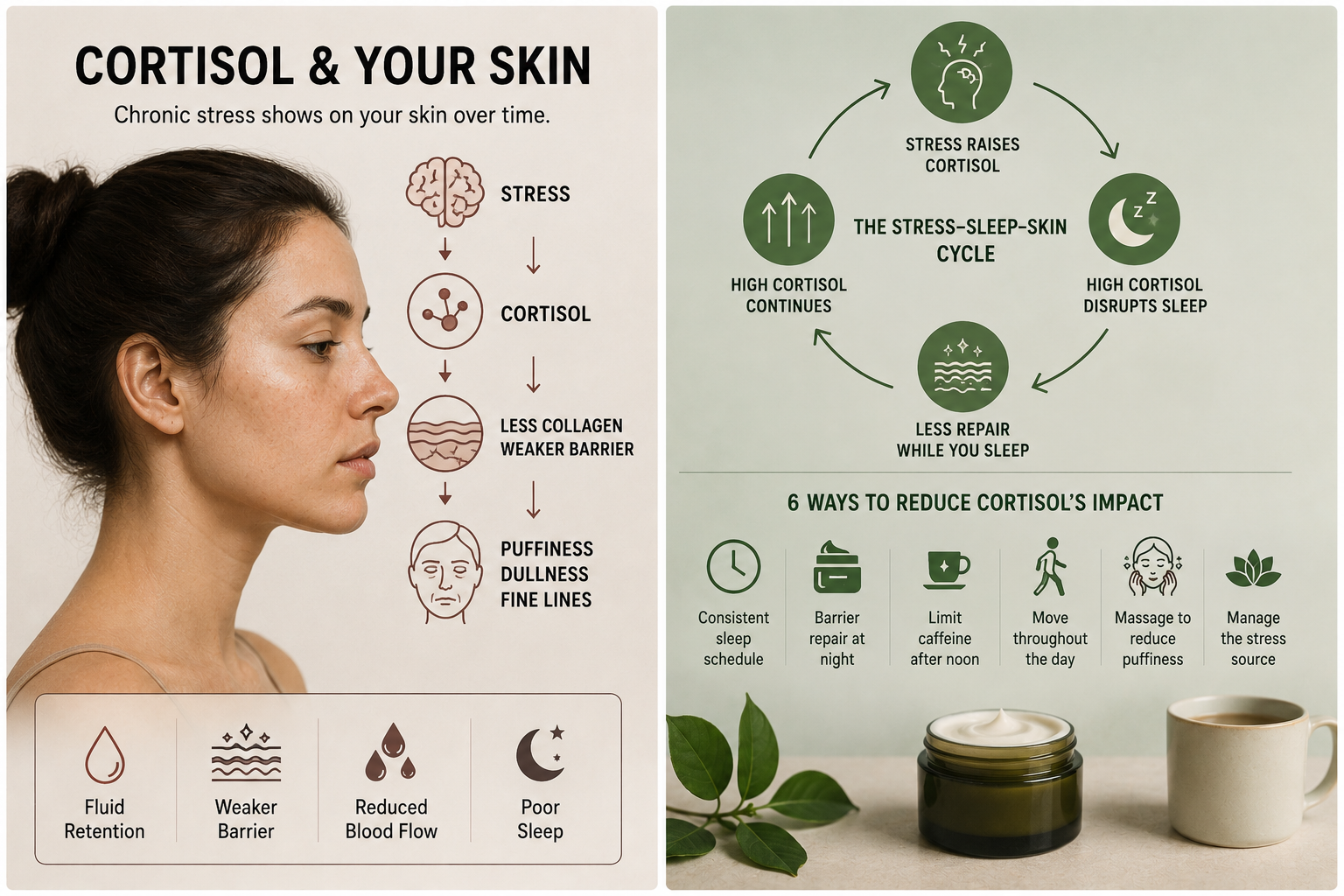
Skin cells have cortisol receptors, meaning your skin responds directly to circulating cortisol levels. Sustained high cortisol suppresses collagen production and accelerates its breakdown, since cortisol interferes with fibroblasts, the cells responsible for producing collagen and elastin.
Why Stressed Skin Looks Puffy and Dull
Cortisol also disrupts your skin barrier's ability to retain water and can trigger fluid retention, particularly around the face, contributing to the puffy appearance often described as "cortisol face." At the same time, chronic stress reduces blood flow to the skin's surface, which is part of why stressed skin often looks duller and grayer rather than flushed or radiant.
The Sleep-Cortisol-Skin Loop
Poor sleep raises cortisol, and elevated cortisol makes it harder to fall into deep, restorative sleep — creating a cycle that compounds over time. This matters for skin specifically because the majority of collagen repair and cell turnover happens during deep sleep, meaning disrupted sleep compounds the collagen loss already caused by cortisol itself.
6 Ways to Reduce Cortisol's Visible Impact
- Prioritize consistent sleep timing. Going to bed and waking at the same time daily helps regulate your cortisol rhythm more effectively than total sleep hours alone.
- Add a barrier-repair moisturizer at night. Ceramide-based formulas help counteract the moisture retention issues caused by cortisol-driven barrier disruption.
- Limit caffeine after midday. Caffeine independently raises cortisol levels, which can compound stress-related elevation later in the day.
- Incorporate short movement breaks. Brief walks or stretching sessions during high-stress periods help metabolize excess cortisol rather than letting it stay elevated.
- Use facial massage or lymphatic drainage techniques. Gentle upward massage can help address the fluid retention component of stress-related puffiness.
- Address the stress source, not just the skin symptoms. Topical products can support the skin barrier, but they can't override a consistently elevated cortisol baseline — sustainable stress management has the biggest long-term effect.
Bottom Line
"Cortisol face" isn't a myth, but it's not an overnight transformation either. Chronic stress genuinely suppresses collagen and disrupts your skin barrier over time, which means the most effective interventions target sleep and stress patterns, not just what you apply topically.