Reviewed by the HyaluFlow Health Editorial Team | Published: July 5, 2026 | Last Updated: August 27, 2026
Quick Answer
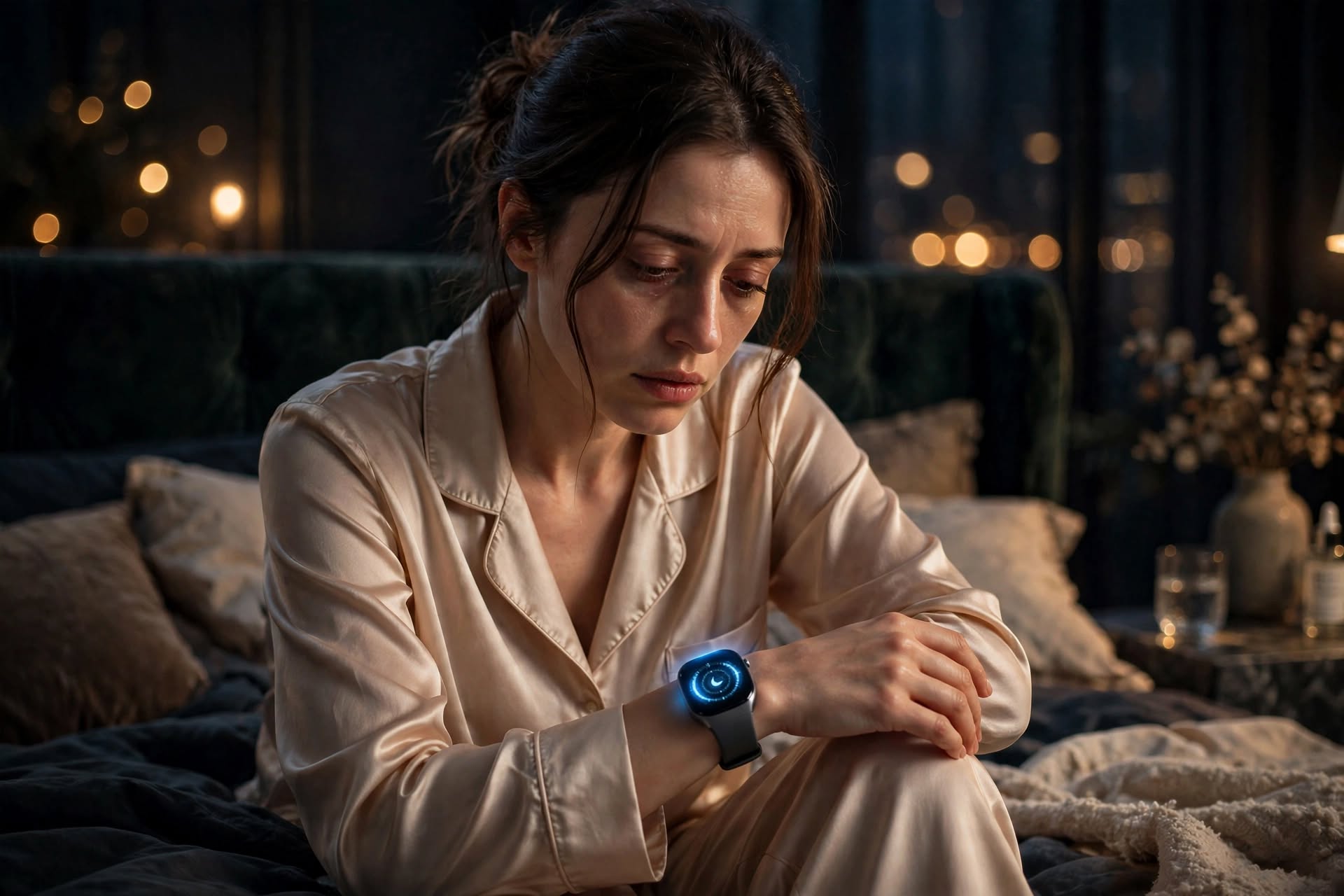
Yes. Constantly checking sleep scores can increase worry about sleep, especially when you treat estimates of deep sleep, REM sleep, or sleep quality as medical facts. This pattern is known as orthosomnia, although it is still a developing sleep-health concept rather than a formal diagnosis.
Key Takeaways
- Orthosomnia involves excessive concern about achieving “perfect” sleep, often influenced by tracking data.
- Consumer wearables can estimate sleep patterns but are not equivalent to a clinical sleep study.
- Nightly scores can become counterproductive when they increase sleep anxiety or perfectionism.
- Looking at longer-term patterns and daytime function is usually more useful than chasing a perfect score.
What Is Orthosomnia?
Orthosomnia describes becoming overly focused on optimizing sleep according to data from a wearable or sleep app. The term was introduced after sleep clinicians reported patients becoming preoccupied with tracker readings and pursuing an “ideal” sleep pattern.
In the original case report, patients sometimes trusted tracker estimates more than validated sleep assessments and sought treatment because of concerning readings. “Orthosomnia: Are Some Patients Taking the Quantified Self Too Far?” in the Journal of Clinical Sleep Medicine describes this pattern in detail.
Can a Sleep Tracker Actually Increase Anxiety?
A tracker does not automatically cause anxiety. The problem is how its information is interpreted.
If a low score makes you worry about being tired tomorrow, repeatedly check the app, or try to force yourself to sleep longer, the data can become part of a self-reinforcing cycle of sleep worry. Recent research also links orthosomnia with sleep effort, perfectionism, health anxiety, and dysfunctional beliefs about sleep. The 2025 Bergen Orthosomnia Scale study in Frontiers in Sleep provides a newer framework for studying this behavior.
How Accurate Are Sleep Trackers?
Consumer wearables can be useful for observing broad sleep patterns, but their estimates are not equivalent to polysomnography, the clinical reference method for measuring sleep architecture.
A 2025 meta-analysis of 24 studies found meaningful differences between consumer wrist devices and polysomnography for measures including total sleep time, sleep efficiency, sleep latency, and wake after sleep onset. The Journal of Clinical Sleep Medicine meta-analysis concluded that these devices should be interpreted cautiously.
Sleep-stage estimates can be particularly uncertain. A 2024 study comparing five commercial devices with polysomnography found device-specific biases in estimates of light, deep, and REM sleep. The Sensors study on commercial sleep-tracking accuracy highlights why a single “deep sleep” percentage should not be treated as a precise measurement.
Signs Your Sleep Tracker Is Becoming a Problem
- You feel anxious or disappointed after seeing a poor sleep score.
- You repeatedly check sleep data during the day or night.
- You stay in bed longer simply to improve your tracked numbers.
- You judge how you feel based on the score rather than your actual daytime function.
- You become rigid about hitting specific targets for deep sleep, REM sleep, or sleep duration.
How to Use a Sleep Tracker Without Losing Sleep
Start by reducing the importance of individual nights. A single low score does not establish insomnia, poor health, or a sleep disorder.
Consider reviewing weekly or longer-term trends instead of checking every morning. You can also disable notifications, avoid checking the data during the night, or take a short break if tracking consistently increases worry.
Most importantly, use the device as a source of information rather than a judge of whether you slept “correctly.”
What the Science Says
The evidence does not show that sleep trackers universally worsen insomnia. In a 2023 study of people with insomnia, adding a Fitbit to a self-help sleep intervention did not significantly worsen sleep-related worry compared with a sleep-diary control group. The Journal of Sleep Research study suggests the effect depends on the person and how the technology is used.
At the same time, sleep clinicians report that consumer sleep technology can contribute to orthosomnia and misunderstandings about sleep. Research published in the Journal of Clinical Sleep Medicine found providers saw both potential benefits and limitations in consumer sleep technology.
Common Myths About Sleep Tracking
Myth: A low sleep score means you slept badly.
Not necessarily. Wearables estimate sleep using sensors and proprietary algorithms, and accuracy varies between devices and sleep measures.
Myth: You need a specific amount of deep sleep every night.
There is no universally correct wearable-generated deep-sleep target that should be used to judge an individual night.
Myth: More tracking always means better sleep.
Tracking can reveal useful patterns, but excessive monitoring may increase sleep effort and worry in susceptible people.
Who Should Pay Attention?
Anyone who notices that sleep tracking increases anxiety, perfectionism, or rigid bedtime behaviors should reconsider how they use the technology.
If persistent sleep problems, significant daytime sleepiness, loud snoring, witnessed breathing pauses, or ongoing anxiety are present, discuss them with a healthcare professional rather than relying on a wearable's interpretation.
Evidence Strength Summary
Moderate evidence: Consumer sleep trackers have measurable limitations compared with polysomnography, particularly for detailed sleep-stage estimates. Early but growing evidence: Orthosomnia is a recognized research concept involving excessive sleep preoccupation, but it is not established as a standalone medical diagnosis.
Bottom Line
A sleep tracker should help you understand your sleep, not make you afraid of it. If checking the score leaves you more anxious than informed, step back from nightly numbers and focus on longer-term patterns, daytime function, and how you actually feel.