Reviewed by the HyaluFlow Health Editorial Team | Published: June 18, 2026 | Last Updated: August 23, 2026
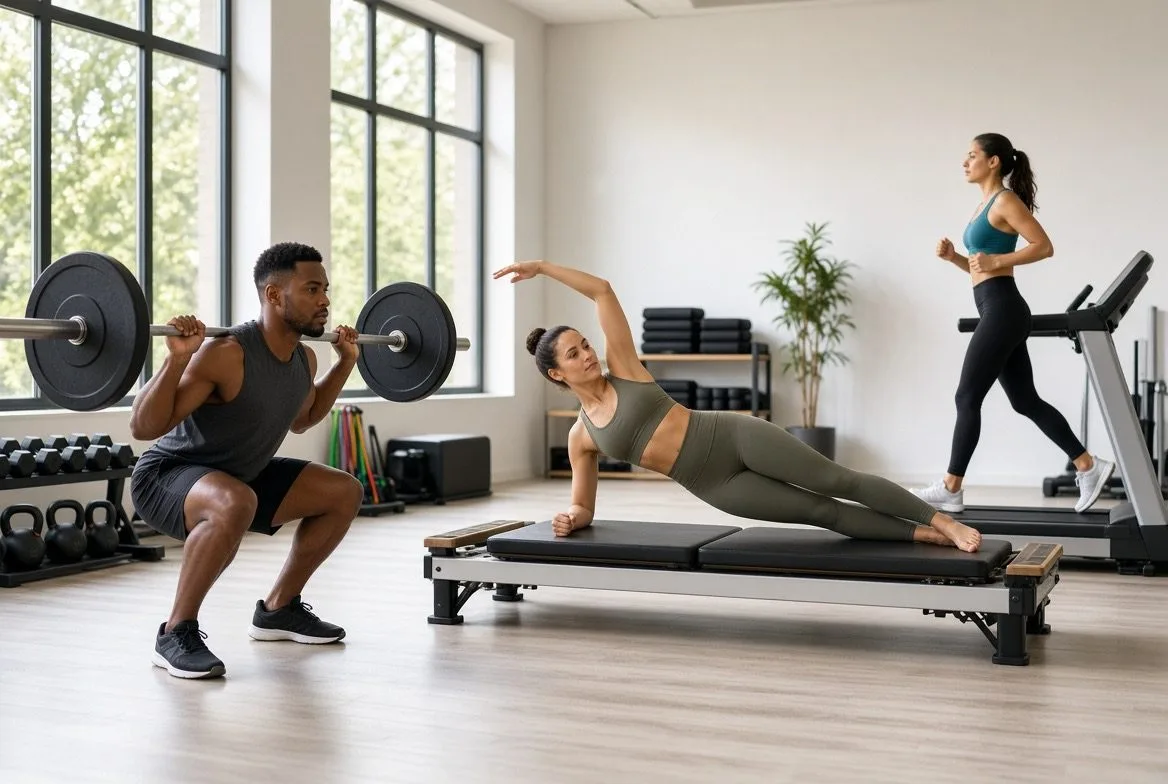
A good fitness routine does not need to push your body to exhaustion every day. Combining resistance training, Pilates, and aerobic exercise can provide a more complete approach to strength, endurance, mobility, and long-term health.
A practical hybrid routine can include strength training at least twice weekly, Pilates for controlled movement and core-focused exercise, and regular aerobic activity such as brisk walking. The goal is consistent progression, not constant high-intensity workouts.
- Resistance training is important for building and maintaining muscular strength.
- Pilates can support balance, flexibility, muscular endurance, and controlled movement.
- Aerobic exercise improves cardiorespiratory fitness and adds important health benefits.
- Exercise can support metabolic health, but no workout specifically “melts” fat from one area.
- There is not strong evidence that normal exercise causes harmful cortisol spikes that require avoiding challenging workouts.
- A sustainable weekly routine is more useful than an extreme short-term fitness program.
1. Why Combine Pilates, Strength, and Cardio?
Each training style offers different benefits. Resistance exercise challenges muscles with external or bodyweight loads, Pilates emphasizes controlled movement and body awareness, while aerobic exercise challenges the cardiovascular system.
Combining them can help create a more well-rounded fitness program instead of relying on one form of exercise for every goal.
U.S. Department of Health and Human Services: Physical Activity Guidelines for Americans
2. What Pilates Can Actually Do
Pilates uses controlled movements that can challenge the trunk, hips, and other muscle groups while emphasizing posture and movement control. Research suggests Pilates can improve several measures of physical performance, although results vary by population and program.
A systematic review found benefits for strength, balance, flexibility, and physical function in older adults, but the certainty of evidence was not uniformly high.
“Pilates improves physical performance and decreases risk of falls in older adults”
Pilates should therefore be viewed as one useful training method, not a replacement for every other form of exercise.
3. Why Resistance Training Matters
Progressive resistance training is one of the most direct ways to improve muscular strength. Exercises such as squats, split squats, rows, presses, hinges, and deadlift variations can train multiple major muscle groups.
Resistance training may also support metabolic health. A systematic review in adults with overweight or obesity found evidence that resistance training can influence markers of insulin resistance, although the size of the effect depends on the population and training program.
4. Add Aerobic Exercise for Endurance
Strength and Pilates do not replace cardiovascular exercise. Brisk walking, cycling, swimming, jogging, and similar activities can improve cardiorespiratory fitness and contribute to overall health.
U.S. guidelines recommend that adults work toward 150 to 300 minutes of moderate-intensity aerobic activity each week, plus muscle-strengthening activity on at least two days.
Physical Activity Guidelines for Americans, 2nd Edition
5. Can Exercise Improve Thyroid Health?
Exercise should not be marketed as a way to “reset” or automatically optimize thyroid function. Thyroid disorders require appropriate medical evaluation and, when indicated, conventional treatment.
Research in people with hypothyroidism suggests exercise can improve physical and mental health, but a 2023 systematic review found no statistically significant overall effect on thyroid hormone measures.
Duñabeitia et al., “Effect of physical exercise in people with hypothyroidism”
Some newer research has reported improvements in thyroid markers following longer exercise interventions, but the evidence remains heterogeneous. Exercise should therefore complement, not replace, medical care for thyroid disease.
6. A Practical Weekly Workout Formula
A hybrid fitness plan can be structured around two strength sessions, two Pilates sessions, and several moderate aerobic sessions. Beginners should start below their maximum capacity and increase training gradually.
- Monday: 35-minute full-body resistance training.
- Tuesday: 25-30 minutes of Pilates and controlled core work.
- Wednesday: 30-minute brisk walk or other moderate aerobic activity.
- Thursday: 35-minute full-body resistance training.
- Friday: 25-30 minutes of Pilates and mobility-focused exercise.
- Weekend: Optional longer walk, cycling, recreational activity, or recovery.
This sample schedule is a starting point rather than a prescription. Adjust the duration, intensity, and exercises according to fitness level, recovery, injuries, and medical needs.
7. Common Myths About Metabolism and Exercise
- Myth: Harder workouts always produce better results. Fact: Progress depends on training quality, recovery, consistency, and individual goals.
- Myth: Pilates alone dramatically raises your resting metabolism. Fact: Pilates can improve physical fitness, but claims of major metabolic increases are not well established.
- Myth: Exercise causes dangerous cortisol spikes. Fact: Exercise naturally affects stress hormones, and a temporary hormonal response is not the same as chronic harmful stress.
- Myth: One workout can specifically burn belly fat. Fact: Fat loss cannot be reliably targeted to one body area through a particular exercise.
8. Who Should Pay Attention?
This approach can suit adults who want to improve general fitness while balancing strength, mobility, and cardiovascular endurance. Beginners can use shorter sessions and lower resistance before gradually increasing workload.
People with thyroid disease, cardiovascular conditions, significant injuries, severe exercise intolerance, or other medical concerns should discuss an appropriate exercise plan with a qualified healthcare professional.
9. Evidence Strength Summary
- Strong evidence: Regular aerobic and muscle-strengthening activity provides broad health benefits.
- Moderate evidence: Resistance training improves muscular strength and can support metabolic health.
- Moderate to low evidence: Pilates can improve aspects of strength, balance, flexibility, and physical function.
- Limited or mixed evidence: Exercise directly changing thyroid hormone levels.
- Not supported: Claims that a specific workout can selectively burn body fat or permanently “reset” metabolism.
Bottom Line
You do not need an extreme workout routine to build a stronger, fitter body. Combining progressive resistance training, Pilates, and regular aerobic activity can provide a balanced foundation for strength, endurance, mobility, and long-term health.
Focus on gradual progression and consistency rather than chasing claims about cortisol, “metabolic resets,” or effortless fat oxidation. The most effective routine is one you can perform safely and sustain over time.