Can light really help your skin look younger? It sounds like science fiction, yet red light therapy has become one of the most researched non-invasive skincare treatments available today. While social media often portrays LED masks as miracle devices, decades of scientific research paint a more balanced picture. Red light therapy isn't magic, but when used consistently and correctly, it may help stimulate collagen production, reduce inflammation, improve skin texture, and support the skin's natural repair process.[1–5]
Originally developed for medical and wound-healing applications, red light therapy has expanded into dermatology clinics and at-home skincare devices. Today, dermatologist-recommended LED masks, handheld devices, and light panels allow people to incorporate photobiomodulation into their skincare routines without injections, downtime, or invasive procedures. Understanding what red light therapy can—and cannot—do is essential for setting realistic expectations and getting the best possible results.
- Red light therapy uses safe, non-UV wavelengths that do not damage the skin like ultraviolet light.
- It works by increasing cellular energy production through a process called photobiomodulation.
- Clinical studies support benefits for collagen production, skin texture, wound healing, and inflammation.
- Results develop gradually and typically require consistent use for several weeks.
- FDA-cleared devices should be used according to manufacturer instructions for safety and effectiveness.
What Is Red Light Therapy?
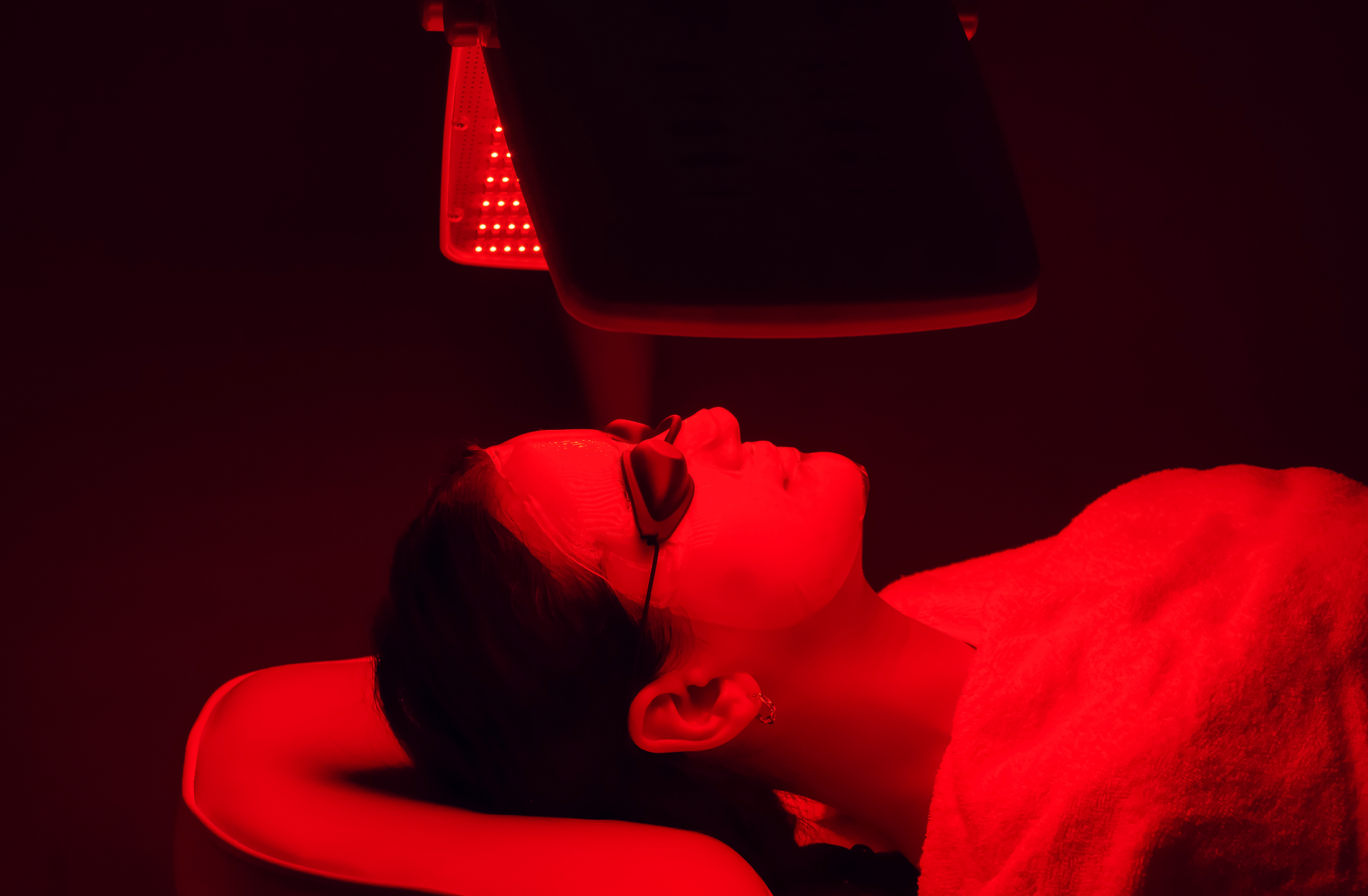
Red light therapy (RLT), also known as photobiomodulation (PBM) or low-level light therapy (LLLT), is a non-invasive treatment that exposes the skin to carefully controlled wavelengths of visible red and near-infrared light. Unlike ultraviolet (UV) radiation from sunlight, these wavelengths do not burn the skin or damage DNA. Instead, they are designed to interact with skin cells in ways that may support healing and tissue repair.[1–4]
Most skincare devices use red light between 630 and 660 nm to target the upper layers of the skin, where collagen-producing fibroblasts are located. Near-infrared light, typically between 810 and 850 nm, penetrates deeper into underlying tissues and may help reduce inflammation while supporting recovery after skin injury or cosmetic procedures.[2–5]
Because red light therapy does not rely on heat, chemicals, or skin injury to stimulate repair, it has become a popular option for individuals looking for a gentle addition to an evidence-based anti-aging skincare routine.
How Does Red Light Therapy Work?
The effects of red light therapy begin inside tiny structures called mitochondria, often referred to as the "powerhouses" of the cell. Within the mitochondria is an enzyme called cytochrome c oxidase, which absorbs specific wavelengths of red and near-infrared light.[1,3]
When this enzyme absorbs light energy, mitochondria produce more adenosine triphosphate (ATP), the primary energy source used by cells. Increased ATP availability may improve cellular repair, stimulate fibroblasts to produce collagen and elastin, reduce oxidative stress, and regulate inflammatory signaling. This biological process is known as photobiomodulation.[1–5]
What the Science Says: Rather than changing the skin overnight, red light therapy enhances normal cellular function. Improvements occur gradually as skin cells repair themselves more efficiently over time, which explains why consistent use is more important than occasional treatments.[1–5]
At-Home LED Devices vs. Professional Treatments
Both at-home and professional red light therapy devices use similar biological principles, but they differ in power, treatment time, and supervision.
| Feature | At-Home LED Device | Professional Clinic Treatment |
|---|---|---|
| Light intensity | Lower | Higher |
| Treatment time | 10–20 minutes | Shorter, depending on device |
| Cost | One-time device purchase | Pay per treatment session |
| Medical supervision | No | Yes |
| Best for | Routine maintenance and long-term consistency | Individualized treatment plans and combination therapies |
For many healthy adults, an FDA-cleared at-home LED device used consistently can provide meaningful improvements in skin quality. However, professional treatments may be more appropriate for individuals with complex skin concerns or those combining light therapy with procedures such as microneedling or laser resurfacing under dermatological supervision.[2–5]
7 Science-Backed Benefits of Red Light Therapy for Skin
Research on red light therapy has expanded considerably over the past two decades. While it is not a cure for every skin concern, multiple randomized controlled trials and systematic reviews suggest that consistent use can improve several aspects of skin health. Results vary depending on the device, wavelength, treatment schedule, and individual skin condition.[1–6]
1. Supports Collagen Production and Firmer Skin
Collagen is the primary structural protein responsible for keeping skin firm, smooth, and resilient. Beginning in the mid-20s, collagen production gradually declines, contributing to wrinkles, reduced elasticity, and skin laxity.
Red light therapy stimulates fibroblasts, the specialized skin cells responsible for producing collagen and elastin. By increasing cellular energy production through photobiomodulation, fibroblasts can function more efficiently and support gradual remodeling of the skin's extracellular matrix.[1–4]
Several clinical studies have reported improvements in skin firmness, elasticity, and collagen density after approximately 8–12 weeks of consistent treatment, making red light therapy a useful complement to evidence-based anti-aging skincare rather than a replacement for sunscreen or topical retinoids.[2–5]
2. Helps Reduce Fine Lines and Wrinkles
As collagen and elastin decline with age, fine lines gradually become deeper and more noticeable. Clinical trials have found that regular red light therapy may soften the appearance of crow's feet, forehead lines, and other superficial wrinkles by improving collagen organization and supporting healthier skin structure.[2–5]
Unlike injectable treatments that temporarily relax muscles or add volume, red light therapy works by supporting the skin's natural repair processes. Improvements develop gradually over several weeks and require ongoing maintenance to preserve results.
Clinical Insight: Most published studies report visible improvements after several weeks of consistent treatment rather than after a single session. Patience and regular use are essential for meaningful results.[2–5]
3. Reduces Inflammation and Skin Redness
Persistent inflammation contributes to premature skin aging and may worsen conditions such as rosacea, acne, and sensitive skin. Laboratory and clinical studies suggest that red light therapy can help regulate inflammatory pathways while reducing oxidative stress inside skin cells.[1–4]
Researchers believe photobiomodulation decreases the production of certain pro-inflammatory signaling molecules while supporting normal tissue repair. Many patients report reduced redness and improved skin comfort after several weeks of treatment, although individual responses vary depending on the underlying condition.[2–5]
4. Supports Faster Skin Repair and Wound Healing
One of the earliest medical uses of red light therapy involved promoting wound healing. Increased ATP production may help skin cells repair damaged tissue more efficiently while encouraging blood vessel formation and collagen remodeling during healing.[1,4–6]
Systematic reviews suggest photobiomodulation may accelerate healing after minor skin injuries and certain dermatological procedures when used appropriately under professional guidance. For this reason, some dermatologists incorporate LED therapy into post-procedure recovery plans following treatments such as microneedling or laser resurfacing.[4–6]
5. May Improve Skin Tone and Texture
Uneven skin texture and dullness often develop as skin cell turnover slows with age and cumulative sun exposure. By supporting healthier cellular function, red light therapy may help improve overall skin smoothness and radiance over time.[2–5]
Clinical studies have reported improvements in skin roughness, texture, and overall complexion after several weeks of consistent treatment. While red light therapy is not a primary treatment for hyperpigmentation, healthier skin remodeling may contribute to a more even-looking skin tone when combined with daily sunscreen and evidence-based skincare ingredients such as retinoids and vitamin C.[2–5]
6. May Help Manage Mild to Moderate Acne
Red light therapy is increasingly used as part of acne treatment because of its anti-inflammatory effects. It can help calm inflamed acne lesions while supporting the skin's natural healing process, potentially reducing redness and post-inflammatory irritation.[3–6]
Many FDA-cleared acne devices combine red light (approximately 630–660 nm) with blue light (around 405–415 nm). Blue light primarily targets Cutibacterium acnes bacteria, while red light helps reduce inflammation and supports tissue repair. This combination has demonstrated greater effectiveness than either wavelength alone in many clinical studies.[4–6]
7. May Support Healthier Hair Growth
Although primarily discussed for skincare, photobiomodulation has also shown promising results for androgenetic alopecia (pattern hair loss). Low-level red light may stimulate hair follicles, prolong the hair growth phase, and improve scalp circulation.[5–7]
Several randomized controlled trials have demonstrated increased hair density and thickness in some men and women using FDA-cleared low-level light therapy devices. However, results vary considerably, and treatment usually requires several months of consistent use. Red light therapy should be viewed as one option within a comprehensive hair-loss management plan rather than a standalone cure.[5–7]
How to Use Red Light Therapy at Home
Using an FDA-cleared LED device correctly is essential for both safety and effectiveness. While instructions vary slightly between manufacturers, most dermatologists recommend the following routine.
- Start with clean skin. Remove makeup, sunscreen, and skincare products that could interfere with light penetration.
- Position the device correctly. Follow the manufacturer's recommended distance. LED masks typically rest directly on the face, while panels are usually positioned several inches away.
- Treat for the recommended time. Most at-home devices are designed for sessions lasting approximately 10–20 minutes. Longer treatments do not necessarily produce better results.
- Apply skincare afterward. Once the session is complete, apply moisturizer and any compatible serums according to your skincare routine. Although increased absorption is often claimed online, current evidence is limited, so topical products should be selected based on their proven benefits rather than expectations of dramatically enhanced penetration.
- Stay consistent. Most clinical studies use treatments 3–5 times per week for at least 8–12 weeks before evaluating results.[2–6]
Common Mistakes to Avoid
- Expecting visible improvements after only one or two sessions.
- Using non-certified devices with unknown wavelengths or light intensity.
- Skipping sunscreen and relying on red light therapy alone for anti-aging.
- Using the device inconsistently.
- Looking directly into high-intensity LED panels without appropriate eye protection when recommended by the manufacturer.
- Believing that longer treatment sessions automatically produce better results.
What the Science Says: Research consistently shows that treatment consistency, appropriate wavelength, and device quality influence outcomes far more than excessively long treatment sessions. Most improvements become noticeable only after several weeks of regular use.[1–6]
Who Should Avoid or Use Red Light Therapy with Caution?
Red light therapy is generally considered safe when FDA-cleared devices are used according to the manufacturer's instructions. However, it is not appropriate for everyone, and certain medical conditions require additional caution. Before beginning treatment, consult a dermatologist or healthcare professional if you have any concerns.[1–6]
- People with photosensitivity disorders, such as lupus or porphyria.
- Individuals taking photosensitizing medications, including certain antibiotics, isotretinoin, or some chemotherapy drugs.
- People with active skin cancer or suspicious skin lesions that have not been evaluated by a healthcare professional.
- Pregnant individuals, as high-quality safety data remain limited.
- Anyone with epilepsy should consult a physician before using devices with flashing lights.
- Individuals recovering from recent eye surgery should follow their ophthalmologist's recommendations and use appropriate eye protection when required.
Common Myths About Red Light Therapy
Myth 1: Red light therapy can replace sunscreen.
Fact: Red light therapy does not protect against ultraviolet (UV) radiation. Daily broad-spectrum sunscreen remains the most effective way to prevent premature skin aging and reduce skin cancer risk.
Myth 2: More treatment time means better results.
Fact: Clinical research supports using the recommended treatment duration. Excessively long sessions do not necessarily improve outcomes and may reduce treatment efficiency.
Myth 3: Red light therapy produces instant anti-aging results.
Fact: Improvements develop gradually. Most clinical studies report noticeable changes after 8 to 12 weeks of regular use.
Myth 4: All LED devices are equally effective.
Fact: Device quality, wavelength, irradiance, and manufacturing standards vary considerably. FDA-cleared or medically validated devices generally provide more reliable performance than unverified products.
Who Should Pay Attention?
Red light therapy may be worth discussing with a dermatologist if you are looking for evidence-based, non-invasive support for:
- Early fine lines and wrinkles.
- Mild loss of skin elasticity.
- Persistent skin redness or inflammation.
- Recovery following selected cosmetic procedures under medical guidance.
- Mild to moderate acne as part of a comprehensive treatment plan.
- Androgenetic alopecia using FDA-cleared low-level light therapy devices.
It should be viewed as one component of a complete skincare routine that includes daily sunscreen, moisturization, topical treatments with proven benefits, healthy nutrition, adequate sleep, and avoidance of smoking.[2–6]
What the Science Says
Systematic reviews and randomized controlled trials indicate that photobiomodulation can improve several markers of skin health, particularly collagen production, wrinkle appearance, wound healing, and inflammatory skin conditions. However, researchers also note considerable variation between studies because treatment protocols, wavelengths, device power, and treatment schedules differ substantially.[1–7]
Current evidence supports red light therapy as a useful adjunct to evidence-based skincare rather than a replacement for established treatments. Ongoing research continues to refine the optimal wavelengths, treatment durations, and patient groups most likely to benefit.[1–7]
Evidence Strength Summary
- Strong evidence: Improved wound healing, reduced inflammation, and modest improvements in fine lines and skin texture with consistent use.
- Moderate evidence: Increased collagen production, improved skin elasticity, and support for acne treatment when combined with blue light.
- Emerging evidence: Benefits for hair growth, pigmentation concerns, and recovery after cosmetic procedures continue to be investigated.
Bottom Line
Red light therapy is one of the best-studied non-invasive skincare technologies available today. While it is not a miracle treatment, consistent use of an FDA-cleared device may help improve collagen production, reduce inflammation, soften fine lines, and support healthier-looking skin over time.
The best results come from combining red light therapy with daily sunscreen, gentle skincare, clinically proven topical ingredients, and healthy lifestyle habits. Realistic expectations and long-term consistency remain the keys to success.[1–7]
References
- Hamblin MR. Photobiomodulation or low-level laser therapy. BBA Clinical.
- Avci P, Gupta A, Sadasivam M, et al. Low-Level Laser (Light) Therapy in Skin. Seminars in Cutaneous Medicine and Surgery.
- Barolet D, Boucher A. LED photobiomodulation in dermatology. Journal of Cosmetic and Laser Therapy.
- American Academy of Dermatology (AAD). LED Light Therapy for Skin.
- National Center for Biotechnology Information (NCBI). Photobiomodulation and Skin Rejuvenation Reviews.
- U.S. Food and Drug Administration (FDA). Cleared Low-Level Light Therapy Devices.
- Systematic reviews indexed in PubMed evaluating photobiomodulation for skin rejuvenation, acne, wound healing, and androgenetic alopecia.