Reviewed by the HyaluFlow Health Editorial Team | Published: July 1, 2026 | Last Updated: August 28, 2026
Quick Answer:
Glycation is a natural process in which sugars react with proteins and form advanced glycation end products (AGEs). AGEs are associated with tissue aging, but there is not enough evidence to call scalp glycation a proven or "hidden cause" of premature hair aging.
Key Takeaways
- Glycation occurs naturally throughout the body.
- AGEs can affect collagen and contribute to tissue aging.
- The direct link between glycation and hair aging remains uncertain.
- Hair aging has multiple causes, including genetics and oxidative stress.
- Healthy nutrition, sun protection, and gentle hair care support scalp health.
What Is Glycation?
Glycation occurs when sugars react with proteins, lipids, or other molecules without normal enzymatic control. Over time, this can produce advanced glycation end products (AGEs), which can accumulate in tissues.
Research has linked AGEs with oxidative stress, inflammation, and changes in collagen structure. A recent dermatology review, Skin Glycomics: Unmasking the Role of Glycation End Products in Cutaneous Aging and Dermatology, describes glycation as one factor involved in skin aging.
Can Glycation Affect the Scalp?
The scalp is living skin surrounding hair follicles, so age-related changes in the scalp may influence the follicle environment. However, this does not prove that glycation directly causes hair loss, thinning, or premature graying.
A review in Getting Under the Skin of Hair Aging: The Impact of the Hair Follicle Environment suggests that age-related changes in scalp skin may contribute to changes in the aging hair phenotype.
How Hair Changes With Age
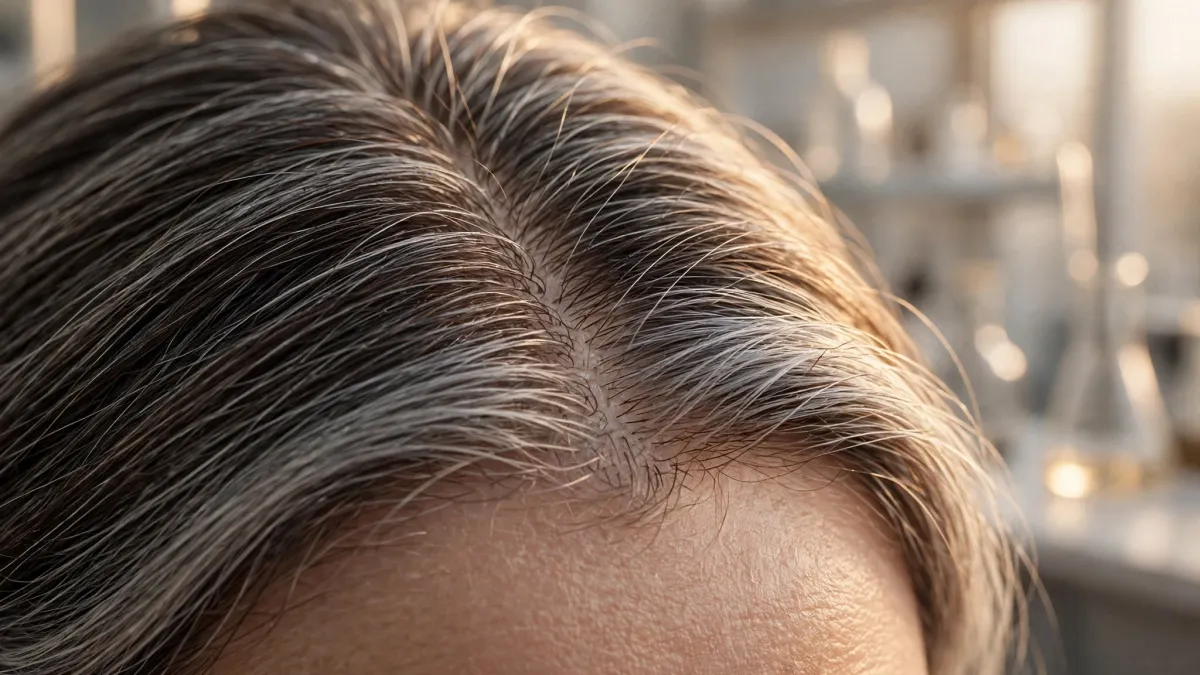
Hair aging involves both the hair shaft and the follicle. Common changes include reduced growth, thinning, dryness, texture changes, and loss of pigmentation.
Genetics, hormones, environmental exposure, oxidative stress, and lifestyle factors can all contribute. Aging of Hair describes both intrinsic and external factors involved in scalp and hair aging.
Factors That May Accelerate Hair Aging
1. Oxidative Stress
Oxidative stress can affect cells involved in hair pigmentation and follicle function. Research on age-related graying has identified oxidative damage as an important mechanism.
2. Smoking
Smoking is associated with poorer hair health and a higher prevalence of premature graying and some forms of hair loss. The Effects of Smoking on Hair Health: A Systematic Review reviewed evidence from 32 studies.
3. UV Exposure
Repeated ultraviolet exposure contributes to skin aging and can affect the scalp, particularly where hair coverage is reduced. Sun exposure is also among the factors associated with premature hair graying.
4. Genetics and Nutrition
Genetic factors strongly influence hair aging and graying. Nutritional deficiencies and overall diet may also affect hair health, making a balanced diet more useful than focusing on one "anti-aging" ingredient.
How to Support a Healthier Scalp
Eat a Balanced Diet
Prioritize adequate protein and a varied diet containing vegetables, fruits, whole grains, nuts, and other nutrient-rich foods. Hair follicles require nutrients for normal growth and maintenance.
Limit Excess Added Sugar
Reducing excessive added sugar is reasonable for overall health, but there is no clinical evidence that simply avoiding sugar reverses scalp glycation or restores aging hair.
Protect Your Scalp From UV
Use a hat or appropriate scalp sun protection when spending extended periods outdoors, especially when thinning or short hair leaves more skin exposed.
Be Gentle With Your Hair
Avoid unnecessary heat, harsh chemical processing, and excessive tension. Gentle cleansing and conditioning can reduce avoidable damage to the hair shaft.
Can Hair Products Reverse Glycation?
No shampoo, serum, or oil has been proven to reverse scalp glycation or restore biologically aged hair follicles. Research into anti-glycation treatments is developing, but much of the evidence remains focused on skin, laboratory models, or early-stage interventions.
Therefore, claims that a cosmetic product can "remove AGEs" from the scalp or reverse hair aging should be treated cautiously.
What the Science Says
Glycation is a legitimate biological process associated with aging, but the evidence is much stronger for its role in skin and systemic aging than for a direct role in human hair aging.
Hair graying is particularly complex. A recent review, Hair Graying Update and Review, links premature graying with genetic, oxidative, environmental, nutritional, and lifestyle factors rather than a single mechanism.
Evidence Strength Summary
Strong: Glycation and AGEs are established biological processes associated with tissue aging, while hair aging has multiple recognized contributors.
Limited: Evidence directly connecting scalp glycation to premature hair aging in humans remains limited. More research is needed before glycation can be considered a major cause.
Bottom Line
Scalp glycation is an interesting area of hair-aging research, but calling it the hidden cause of premature hair aging overstates the evidence. Focus instead on proven fundamentals: balanced nutrition, sun protection, avoiding smoking, and gentle hair care.