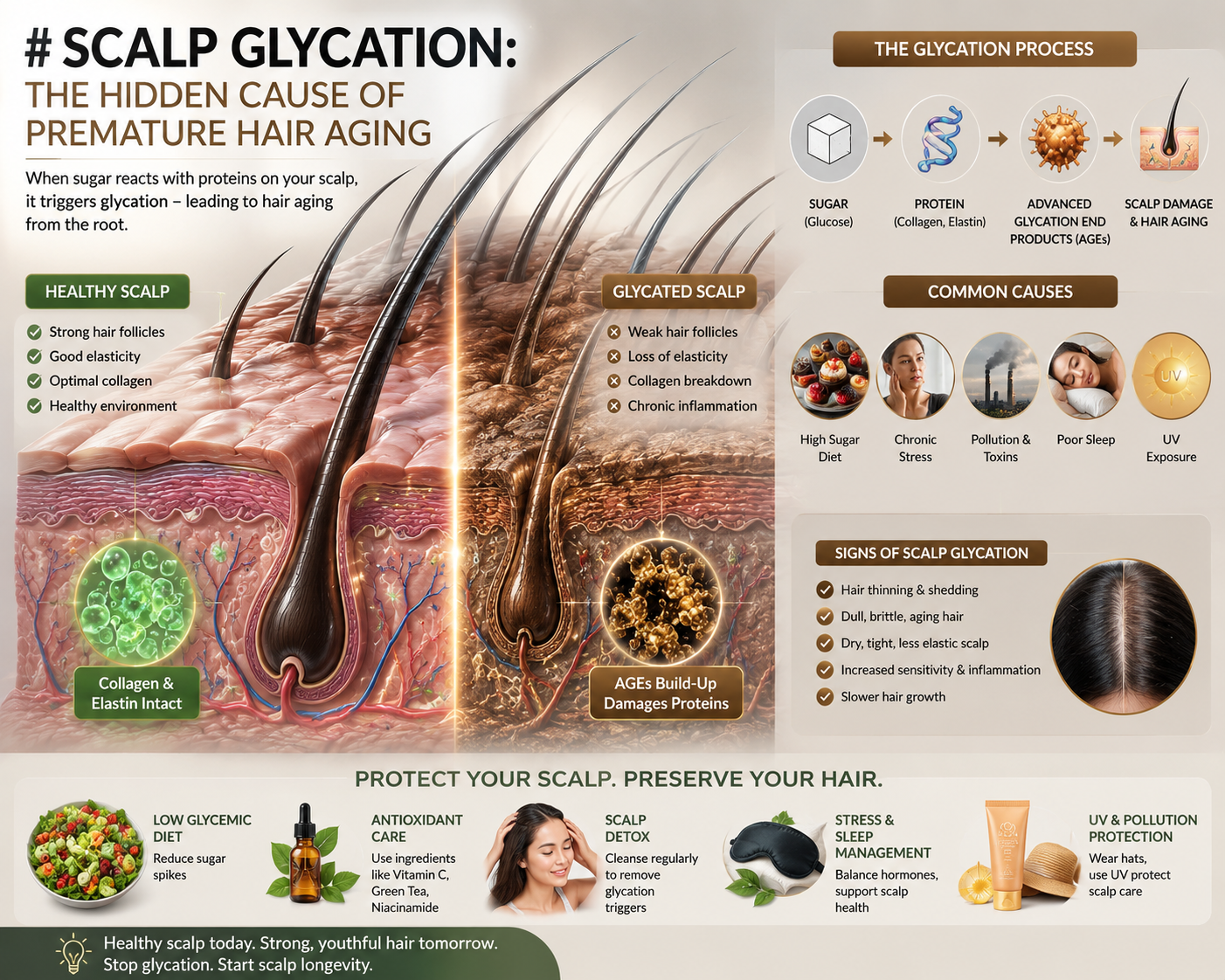
Scalp Glycation: The Hidden Cause of Premature Hair Aging
When people think about youthful hair, they often focus on shampoos, conditioners, hair oils, and styling products. While these products play an important role, many people overlook a lesser-known process that may influence the long-term health of both the scalp and hair—glycation.
Glycation is a natural process that occurs throughout the body. Over time, it can affect proteins such as collagen and elastin, reducing their flexibility and function. Researchers have primarily studied glycation in relation to skin aging, but growing scientific interest suggests that the scalp may also experience similar age-related changes that influence the environment where hair grows.
Although glycation is only one of many factors involved in hair aging, understanding it may help you build healthier habits that support stronger, shinier hair over time.
What Is Glycation?
Glycation happens when excess sugar molecules attach to proteins without the help of enzymes. This reaction creates compounds called Advanced Glycation End Products (AGEs).
These compounds can accumulate naturally as we age. They may reduce the flexibility of collagen, increase oxidative stress, and contribute to visible signs of aging throughout the body.
While your scalp isn't usually the first area people think about, it contains collagen-rich tissue, tiny blood vessels, and hair follicles that benefit from a healthy environment.
How Glycation May Affect the Scalp
Scientists continue to study how glycation influences scalp biology. Current evidence suggests that excessive glycation may contribute to changes in the skin that supports healthy hair follicles.
- Reduced collagen flexibility
- Increased oxidative stress
- Weaker skin barrier
- Less efficient nutrient delivery
- Reduced scalp elasticity
These changes do not directly cause hair loss on their own, but they may contribute to an environment that is less supportive of healthy hair growth over time.
Signs of Premature Hair Aging
Hair aging is influenced by genetics, hormones, environmental exposure, nutrition, and overall health. Some common signs include:
- Hair becoming thinner
- Loss of natural shine
- Increased dryness
- Greater breakage
- Reduced elasticity
- Coarser texture
- Early graying
These changes develop gradually and vary significantly between individuals.
Factors That May Increase Glycation
1. Diet High in Added Sugar
Frequently consuming large amounts of sugary foods and drinks may increase glycation within the body over time.
2. Smoking
Smoking increases oxidative stress, which is associated with faster visible aging of both skin and hair.
3. UV Exposure
Sun exposure affects not only facial skin but also the scalp, particularly in people with thinning hair.
4. Chronic Stress
Long-term stress may influence inflammation and overall scalp health, making healthy lifestyle habits increasingly important.
5. Poor Sleep
Sleep is essential for normal repair processes throughout the body, including the skin and scalp.
How to Support a Healthier Scalp
Eat Antioxidant-Rich Foods
Colorful fruits, leafy vegetables, nuts, seeds, and whole grains provide antioxidants that help protect cells from oxidative stress.
Choose Protein-Rich Meals
Hair is primarily composed of keratin, a structural protein. Adequate dietary protein supports normal hair structure.
Stay Hydrated
Hydration supports healthy skin function throughout the body, including the scalp.
Massage Your Scalp
A gentle scalp massage may improve relaxation and temporarily increase local blood circulation.
Use Gentle Hair Products
Choose shampoos that cleanse effectively without stripping excessive natural oils. Avoid harsh cleansing multiple times each day unless recommended by a healthcare professional.
Protect Your Scalp from the Sun
Wear a hat or use scalp-friendly sun protection when spending long periods outdoors.
Can Hair Products Reverse Glycation?
No shampoo or serum can completely reverse glycation. However, products containing antioxidants, moisturizing ingredients, and scalp-supporting formulations may help maintain healthier-looking hair while supporting the scalp's protective barrier.
Long-term results are generally achieved through consistent daily habits rather than relying on a single product.
Daily Anti-Aging Hair Routine
- Wash your scalp according to your hair type.
- Massage your scalp for 2–3 minutes.
- Eat protein with every major meal.
- Limit excess added sugar.
- Sleep 7–9 hours each night.
- Stay physically active.
- Drink enough water throughout the day.
- Protect your scalp from excessive UV exposure.