Medically reviewed by the HyaluFlow Health Editorial Team | Published: August 4, 2026 | Last Updated: August 4, 2026
Quick Answer
Red light therapy, also called low-level light or laser therapy (LLLT), can improve hair density in some people with pattern hair loss. Controlled trials and systematic reviews support a modest benefit, but results depend on the device, treatment schedule, and whether follicles are still active.
Key Takeaways
- LLLT has clinical evidence for male and female pattern hair loss.
- Benefits are usually measured after several months, not days or weeks.
- It is non-invasive and generally well tolerated in clinical studies.
- Evidence is strongest for mild-to-moderate pattern hair loss.
- Not every red-light device has the same clinical evidence.
What Is Red Light Therapy?
Red light therapy uses low-intensity visible red or near-infrared light. For hair loss, the treatment is usually called low-level light therapy or low-level laser therapy.
Unlike ablative lasers, LLLT is designed to deliver low-energy light without intentionally damaging or heating tissue. A review in Lasers in Surgery and Medicine: Low-Level Laser (Light) Therapy for Treatment of Hair Loss describes proposed cellular effects and the clinical evidence for hair loss.
How Might It Support Hair Growth?
Pattern hair loss involves progressive follicle miniaturization and changes in the hair-growth cycle. Researchers propose that photobiomodulation may influence cellular energy and signaling in follicles, although the exact mechanism in human hair growth is not fully established.
LLLT is intended to support existing follicles, not create brand-new follicles in areas of advanced baldness.
What Does the Research Show?
A systematic review and meta-analysis of randomized controlled trials found that LLLT significantly increased hair density compared with sham treatment in adults with androgenetic alopecia. Comparative Effectiveness of Low-Level Laser Therapy for Adult Androgenic Alopecia reported this benefit across both men and women, while noting heterogeneity between trials.
A separate systematic review of FDA-cleared home-use devices also found a significant improvement in hair density, including in both men and women. However, the authors noted short follow-up periods and differences between devices. A Systematic Review and Meta-analysis of FDA-Approved Home-Use Low-Level Light/Laser Therapy Devices supports these findings while calling for longer-term research.
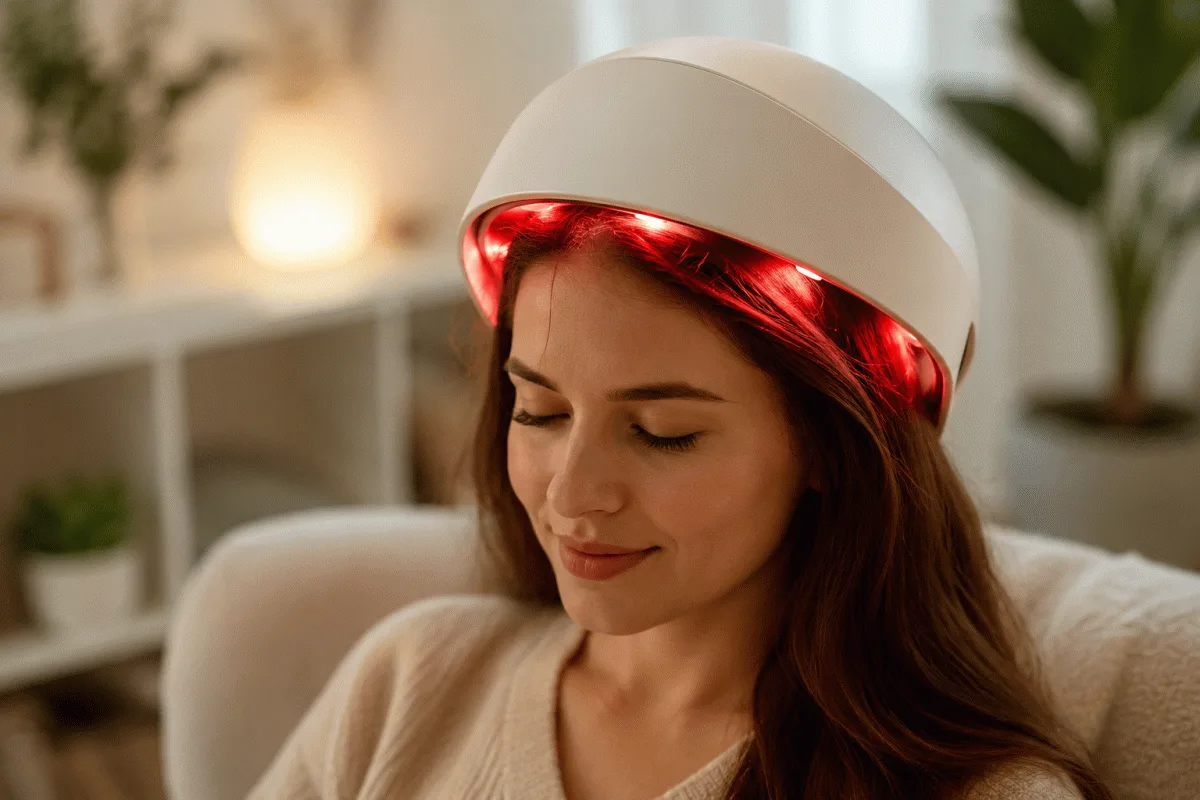
One randomized helmet-device trial reported significantly greater hair-density and hair-thickness improvements after 16 weeks than with a sham device. Low-Level Light Therapy Using a Helmet-Type Device for Androgenetic Alopecia provides additional controlled evidence.
Who Is Most Likely to Benefit?
LLLT is most relevant to people with androgenetic alopecia, also called pattern hair loss, particularly when follicles are miniaturized but still producing hair.
It may be less useful for advanced, long-standing baldness or hair loss caused by another condition. Sudden, patchy, scarring, or unexplained hair loss deserves a medical evaluation before starting a device.
Red Light Therapy vs. Minoxidil
Minoxidil has a longer-established evidence base and remains a standard treatment for pattern hair loss. LLLT is a non-drug option, but it should not automatically be treated as a replacement.
A randomized trial comparing minoxidil alone with minoxidil plus LLLT found numerically greater hair-density improvement with the combination, but the difference was not statistically significant. Efficacy of Low-Level Laser Therapy in Androgenetic Alopecia: A Randomized Controlled Trial therefore does not establish a definite added benefit from combining the treatments.
How Long Does It Take?
Do not expect visible regrowth after a few sessions. Clinical trials commonly evaluate LLLT over roughly 16 to 26 weeks, so consistent use for several months is a more realistic expectation.
Follow the specific device instructions rather than assuming that longer or more frequent sessions will accelerate growth.
Is Red Light Therapy Safe?
Published trials generally report a favorable safety profile, with serious adverse effects uncommon. Mild scalp discomfort, redness, itching, or irritation can occur, although exact rates vary between devices and studies.
If you have a photosensitivity disorder, scalp disease, or unexplained hair loss, ask a clinician whether LLLT is appropriate.
What the Science Says
The strongest conclusion is not that red light therapy "cures" baldness. It is that specific LLLT devices have demonstrated improvements in hair density in controlled studies of pattern hair loss.
A systematic review and meta-analysis found a significant increase in hair density versus sham devices, but also highlighted differences between trials. Systematic Review of Low-Level Laser Therapy for Adult Androgenic Alopecia concluded that LLLT is promising but that larger studies with longer follow-up are needed.
Evidence Strength Summary
- Overall evidence: Moderate.
- Best-supported use: Pattern hair loss in adults, especially mild-to-moderate cases.
- Main limitation: Studies differ in device design, wavelength, treatment schedules, and follow-up duration.
Common Myths
Myth: Any red LED device will regrow hair.
Fact: Clinical evidence applies to studied treatment parameters and specific devices, not every product sold online.
Myth: LLLT permanently reverses pattern baldness.
Fact: Pattern hair loss is chronic, and maintaining gains generally requires ongoing treatment.
Myth: More light means faster growth.
Fact: There is no solid basis for assuming that excessive exposure improves results.
Who Should Pay Attention?
Consider professional evaluation if hair loss is rapid, patchy, painful, associated with scalp inflammation, or accompanied by other symptoms. The right diagnosis matters because LLLT evidence is mainly for pattern hair loss.
Bottom Line
Red light therapy can help some people with pattern hair loss, and controlled research supports a real but not miraculous effect. If you choose LLLT, use a device with credible clinical evidence, follow its treatment schedule, and keep expectations realistic.