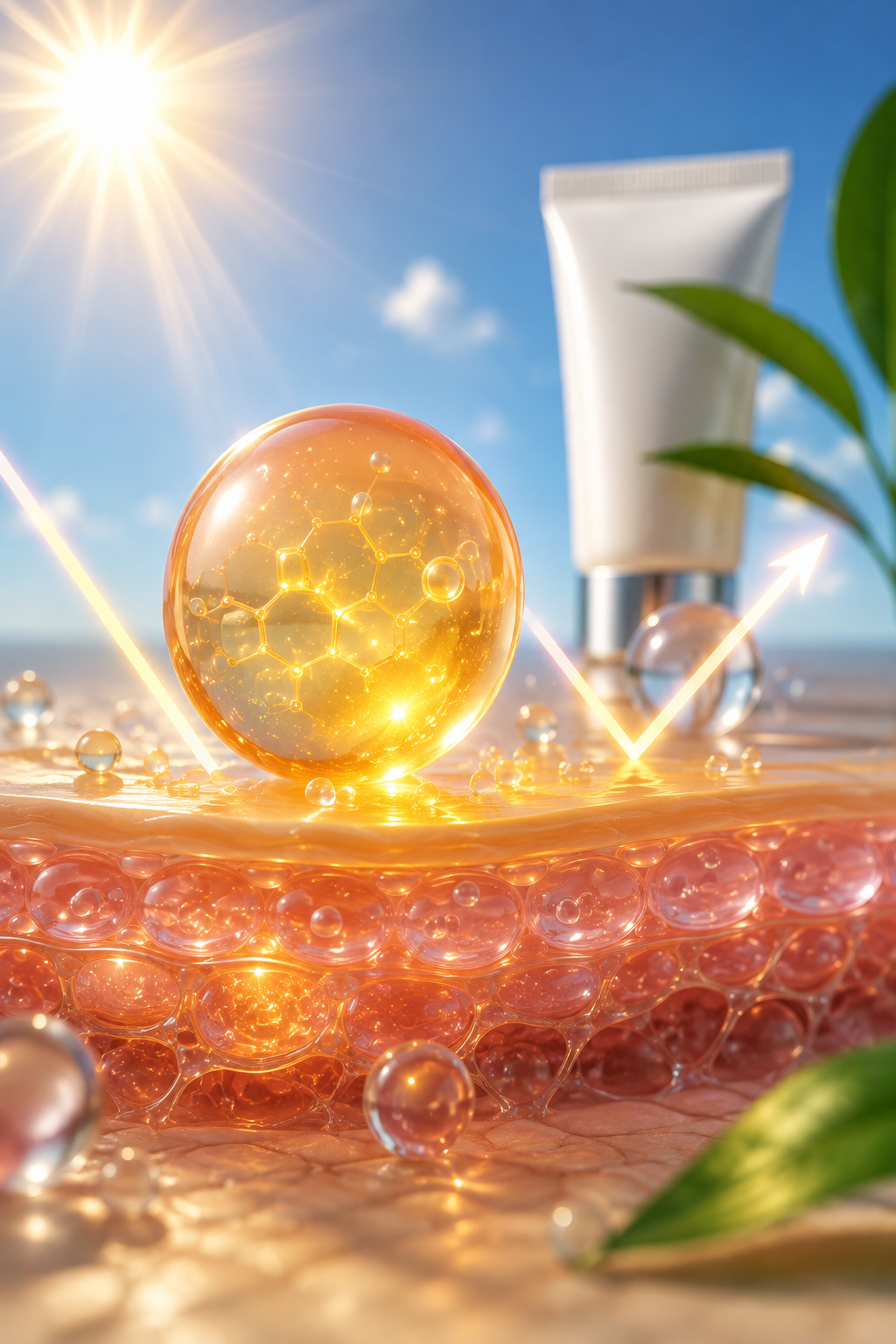
The Solar Spectrum and Skin Aging
Sunlight consists of two primary types of ultraviolet rays that damage the skin: UVA (aging rays) and UVB (burning rays). UVA penetrates deep into the dermis, breaking down collagen and causing premature wrinkles, while UVB targets the epidermis, causing sunburns. Daily sunscreen application is the single most effective anti-aging step you can take.
Physical Sunscreens: The Mineral Shield
Physical or mineral sunscreens utilize ingredients like Zinc Oxide and Titanium Dioxide. They sit on top of the skin, acting as microscopic mirrors that reflect and scatter UV rays away from the body.
- Pros: Gentle on sensitive skin, immediate protection, less likely to trigger heat-related redness.
- Cons: Can leave a white cast, particularly on deeper skin tones, and may feel heavier on oily skin.
"Mineral sunscreens act as a physical shield, making them ideal for post-treatment, sensitive, or reactive skin types."
Chemical Sunscreens: The Organic Absorbers
Chemical sunscreens contain active organic compounds such as Avobenzone, Octisalate, and Oxybenzone. These filters absorb UV rays like a sponge, converting the radiation into harmless heat energy that is released from the skin. They are typically lightweight, blend clear, and layer well under makeup.