Medically reviewed by HyaluFlow Editorial Team | Updated: July 30, 2026
Quick Answer
Dark elbows usually develop because the skin becomes thicker, drier, and more pigmented after years of friction and pressure. Regular exfoliation, intense moisturization, reducing friction, and using proven brightening ingredients can gradually improve their appearance. However, sudden or widespread darkening should be evaluated by a healthcare professional.
Key Takeaways
- Dark elbows are commonly caused by friction, dry skin, and hyperkeratosis.
- Repeated pressure can trigger excess melanin production, leading to hyperpigmentation.
- The elbow naturally has fewer oil glands, making it more prone to dryness.
- Ingredients like urea, lactic acid, niacinamide, and salicylic acid have the strongest evidence for improving rough, dark elbows.
- Persistent or rapidly worsening discoloration may indicate an underlying medical condition that requires evaluation.
Introduction
Have you noticed your elbows looking darker than the rest of your skin, even though you wash them regularly? You're not alone.
Dark elbows are one of the most common skin concerns, especially as people get older. Fortunately, they are rarely caused by poor hygiene.
In most cases, the dark color develops because the skin responds to years of friction, pressure, dryness, and repeated bending. These changes gradually make the skin thicker, rougher, and more pigmented.[1][2]
Understanding why this happens is the first step toward choosing treatments that actually work instead of relying on harsh scrubs or home remedies that may worsen irritation.
Why This Matters
The skin covering the elbows is very different from the skin on your cheeks or forearms. It stretches constantly, experiences repeated pressure, and contains relatively few oil glands.
These unique characteristics make elbows especially vulnerable to dryness, thickened skin, and discoloration over time.[2]
Although dark elbows are usually harmless, they can occasionally be associated with conditions such as eczema, psoriasis, diabetes, obesity-related insulin resistance, or acanthosis nigricans. Knowing the difference helps you decide whether simple skincare is enough or whether medical advice is needed.[3][4]
The Main Cause: Hyperkeratosis
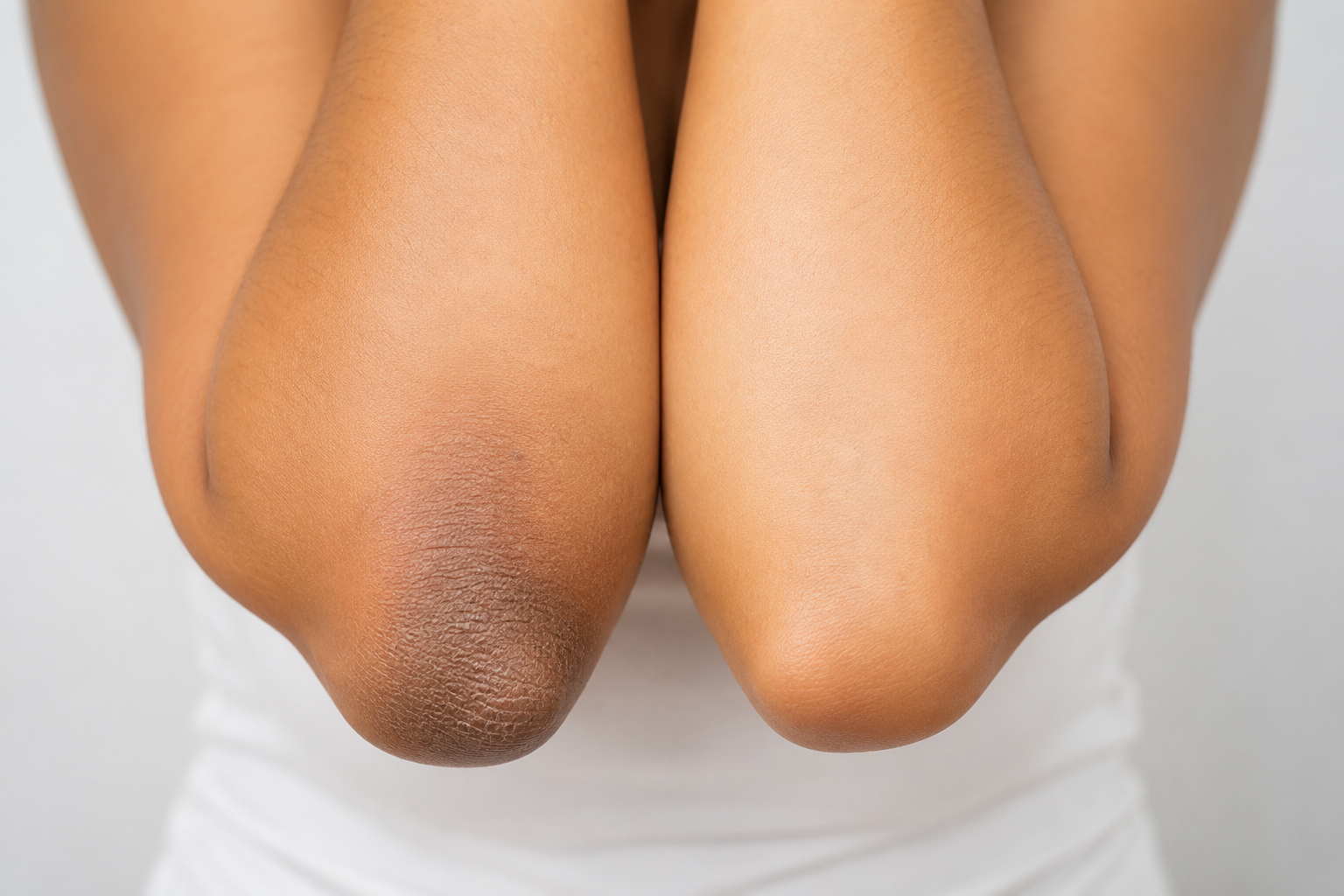
The most common reason elbows become darker is hyperkeratosis, a protective response in which the outer layer of skin becomes thicker.
Every time you lean on a desk, rest your elbows on a table, or place pressure on the joint, your skin experiences mechanical stress. To protect the tissues underneath, it produces extra keratin, the protein that strengthens the skin.[1]
Over time, these extra layers of dead skin cells accumulate on the surface. Because they are dry and compact, they reflect light differently, making the elbows appear dull, gray, or darker than surrounding skin.
Friction Can Trigger Dark Pigmentation
Dark elbows are not only thicker. They are often more pigmented too.
Repeated rubbing and pressure create low-grade inflammation in the skin. In response, melanocytes produce more melanin, the pigment responsible for skin color. This process is known as post-inflammatory hyperpigmentation (PIH).[1][5]
Because elbow skin naturally sheds more slowly than many other areas, excess pigment can remain visible for months or even years if the friction continues.
Years of pressure, friction, and dryness cause the elbow to become both thicker and darker as part of the skin's natural protective response.
Why Dry Skin Makes Elbows Look Worse
Elbows contain very few sebaceous (oil) glands compared with other parts of the body. That means they lose moisture more easily.
When the skin becomes dehydrated, dead skin cells cling together instead of shedding normally. This creates a rough, flaky surface that looks darker and feels coarse.[2]
Dryness also weakens the skin barrier, making the area more susceptible to irritation and further pigmentation.
Can Aging Make Elbows Darker?
Yes. Aging naturally slows skin cell turnover and reduces the production of collagen, ceramides, and natural moisturizing factors.
As a result, older skin becomes drier, less elastic, and slower to replace damaged cells. Years of accumulated friction also become more noticeable, making elbow discoloration increasingly visible with age.[6]
This explains why many people notice dark elbows becoming more prominent during middle age, even if their daily habits have not changed.
When Dark Elbows Could Signal a Medical Condition
Most dark elbows are harmless, but not all cases are caused by friction alone.
Seek medical advice if the discoloration develops suddenly, spreads quickly, becomes velvety, or is accompanied by symptoms such as itching, pain, unexplained weight changes, or fatigue.
Conditions that may contribute include:
- Acanthosis nigricans associated with insulin resistance or diabetes.
- Eczema or psoriasis causing chronic inflammation.
- Hormonal disorders such as Addison's disease.
- Vitamin B12 deficiency in some individuals.
- Certain medications that increase skin pigmentation.[3][4][7]
Identifying and treating the underlying cause is essential because topical skincare alone may not resolve medically related pigmentation.
How to Brighten Dark Elbows Safely
Improving dark elbows takes consistency, not aggressive scrubbing. Most people notice gradual improvement within several weeks when they combine exfoliation, hydration, and friction reduction.
1. Exfoliate Gently
Chemical exfoliants are generally more effective than harsh physical scrubs.
Look for products containing lactic acid, salicylic acid, or glycolic acid. These ingredients help dissolve dead skin cells, smooth rough patches, and improve skin texture.[8]
2. Moisturize Every Day
Daily moisturization is one of the most important steps.
Choose creams containing 10% to 20% urea, ceramides, glycerin, or petrolatum. Urea is particularly effective because it hydrates the skin while softening thick keratin buildup.[9]
3. Use Brightening Ingredients
Once the skin barrier has improved, ingredients that target excess pigmentation may help even out skin tone.
Evidence-supported options include:
- Niacinamide
- Alpha-arbutin
- Vitamin C
- Azelaic acid
- Licorice root extract
These ingredients help reduce melanin production and gradually fade discoloration with regular use.[10]
4. Reduce Friction
Small daily habits can make a significant difference.
Avoid resting your elbows on hard surfaces for long periods. If your work requires leaning on a desk, use a soft cushion or elbow pad to reduce repeated pressure.
What the Science Says
Research shows that friction-induced hyperkeratosis and post-inflammatory hyperpigmentation are common biological responses to repeated mechanical stress.
Clinical guidelines also support the use of keratolytic ingredients such as urea, lactic acid, and salicylic acid for thickened skin, while pigment-regulating ingredients like niacinamide and azelaic acid may improve uneven skin tone over time.[1][8][9][10]
Although these treatments can significantly improve appearance, results usually develop gradually over several weeks rather than overnight.
Common Myths About Dark Elbows
Myth: Dark elbows mean poor hygiene.
Fact: In most cases, dark elbows result from friction, dry skin, and thickened skin rather than inadequate washing.
Myth: Scrubbing harder will make elbows lighter.
Fact: Aggressive scrubbing can increase irritation and inflammation, potentially making pigmentation worse.
Myth: Lemon juice is the safest natural remedy.
Fact: Lemon juice is acidic and may irritate the skin or increase sensitivity to sunlight. Evidence-based skincare ingredients are generally safer and more effective.[8]
Who Should Pay Attention?
Most people can manage dark elbows with consistent skincare. However, medical evaluation is recommended if the discoloration develops suddenly, spreads rapidly, becomes velvety, or appears alongside symptoms such as fatigue, unexplained weight changes, or increased thirst.
People with diabetes, obesity, eczema, psoriasis, hormonal disorders, or vitamin deficiencies may be more likely to experience persistent elbow discoloration.[3][4][7]
Bottom Line
Dark elbows are usually a normal consequence of aging, repeated friction, dry skin, and the gradual buildup of dead skin cells. They rarely indicate poor hygiene.
The most effective approach combines gentle chemical exfoliation, daily moisturization with ingredients like urea, pigment-correcting skincare, and reducing repeated pressure on the elbows. While improvement takes time, consistent care can noticeably soften rough skin and restore a more even skin tone.[8][9][10]
References
- [1] American Academy of Dermatology. Hyperkeratosis and thickened skin overview.
- [2] Cleveland Clinic. Dry Skin (Xerosis): Causes, Symptoms and Treatment.
- [3] American Academy of Dermatology. Acanthosis Nigricans: Signs, Causes and Treatment.
- [4] Mayo Clinic. Acanthosis Nigricans: Symptoms and Causes.
- [5] StatPearls. Post-Inflammatory Hyperpigmentation. National Center for Biotechnology Information.
- [6] National Institute on Aging. Aging Skin.
- [7] DermNet NZ. Hyperpigmentation: Causes and Management.
- [8] American Academy of Dermatology. Exfoliation and Safe Skin Care Recommendations.
- [9] DermNet NZ. Urea Cream: Uses and Benefits.
- [10] Draelos ZD. Skin Lightening Agents and Treatment of Hyperpigmentation. Journal of Clinical and Aesthetic Dermatology.