Can Back Sleeping Prevent Neck Wrinkles?
Back sleeping may reduce some sleep-related skin compression, but it has not been proven to prevent neck wrinkles. Learn which factors and skincare strategies have stronger evidence.
Explore our comprehensive guide systems spanning anti-aging compounds, cellular weight loss, and organic beauty routines.
Back sleeping may reduce some sleep-related skin compression, but it has not been proven to prevent neck wrinkles. Learn which factors and skincare strategies have stronger evidence.
Your sleep position can create repeated pressure and distortion on facial skin. Back sleeping may reduce this mechanical stress, but sun protection and evidence-based skincare remain more important for preventing premature skin aging.
Side sleeping can create temporary sleep lines from repeated facial pressure, but evidence that it permanently ages one side of the face faster is limited. Learn what research actually shows and how to reduce facial compression.
Side sleeping can create temporary chest sleep lines, but UV exposure and natural aging have stronger evidence as causes of lasting decolletage wrinkles. Learn what actually helps.
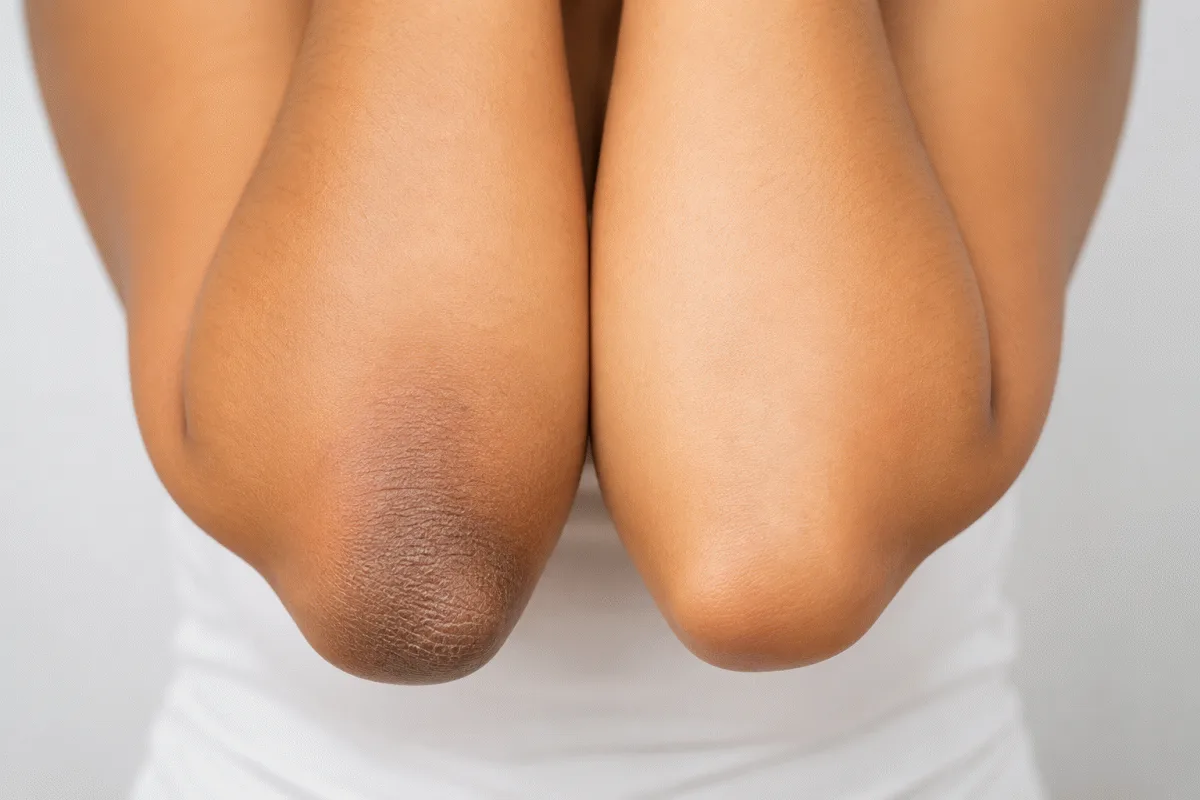
Dark elbows are commonly linked to dryness, friction, thickened skin, and post-inflammatory pigmentation. Learn what causes elbow discoloration with age, how to improve it safely, and when darkening may need medical evaluation.
Knee skin can become dry, crepey, wrinkled, and less firm with age, UV exposure, friction, and changes in underlying tissue. A consistent routine using moisturizers, retinoids, gentle exfoliation, sunscreen, and strength training can improve skin quality without promising unrealistic tightening.