Reviewed by the HyaluFlow Health Editorial Team | Published: June 30, 2026 | Last Updated: August 28, 2026
Quick Answer: Yes, visible sun damage on the hands can be improved, but it cannot be completely reversed. Daily broad-spectrum sunscreen is essential, while retinoids, vitamin C, niacinamide, and pigment-targeting ingredients can gradually improve spots, texture, and fine lines.
Key Takeaways
- UV exposure is a major driver of premature hand aging.
- Solar lentigines are commonly known as age or sun spots.
- Retinoids have strong evidence for improving photoaged skin.
- Vitamin C may improve pigmentation and photoaged texture.
- Niacinamide can improve uneven tone and visible signs of aging.
- Dermatologists can treat stubborn pigmentation with procedures such as lasers and cryotherapy.
Why the Backs of Hands Show Sun Damage
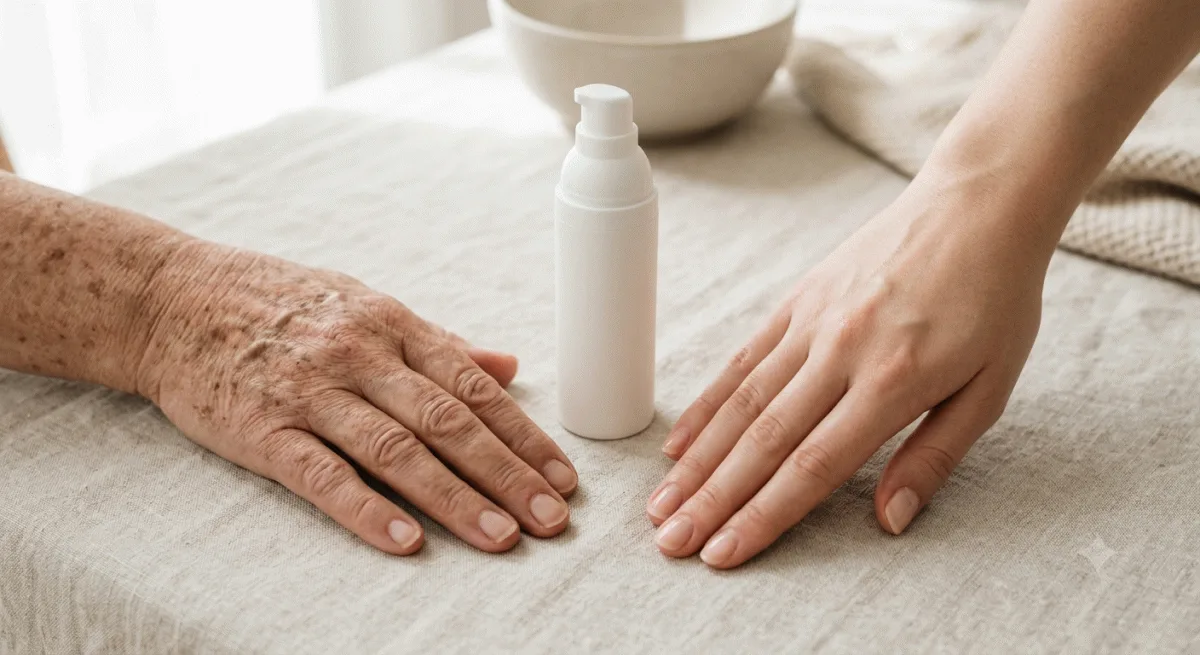
The backs of the hands receive frequent UV exposure from driving, walking, gardening, and outdoor work. Unlike some facial areas, the hands also have relatively little soft-tissue cushioning, making age-related volume loss and skin changes more noticeable.
Chronic UV exposure contributes to oxidative stress and changes in collagen and elastin. These processes can lead to wrinkles, uneven texture, reduced firmness, and visible pigmentation. Restoration of collagen formation in photodamaged human skin by tretinoin describes how photoaged skin can show impaired collagen formation.
Can Age Spots on Hands Be Faded?
Yes. Solar lentigines, often called age spots or sun spots, can become lighter with appropriate topical treatments or dermatologist-performed procedures.
The American Academy of Dermatology guidance on younger-looking hands lists options including lightening products, chemical peels, cryosurgery, laser therapy, and microdermabrasion.
Not every dark spot is an age spot. A lesion that changes rapidly, bleeds, becomes painful, or develops an unusual shape should be evaluated by a dermatologist.
Best Ingredients for Sun-Damaged Hands
Retinoids
Topical retinoids are among the best-studied treatments for photoaging. Tretinoin can improve fine wrinkles and stimulate collagen formation in photodamaged skin. New England Journal of Medicine research on tretinoin and collagen provides clinical evidence for this effect.
Vitamin C
Topical vitamin C provides antioxidant activity and may support collagen production while improving uneven pigmentation. A randomized study of photoaged skin found improvement with topical 5% vitamin C, while a later systematic review found evidence for improvements in pigmentation and photoaging but noted that more research is needed. Topical ascorbic acid on photoaged skin
Systematic review of topical vitamin C for melasma and photoaging also found potential benefits for uneven and wrinkled skin.
Niacinamide
Niacinamide may improve uneven pigmentation, fine lines, elasticity, and other visible signs of aging. A randomized clinical trial using 5% niacinamide found improvements in several measures of facial photoaging after 12 weeks. Niacinamide: A B vitamin that improves aging facial skin appearance
Simple Routine for Sun-Damaged Hands
Morning
Apply a vitamin C or niacinamide product if tolerated, followed by moisturizer and broad-spectrum SPF 30 or higher. Reapply sunscreen after frequent hand washing or extended outdoor exposure.
Night
Use a moisturizer and introduce a retinoid gradually if appropriate. Start only a few nights per week and reduce frequency if persistent dryness, burning, or peeling develops.
Barrier-supporting ingredients such as ceramides and glycerin can help maintain comfortable, hydrated skin while using active ingredients.
What the Science Says
The strongest evidence supports consistent UV protection and topical retinoids for preventing or improving important features of photoaging. Vitamin C and niacinamide also have clinical evidence for improving selected signs of aging, although results depend on formulation, concentration, and consistent use.
Importantly, skincare should be viewed as damage management rather than a way to erase decades of UV exposure. The realistic goal is smoother, more even-looking, healthier skin while preventing additional damage.
Common Myths
Myth: Sun damage cannot be improved.
Fact: Existing UV injury cannot be completely erased, but visible pigmentation, wrinkles, and texture can improve.
Myth: Scrubbing removes age spots.
Fact: Aggressive scrubbing can irritate the skin and does not remove deeper pigmentation.
Myth: Sunscreen is only needed outdoors.
Fact: Daily UV protection is important because cumulative exposure contributes to photoaging.
Myth: Moisturizer reverses sun damage.
Fact: Moisturizers improve hydration and softness but do not directly reverse collagen loss or remove solar lentigines.
Who Should Pay Attention?
Adults with frequent outdoor exposure, a history of sunburns, visible hand spots, rough texture, wrinkles, or thinning skin may benefit from a consistent photoaging routine.
People with changing or suspicious pigmented lesions should seek professional evaluation rather than treating the spot as ordinary sun damage.
Evidence Strength Summary
| Approach | Evidence |
|---|---|
| Daily broad-spectrum sunscreen | Strong |
| Topical retinoids | Strong |
| Topical vitamin C | Moderate |
| Topical niacinamide | Moderate |
| Professional pigmentation treatments | Moderate |
| Moisturizer alone | Limited for reversing photoaging |
Bottom Line
You cannot completely reverse years of sun damage on the backs of your hands, but you can significantly improve its visible effects. Sunscreen should be the foundation, with retinoids, vitamin C, niacinamide, moisturizers, and appropriate pigment treatments added according to tolerance and goals.
For stubborn age spots or advanced photoaging, dermatologist-performed treatments may produce faster or greater improvement. Consistent UV protection remains essential to protect those gains.