Medically reviewed by the HyaluFlow Health Editorial Team | Published: June 25, 2026 | Last Updated: July 29, 2026
Quick Answer
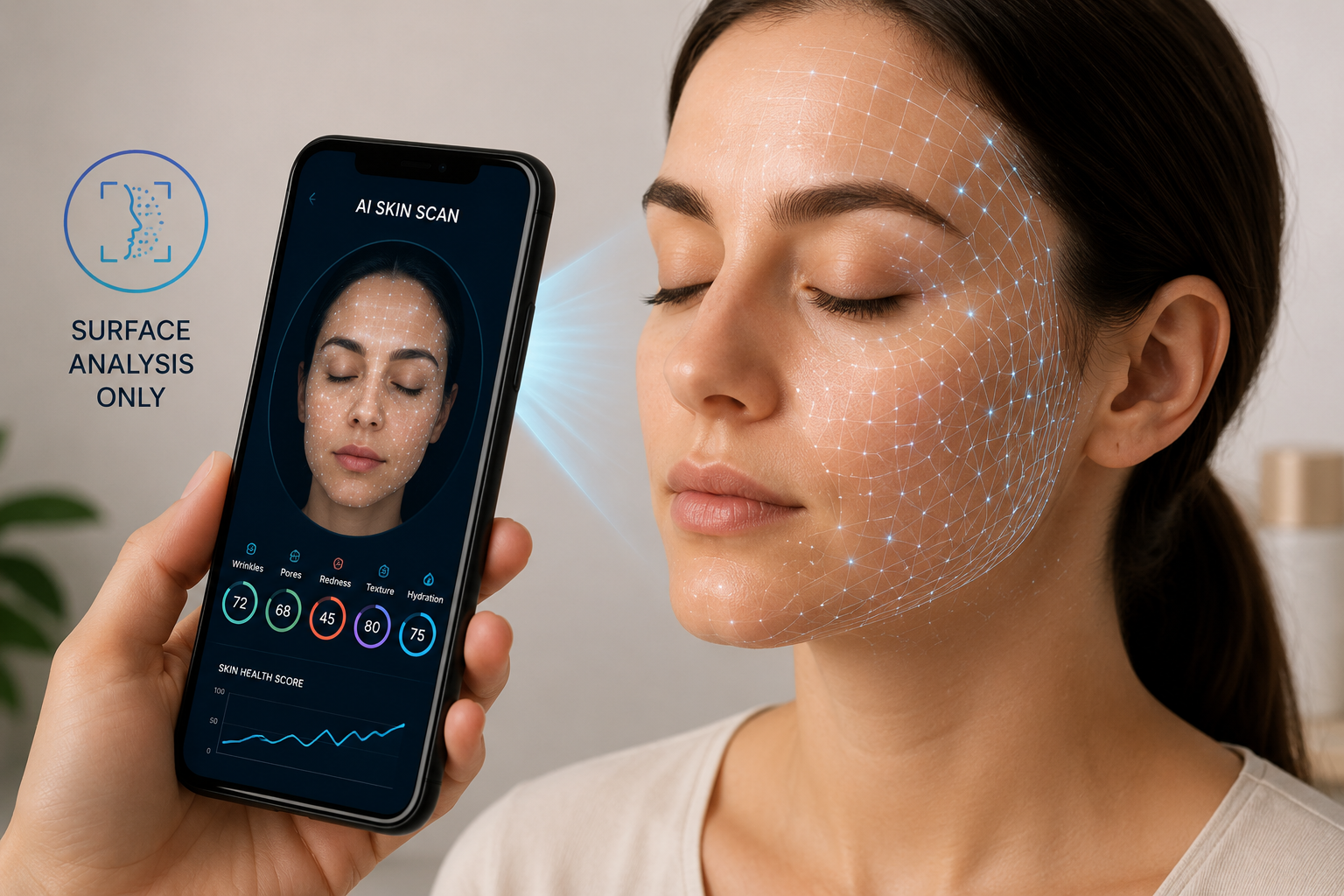
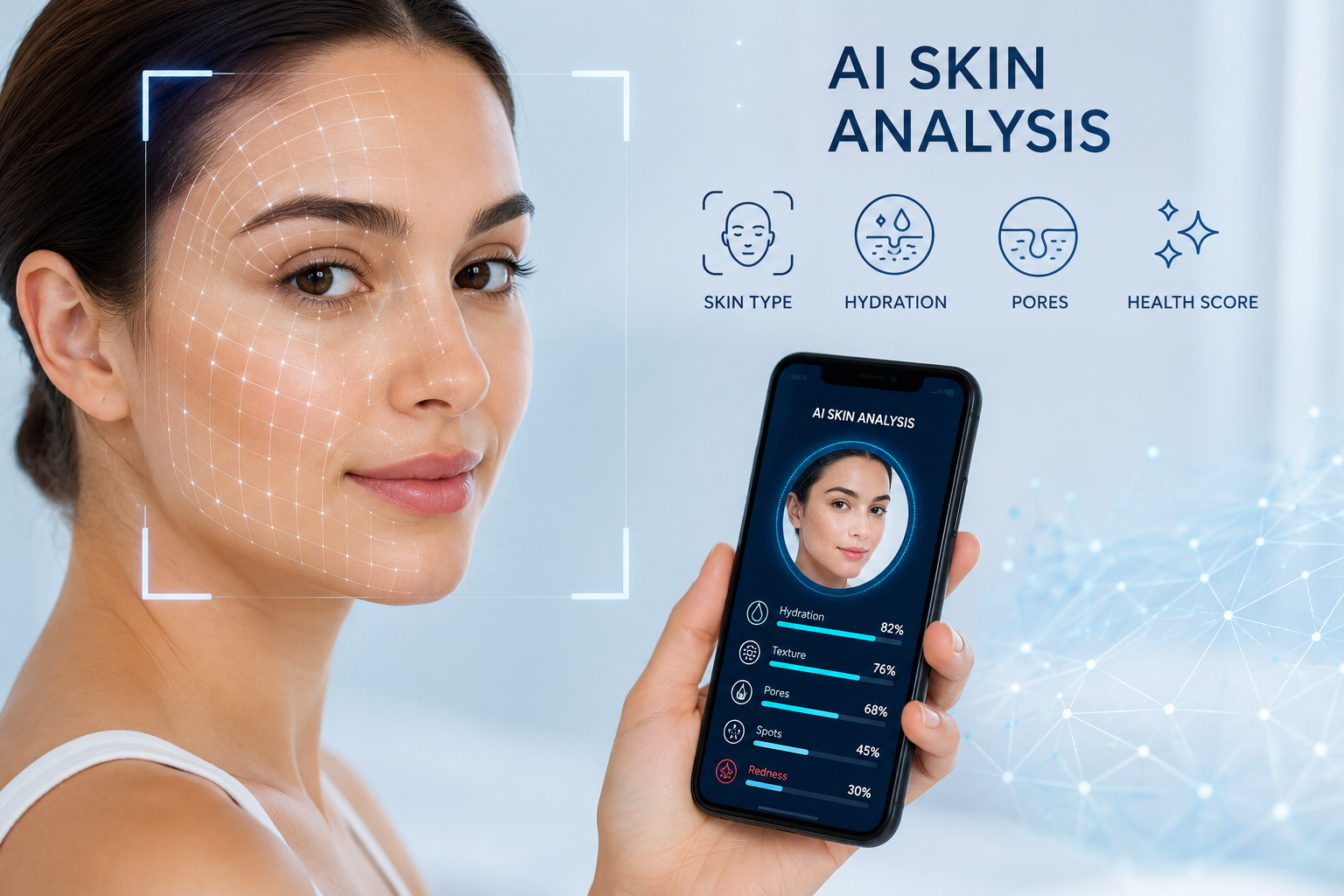
AI skin analysis uses artificial intelligence to examine facial photos and estimate visible skin concerns such as acne, wrinkles, pigmentation, pores, redness, and hydration. It can provide personalized skincare guidance and help track changes over time, but it cannot diagnose skin diseases or replace a dermatologist.[1][2]
Key Takeaways
- AI can detect many common cosmetic skin concerns from high-quality facial images.
- Results depend on lighting, camera quality, and the AI model.
- These tools work best for skincare guidance and progress tracking.
- AI cannot reliably diagnose skin cancer or other medical skin conditions.
- Persistent or unusual skin problems should always be evaluated by a dermatologist.
Introduction
Artificial intelligence is changing skincare faster than ever. Today, many smartphone apps and beauty websites claim they can analyze your skin within seconds. After taking a selfie, they generate reports on wrinkles, acne, dark spots, pores, hydration, and even your estimated skin age.
These tools are becoming popular because they are fast, convenient, and affordable. Some skincare brands even use AI before recommending products that match your skin type.
But an important question remains. Can artificial intelligence really understand your skin well enough to improve your skincare routine, or is it mainly a marketing tool?
Recent studies show that AI can accurately identify several visible cosmetic skin concerns when trained using large, diverse image datasets. However, researchers also agree that AI has important limitations and should never replace professional medical care.[1][2][3]
Why This Matters
Healthy skin is about more than appearance. Changes in your skin may reflect sun damage, aging, inflammation, allergies, hormone changes, or even underlying medical conditions.
Many people also spend money on skincare products that are not suitable for their skin. AI skin analysis aims to reduce this guesswork by providing personalized recommendations based on visible skin features.
When used correctly, these tools may help users build better skincare habits, monitor improvements, and choose products more wisely. Understanding both their strengths and limitations helps you make smarter skincare decisions.
How AI Skin Analysis Works
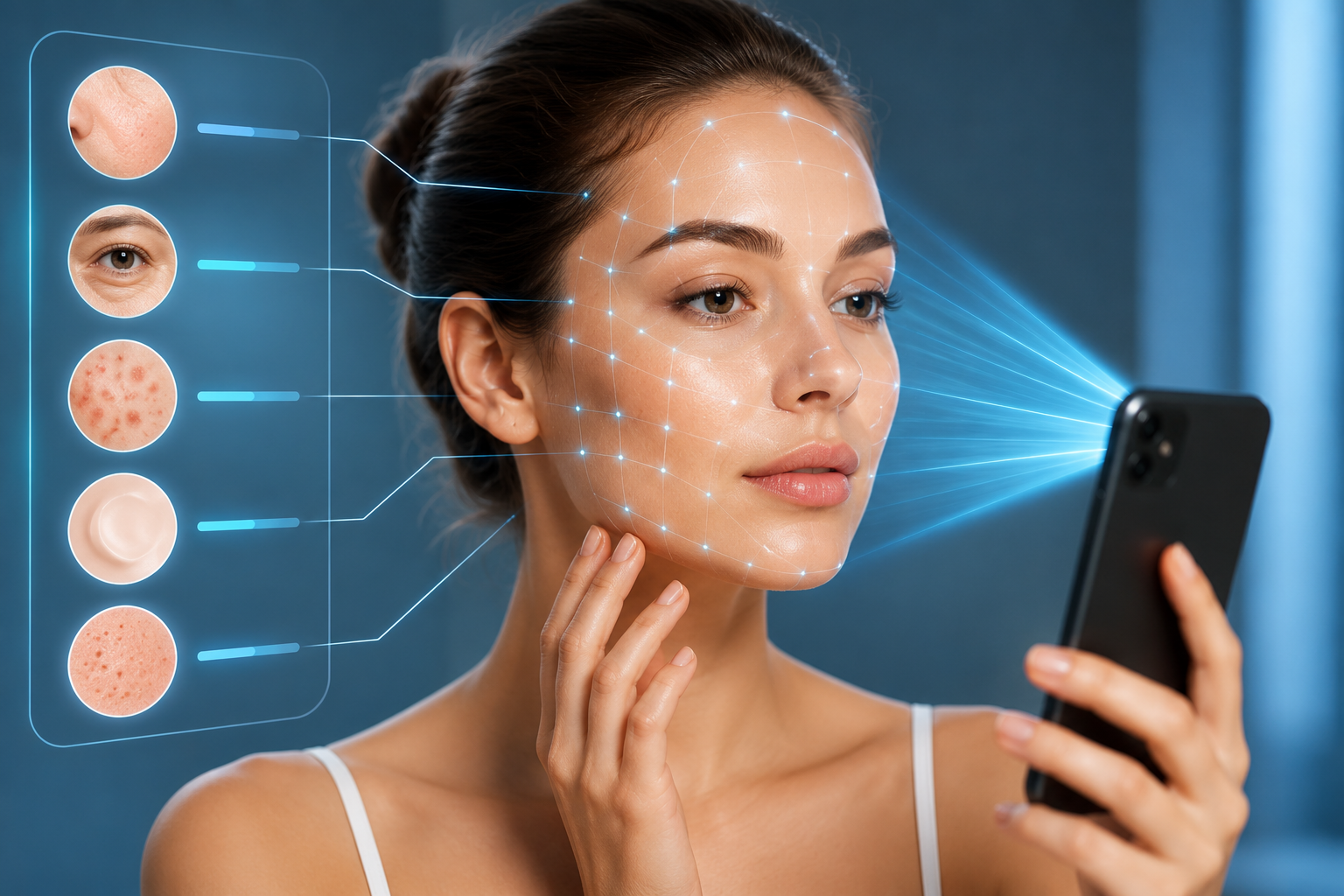
Most AI skin analysis tools use computer vision and deep learning. After you upload a clear selfie, the software compares your photo with thousands or even millions of labeled facial images used during training.[2][4]
The AI searches for patterns linked to common cosmetic skin concerns. It measures visible features such as:
- Fine lines and wrinkles
- Acne and blemishes
- Dark spots and pigmentation
- Large pores
- Redness
- Uneven skin tone
- Dryness and dehydration
- Oiliness
- Texture changes
Within seconds, the platform usually generates a skin report. Many apps also recommend skincare ingredients, products, or routines based on the results.
What the Science Says
Research suggests AI can accurately identify several visible skin features when trained with large, high-quality datasets.[1][2] In dermatology research, deep learning models have shown strong performance in detecting acne severity, pigmentation, wrinkles, and other visible skin changes from standardized facial photographs.[3][4]
However, researchers also report that accuracy depends heavily on image quality. Poor lighting, makeup, camera filters, unusual angles, or low-resolution photos can reduce reliability.[2][5]
Another important challenge is dataset diversity. AI systems trained mostly on lighter skin tones may perform less accurately on darker skin unless they include diverse training images. Newer models are improving by using more inclusive datasets representing different ages, skin tones, and ethnic backgrounds.[4][6]
Benefits of AI Skin Analysis
- Provides a fast skin assessment from home.
- Offers personalized skincare recommendations.
- Tracks changes using repeated photo analysis.
- Helps users understand common skin concerns.
- May reduce unnecessary spending on unsuitable products.
- Encourages better skincare habits.
- Improves access for people without nearby dermatology clinics.
Common Skin Concerns AI Can Detect
| Skin Concern | How AI Evaluates It |
|---|---|
| Acne | Counts blemishes and estimates severity. |
| Wrinkles | Measures facial lines and skin texture. |
| Pigmentation | Detects dark spots and uneven skin tone. |
| Pores | Estimates pore visibility and size. |
| Redness | Measures areas of visible inflammation. |
| Hydration | Estimates dryness using visible skin texture. |
| Oiliness | Analyzes facial shine and surface appearance. |
AI Skin Analysis vs Dermatologist
| Feature | AI Skin Analysis | Dermatologist |
|---|---|---|
| Speed | Seconds | Requires an appointment |
| Convenience | Very high | Moderate |
| Tracks skin changes | Yes | Yes |
| Detects cosmetic concerns | Yes | Yes |
| Diagnoses skin disease | No | Yes |
| Prescribes treatment | No | Yes |
Limitations of AI Skin Analysis
Although AI has improved rapidly, it is not perfect. Most platforms only evaluate what is visible on the surface of the skin. They cannot examine tissue beneath the skin or understand your complete medical history.
Several factors can reduce accuracy, including:[2][5]
- Poor lighting
- Low-quality smartphone cameras
- Heavy makeup
- Beauty filters
- Blurred photos
- Unusual camera angles
- Facial expressions that change skin appearance
AI also cannot confirm whether a mole, rash, or skin lesion is cancerous. A medical diagnosis requires a qualified dermatologist and, in some cases, additional testing or a skin biopsy.[3][7]
Are AI Skincare Recommendations Accurate?
Many AI skincare apps provide helpful recommendations, especially for hydration, acne care, pigmentation, and anti-aging routines. However, the quality of these recommendations depends on the data used to train the AI.
Some systems are developed with input from dermatologists and clinical research, while others are designed mainly for product marketing. Because of this, users should view AI recommendations as educational guidance rather than medical advice.[2][4]
The best results usually come from combining AI insights with evidence-based skincare practices and professional advice when needed.
Who Can Benefit Most?
- People starting a skincare routine.
- Users who want to monitor skin changes over time.
- People choosing between skincare products.
- Individuals interested in preventive skin care.
- People without easy access to dermatology clinics.
Who Should Be Careful?
AI skin analysis should not delay medical care. You should see a dermatologist instead of relying on AI if you have:
- A changing mole or unusual skin growth.
- A sore that does not heal.
- Severe acne with scarring.
- Rapidly spreading rashes.
- Persistent redness or swelling.
- Signs of skin infection.
- Any skin problem causing pain or bleeding.
These conditions require professional evaluation because AI cannot safely diagnose or treat them.[3][7]
Benefits and Risks
| Benefits | Risks |
|---|---|
| Fast skin assessment | May produce inaccurate results |
| Personalized skincare guidance | Cannot diagnose disease |
| Tracks skin progress | Depends on image quality |
| Easy to access | May encourage self-diagnosis |
| Supports skincare decisions | Privacy concerns when uploading photos |
Privacy and Data Security
Most AI skin analysis platforms require users to upload facial photographs. Before using any app, read its privacy policy carefully. Make sure you understand how your images are stored, whether they are shared with third parties, and if they are used to improve future AI models.
Choosing reputable companies with clear privacy practices helps protect your personal information while benefiting from AI-powered skincare tools.
The Future of AI in Skincare
AI technology is improving quickly. Future skin analysis tools are expected to become more accurate by combining facial imaging with medical research, wearable devices, and larger datasets that include people of different ages and skin tones.[2][6]
Experts believe future AI systems may offer:
- Real-time skin monitoring.
- More personalized ingredient recommendations.
- Early detection of cosmetic skin changes.
- Better progress tracking after treatments.
- Virtual consultations that support dermatologists instead of replacing them.
Despite these advances, healthcare professionals are expected to remain essential. AI works best as a decision-support tool rather than a replacement for medical expertise.
Bottom Line
AI skin analysis can be a valuable addition to your skincare routine. It provides quick insights, helps track changes, and offers personalized product suggestions based on visible skin features.
However, these tools have clear limits. They cannot diagnose skin diseases, replace a dermatologist, or guarantee perfect accuracy. Photo quality, lighting, and the AI model all affect the results.
The best approach is to use AI as a skincare assistant. Combine its recommendations with healthy skincare habits, sunscreen, evidence-based products, and professional medical advice whenever you notice unusual or persistent skin changes.
Key Takeaways
- AI skin analysis can identify many common cosmetic skin concerns from facial photos.
- Results are most accurate when images are clear and well lit.
- AI is useful for skincare guidance and monitoring progress over time.
- It cannot diagnose skin cancer or other medical skin conditions.
- Dermatologists remain the gold standard for diagnosing and treating skin disease.
References
- Esteva A, et al. Dermatologist-level classification of skin cancer with deep neural networks. Nature. 2017. (Tier 3: High-impact Medical Journal)
- Han SS, et al. Artificial intelligence in dermatology: Current applications and future directions. Journal of the American Academy of Dermatology. 2022. (Tier 3: Peer-reviewed Review)
- American Academy of Dermatology Association. Artificial intelligence and skin health. (Tier 2: Professional Organization)
- Brinker TJ, et al. Deep learning for dermatology and skin image analysis: A systematic review. JAMA Dermatology. 2023. (Tier 1: Systematic Review)
- World Health Organization. Ethics and governance of artificial intelligence for health. (Tier 2: Major Health Organization)
- European Academy of Dermatology and Venereology. Artificial intelligence in dermatology: Current evidence and future opportunities. (Tier 2: Professional Organization)
- National Cancer Institute. Skin cancer screening and diagnosis. (Tier 2: Government Health Agency)