Reviewed by the HyaluFlow Health Editorial Team | Published: July 6, 2026 | Last Updated: August 27, 2026
Quick Answer
AI skin scanners can analyze visible features such as wrinkles, pigmentation, texture, redness, and pores. However, they cannot independently determine every cause of a skin concern or replace a dermatologist's assessment.
Accuracy depends on the algorithm, image quality, training data, skin tone, and intended use. Diagnostic Accuracy of Artificial Intelligence Compared to Family Physicians and Dermatologists for Skin Conditions
Key Takeaways
- AI skin scanners analyze images, not your complete health history.
- They can help track visible changes over time.
- Lighting and camera quality can affect results.
- Accuracy may vary across skin tones and devices.
- AI cannot explain every underlying cause of a skin problem.
- Persistent or changing concerns may require professional evaluation.
How AI Skin Scanners Work
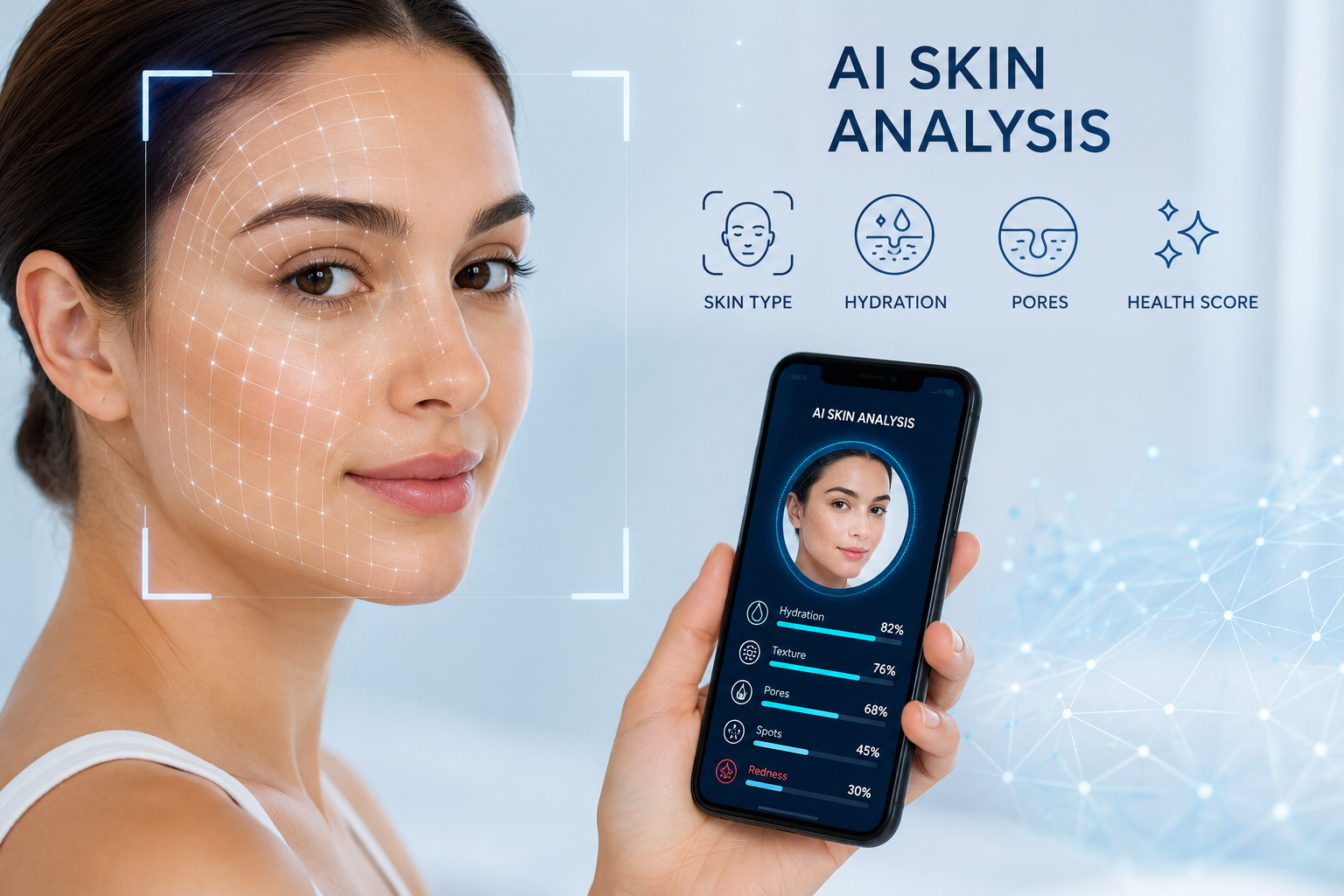
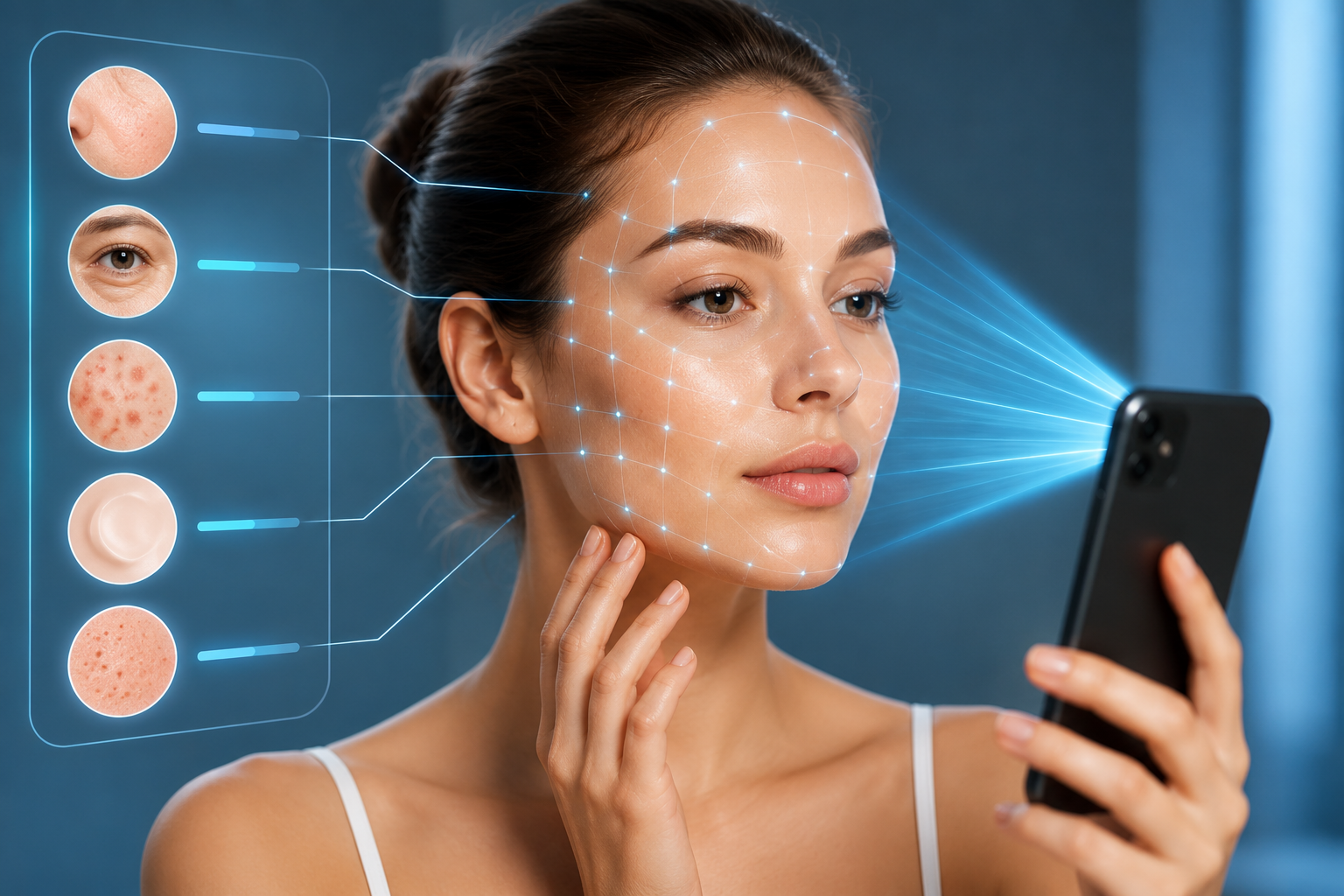
Most AI skin analysis tools use smartphone or dedicated-device photographs. Software analyzes visual patterns and produces measurements, scores, or recommendations.
Depending on the system, it may assess wrinkles, pigmentation, redness, texture, pores, or certain lesions. This is image analysis, not a complete assessment of your skin health.
The FDA recognizes AI-enabled medical devices for applications such as image processing and disease detection, but performance depends on the device's intended use and validation. FDA: Artificial Intelligence-Enabled Medical Devices
What AI Skin Analysis Can Do Well
Track visible changes. Consistent lighting, positioning, and equipment can make repeated images useful for monitoring trends.
Analyze specific features. AI can perform well on narrowly defined image-based tasks when appropriately trained and validated.
Offer a starting point. An AI tool may help identify visible concerns and organize observations for a skincare routine.
However, results from controlled studies do not automatically mean every consumer app performs equally well in everyday conditions. Artificial Intelligence in Dermatology: A Literature Review of Current Evidence and Clinical Implementation
Where AI Skin Scanners Fall Short
A photograph cannot capture everything affecting skin health. Hormones, medications, allergies, symptoms, and medical history require information beyond an image.
Two people can have similar-looking acne or redness but completely different causes. An algorithm may identify the visible pattern without explaining why it developed.
Lighting, shadows, camera settings, distance, and resolution can also change the appearance of skin and influence automated analysis.
How Accurate Are AI Skin Scanners?
There is no single accuracy rate for AI skin scanners. Different systems use different datasets and may be designed for cosmetic tracking, screening, triage, or clinical diagnosis.
Research shows promising diagnostic performance for some AI dermatology systems, but important limitations remain, including differences between specialist and smartphone settings and performance across darker skin tones. Equity and Generalizability of Artificial Intelligence for Skin-Lesion Diagnosis
A strong research result should therefore not be treated as proof that every consumer skin analysis app is equally reliable.
Why Skin Tone and Dataset Diversity Matter
AI systems can perform differently when training datasets do not adequately represent the people using them. Dermatology research has identified underrepresentation of darker skin tones as an important concern.
A review found that limited representation, image quality, and standardization can affect AI performance in skin of color. Artificial Intelligence in Dermatology: Advancements and Challenges in Skin of Color
Research continues to examine these differences and the need for diverse training and validation. Exploring the Diagnostic Capability of Artificial Intelligence in Dermatology for Darker Skin Tones
Common Myths About AI Skin Scanners
Myth: A skin score tells you how healthy your skin is.
Fact: A score reflects the system's measurements. It is not automatically a medical health rating.
Myth: AI can diagnose any skin condition from a photo.
Fact: Some systems support specific diagnostic tasks, but consumer scanners are not universal diagnostic tools.
Myth: All AI skin scanners are equally accurate.
Fact: Accuracy varies with the algorithm, dataset, device, image quality, and intended use.
Who Should Be Extra Cautious?
People with darker skin tones should check whether an AI tool has been validated across diverse skin types. Inadequate representation can contribute to performance gaps. Artificial Intelligence for the Classification of Pigmented Skin Lesions in Populations With Skin of Color
Anyone with eczema, psoriasis, rosacea, persistent acne, or a changing mole should not replace professional care with an app result.
How to Use an AI Skin Scanner Safely
- Use consistent lighting and the same device for repeat scans.
- Follow the app's instructions about makeup and skin preparation.
- Compare trends instead of reacting to one score.
- Review the app's privacy policy before uploading facial images.
- Seek professional evaluation for persistent or changing concerns.
Privacy also matters because dermatology AI research has identified concerns involving data security, misdiagnosis, and transparency. Ethical Considerations for Artificial Intelligence in Dermatology: A Scoping Review
What the Science Says
AI has genuine potential in dermatology, especially for image analysis, screening support, and monitoring visible changes. Its usefulness depends on appropriate validation, diverse datasets, and human oversight.
The evidence supports AI as a helpful technology, not a universal replacement for clinical judgment.
Evidence Strength Summary
| Claim | Evidence Strength |
|---|---|
| AI can analyze dermatology images | Strong |
| AI can support selected skin-disease tasks | Moderate to Strong |
| Performance varies by dataset and skin tone | Strong |
| Image quality affects assessment | Moderate |
| Consumer scanners can replace dermatologists | Not supported |
Bottom Line
An AI skin scanner can help analyze visible features and track changes, but it cannot provide a complete picture of your skin health. Accuracy depends on the technology, images, training data, and intended purpose.
Use AI skin analysis as one source of information, not the final authority. If a concern is persistent, painful, rapidly changing, or worrying you, professional dermatology assessment remains the safer choice.