Medically reviewed by the HyaluFlow Health Editorial Team | Published: July 2, 2026 | Last Updated: August 9, 2026
Self-care is easier when you have the right information.
But figuring out your skin type, hair concerns, calorie needs, hydration, body fat, or nutrition targets can quickly become confusing when you have to search for separate calculators and guides.
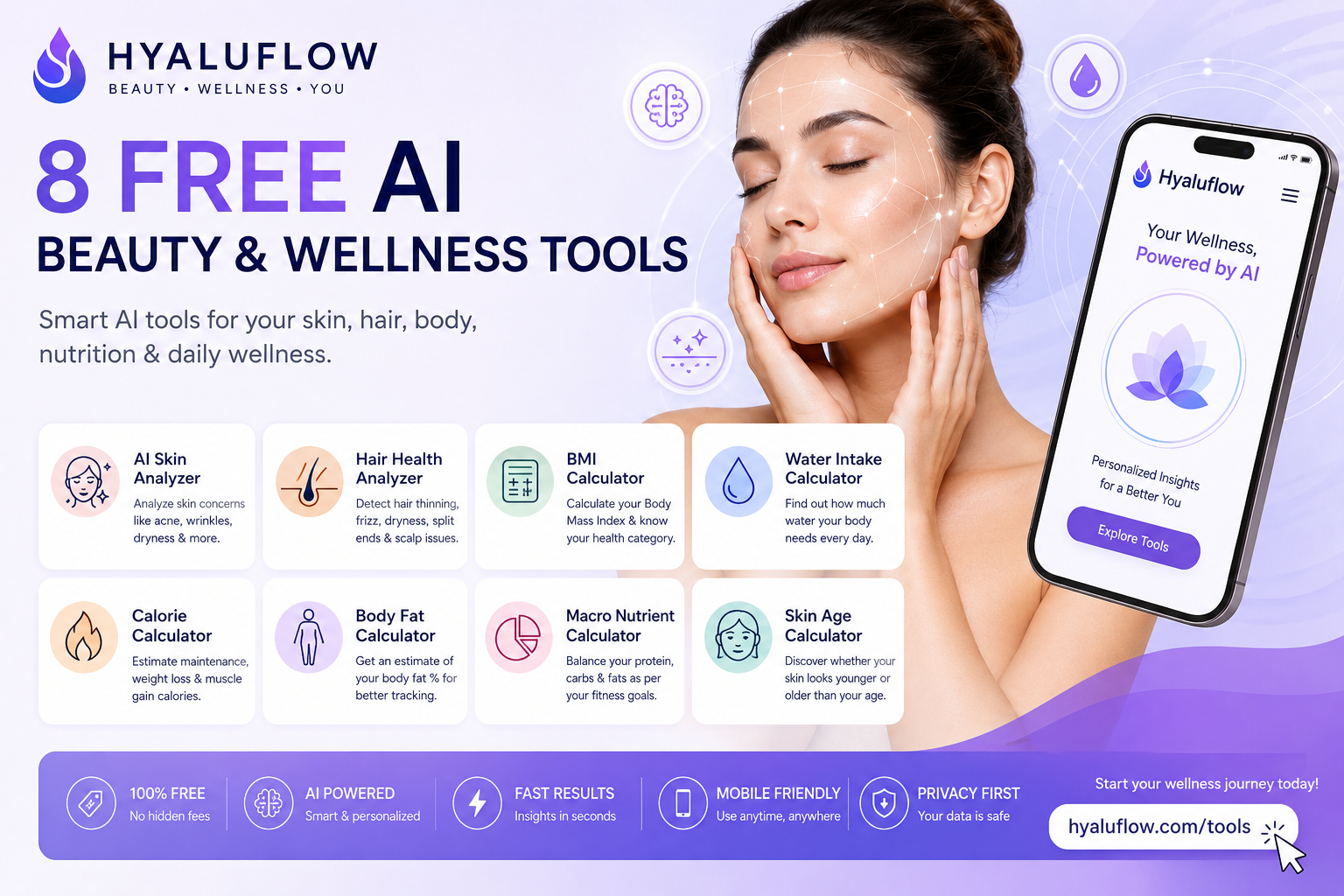
HyaluFlow brings eight free AI-powered beauty and wellness tools together in one place, helping you turn basic personal information into quick, practical insights.
From skin and hair analysis to BMI, calorie, hydration, body fat, and macronutrient calculations, these tools are designed to make everyday wellness decisions simpler.
Explore all HyaluFlow AI beauty and wellness tools.
Quick Answer
HyaluFlow offers eight free AI beauty and wellness tools covering skin analysis, hair health, BMI, hydration, calorie needs, body fat, macronutrients, and skin age. They provide personalized insights or estimates based on the information you enter, but they should be used for general wellness guidance rather than medical diagnosis or treatment.
Key Takeaways
- HyaluFlow currently offers eight free beauty and wellness tools.
- The AI Skin Analyzer provides personalized insights into common skin concerns.
- The Hair Health Analyzer evaluates common hair and scalp concerns.
- The BMI Calculator estimates Body Mass Index and its standard weight category.
- The Water Intake Calculator estimates daily fluid needs based on personal factors.
- The Calorie Calculator estimates maintenance, weight-loss, and muscle-gain calorie targets.
- The Body Fat Calculator estimates body fat percentage for fitness tracking.
- The Macro Nutrient Calculator helps divide calorie targets between protein, carbohydrates, and fat.
- The Skin Age Calculator compares estimated skin age with chronological age.
- Results are estimates or wellness insights and should not replace professional medical advice.
Important:
AI and wellness calculators can make health information easier to understand, but personalized results are not automatically medically accurate. Health-related digital tools should be treated according to their intended purpose and limitations.[1][2]
1. AI Skin Analyzer
Your skin can change with age, weather, hormones, lifestyle, and skincare habits.
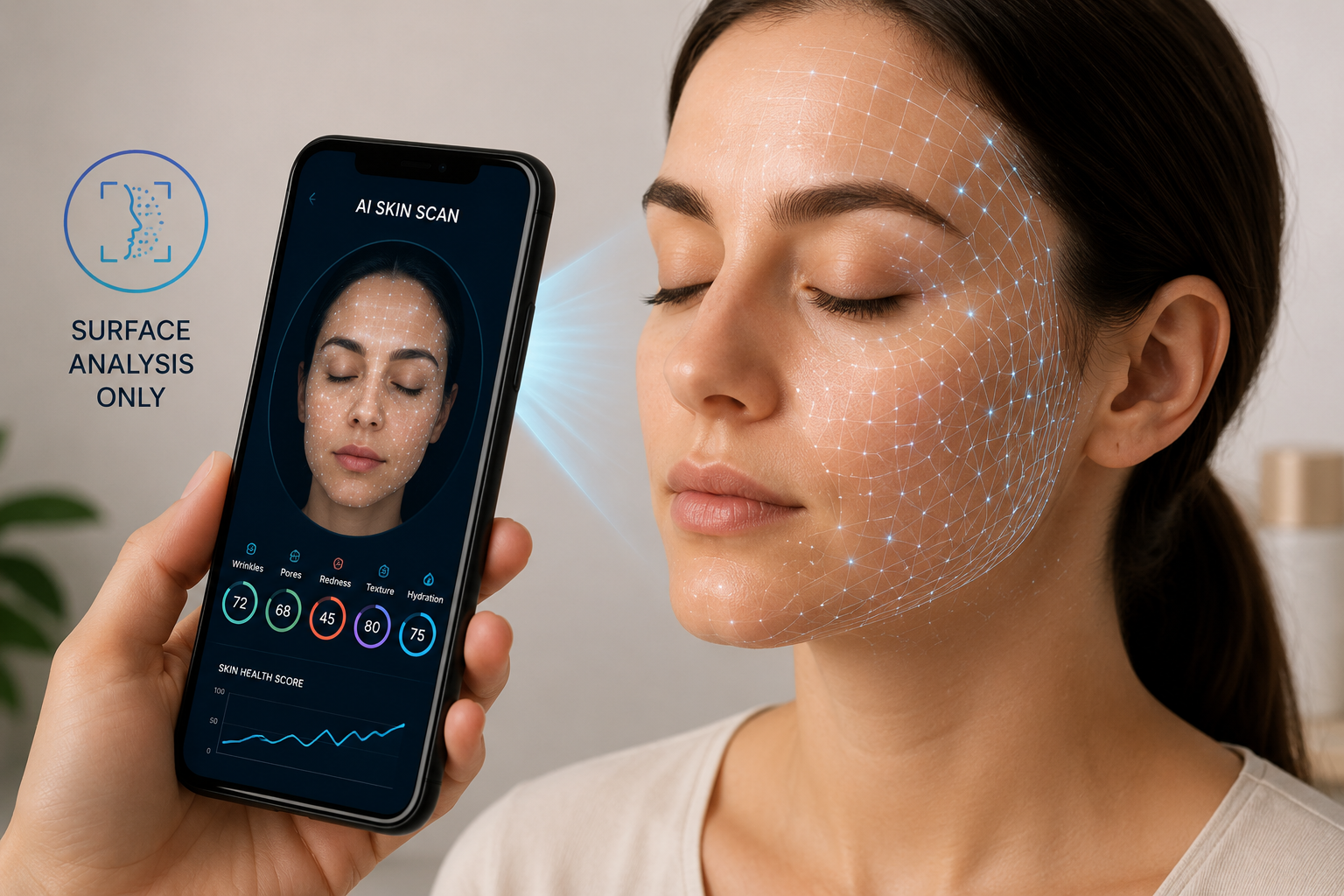
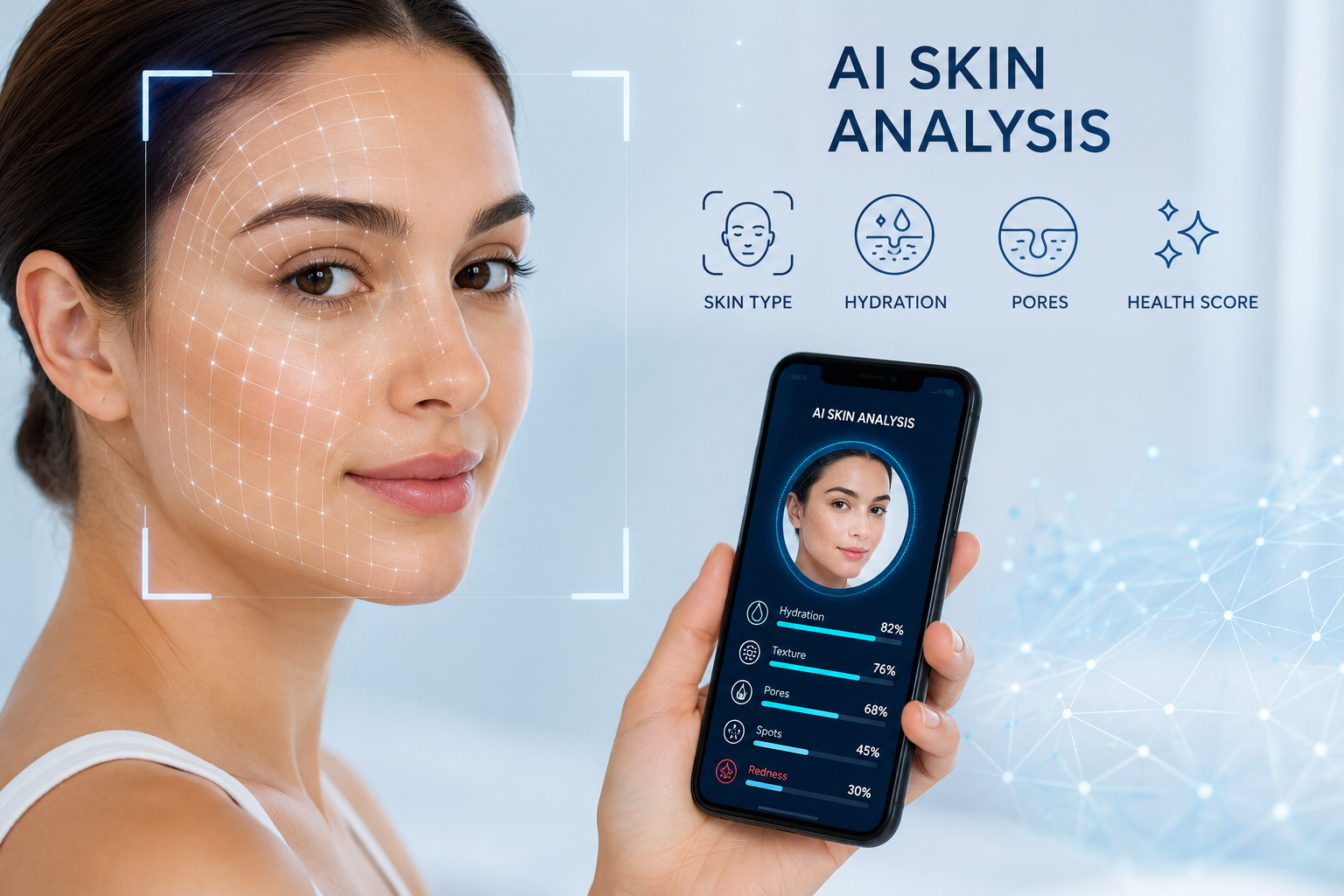
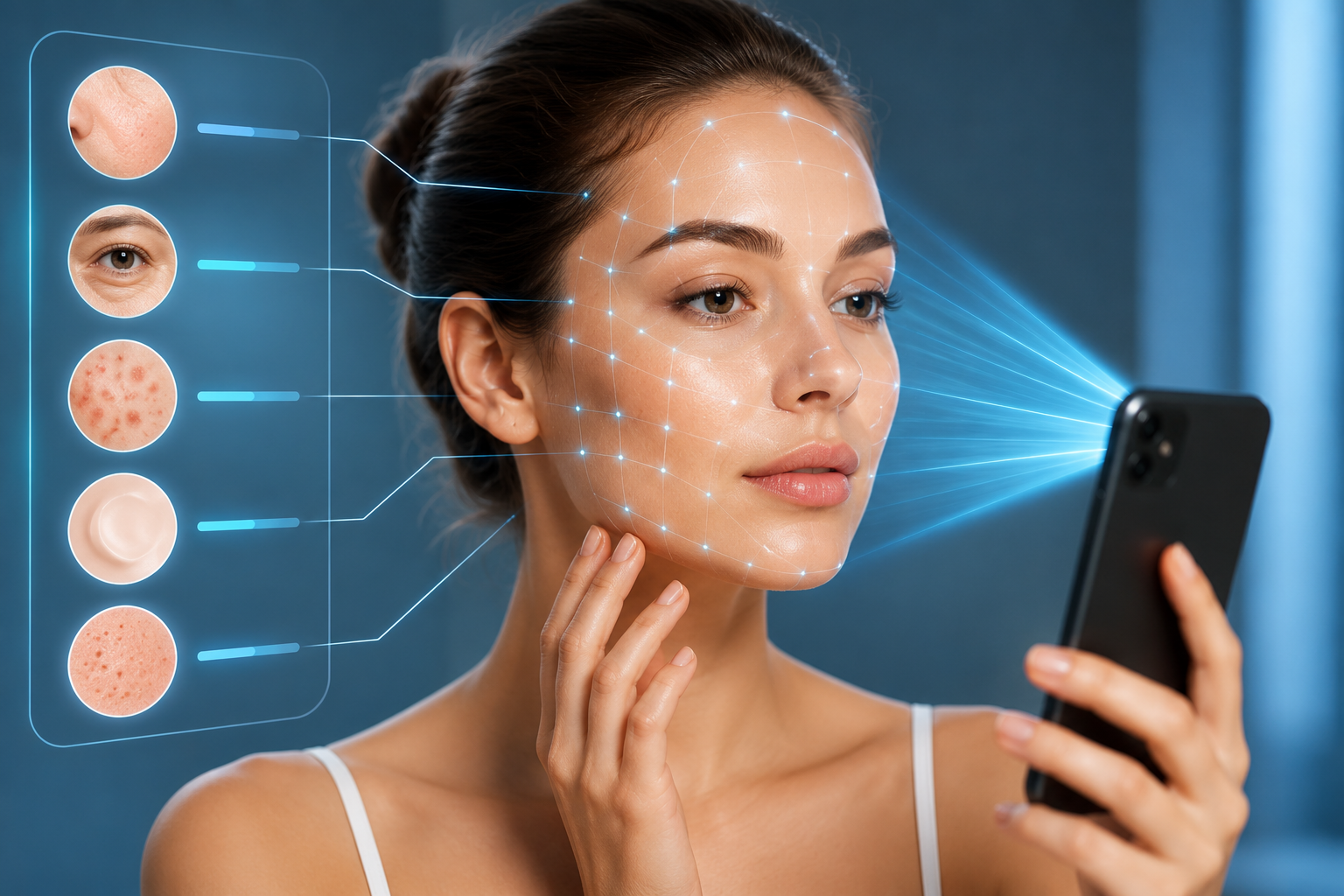
The AI Skin Analyzer helps assess common concerns such as acne, wrinkles, dryness, oiliness, and dark spots.
Instead of relying on a generic skincare routine, the tool provides personalized skincare insights based on the information or analysis provided.
This can be useful when you are trying to understand what your skin may need before building a routine.
However, an AI skin analysis should not be treated as a diagnosis. Persistent acne, unusual pigmentation, rapidly changing lesions, severe irritation, or other concerning symptoms should be assessed by a qualified healthcare professional.
2. Hair Health Analyzer
Hair problems are not always easy to identify from appearance alone.
The Hair Health Analyzer provides AI-based insights into concerns such as hair thinning, frizz, dryness, split ends, and scalp issues.
Understanding the dominant concern can help you think more clearly about your haircare routine and the types of products or habits worth reviewing.
Hair health is influenced by many factors, including genetics, nutrition, styling practices, chemical treatments, scalp health, hormones, and environmental exposure.
Therefore, an online analyzer should be considered a starting point rather than a diagnosis of hair loss or scalp disease.
Sudden or significant hair loss, scalp inflammation, persistent itching, or unexplained changes should be discussed with a healthcare professional.
3. BMI Calculator
The BMI Calculator provides a quick estimate of Body Mass Index using height and weight.
BMI is calculated by dividing weight in kilograms by height in meters squared. It is commonly used as a population-level screening measure for weight categories.
For adults, standard BMI categories include underweight, healthy weight, overweight, and obesity.
But BMI has important limitations. It does not directly measure body fat and cannot distinguish muscle mass from fat mass.
A muscular person, for example, may have a higher BMI without having excess body fat.
That is why BMI is more useful when considered alongside other information such as waist circumference, body composition, fitness, medical history, and overall health.
The Centers for Disease Control and Prevention describes BMI as a screening measure rather than a diagnostic tool.[3]
4. Water Intake Calculator
How much water do you actually need each day?
The Water Intake Calculator provides an estimate based on factors such as body weight and activity level.
There is no single amount of water that is ideal for every person. Fluid requirements can change with exercise, temperature, diet, illness, pregnancy, breastfeeding, medications, and other factors.
Water also comes from foods and other beverages, not just plain drinking water.
The National Academies of Sciences, Engineering, and Medicine has established adequate intake values for total water, but individual needs can vary considerably.[4]
Use the calculator as a practical starting point rather than an exact medical prescription.
Try the Water Intake Calculator.
5. Calorie Calculator
Calories provide the energy your body needs to function, move, and maintain normal physiological processes.
The Calorie Calculator estimates daily calorie requirements based on personal information and activity level.
It can provide estimates for:
- Maintenance calories.
- Weight-loss calorie targets.
- Muscle-gain calorie targets.
These calculations typically begin with an estimate of resting energy expenditure and then account for physical activity.
However, estimated calorie needs are not exact. Actual energy expenditure differs between people and can change as body weight, activity, sleep, and other factors change.
For sustainable weight management, calorie estimates work best as a starting point that can be adjusted according to real-world progress.
6. Body Fat Calculator
Body weight alone does not tell the full story about body composition.
The Body Fat Calculator provides an estimate of body fat percentage, giving you another metric for tracking fitness progress.
Body fat percentage refers to the proportion of total body weight that is fat mass.
Unlike BMI, body fat percentage attempts to provide information about body composition. However, the accuracy of an estimate depends heavily on the method and measurements used.
Many consumer body-composition methods have limitations, and results can vary because of hydration, measurement technique, equipment, and individual differences.
For that reason, body fat estimates are generally more useful for tracking trends over time than obsessing over a single number.
7. Macro Nutrient Calculator
Macronutrients are the three major nutrients that provide energy: protein, carbohydrates, and fat.
The Macro Nutrient Calculator helps you estimate how your daily calorie target can be divided among these three macronutrients according to your fitness goal.
Protein supports muscle maintenance and repair. Carbohydrates provide an important source of energy, while dietary fat supports essential physiological functions and helps the body absorb fat-soluble vitamins.
The ideal macronutrient distribution varies according to factors such as activity level, training goals, food preferences, and overall dietary pattern.
A macro calculator can therefore help with planning, but it should not be treated as a rigid prescription.
Try the Macro Nutrient Calculator.
8. Skin Age Calculator
Does your skin appear younger or older than your chronological age?
The Skin Age Calculator provides an estimate designed to help you explore how factors associated with skin aging may affect your overall skin profile.
Skin appearance is influenced by many variables, including age, genetics, ultraviolet exposure, smoking, sleep, lifestyle, skincare habits, and environmental factors.
A skin-age result should therefore be viewed as an educational estimate rather than a biological measurement of how old your skin actually is.
More importantly, the result can encourage useful habits such as daily sun protection, consistent moisturization, adequate sleep, and avoiding tobacco exposure.
Why Use HyaluFlow Beauty & Wellness Tools?
The biggest advantage is convenience.
Instead of searching for separate calculators and assessments, HyaluFlow brings eight tools together in one wellness-focused platform.
- Free: Access the tools without paying for individual calculations.
- Fast: Get results without manually performing complicated calculations.
- Personalized: Results are based on information you provide.
- Practical: Each tool focuses on a specific beauty, nutrition, or fitness question.
- Accessible: The tools are designed for convenient everyday use.
Digital health technologies can help people access and understand health-related information, but their usefulness depends on the tool's purpose, design, underlying method, and limitations.[1][2]
Are AI Beauty & Wellness Tools Accurate?
Accuracy depends on the tool.
A mathematical calculator can produce a precise calculation from the information entered, but the underlying formula may still only estimate a real-world biological measurement.
AI-based analyzers have a different challenge. Their results depend on the quality of the data, the model, the training process, and the specific problem being assessed.
The U.S. Food and Drug Administration notes that AI-enabled health technologies require careful consideration of factors such as performance, data quality, bias, and uncertainty.[1][2]
That is why HyaluFlow tools should be used as wellness and educational aids, not as substitutes for professional diagnosis or treatment.
How to Get Better Results From Wellness Tools
Use Accurate Information
Enter your current height, weight, activity level, age, or other requested information as accurately as possible.
Don't Treat One Number as the Whole Story
A BMI result, calorie estimate, body fat percentage, or skin-age score cannot describe your entire health profile.
Look at trends and context rather than becoming fixated on one result.
Use Results to Guide Better Questions
A useful tool does not necessarily give you the final answer. It can help you identify what you should investigate next.
For example, a hair analyzer may highlight thinning, but the cause of hair loss may require professional evaluation.
Know When Professional Advice Is Necessary
Persistent symptoms, severe pain, rapid hair loss, concerning skin changes, eating-related problems, or unexplained changes in health should be evaluated by a qualified healthcare professional.
What the Science Says
Digital wellness tools can make calculations and health information more accessible, but their results should be interpreted according to their intended use.
The FDA distinguishes general wellness technologies from software intended for medical diagnosis, treatment, or clinical decision-making.[1][2]
BMI is a useful example. The CDC recognizes BMI as a screening measure, but it does not directly measure body fat or diagnose an individual's health status.[3]
Hydration is similarly individualized. Official dietary reference values provide useful guidance for populations, while actual fluid needs vary according to environmental and physiological factors.[4]
AI-based health technologies add another layer of complexity because performance can vary depending on the data used to develop and evaluate the system.[1][2]
The practical takeaway is simple: use calculators and AI analyzers to make everyday wellness information easier to understand, but do not mistake an estimate for a clinical measurement.
Common Myths About AI Beauty & Wellness Tools
Myth: An AI skin analyzer can diagnose any skin condition.
Fact: Consumer AI analysis should not automatically be treated as a medical diagnosis. Concerning or persistent skin changes may require examination by a dermatologist.
Myth: BMI tells you how much body fat you have.
Fact: BMI uses height and weight. It does not directly measure body fat and cannot distinguish muscle from fat.[3]
Myth: Everyone needs exactly the same amount of water.
Fact: Fluid requirements vary according to body size, activity, climate, diet, health status, and other factors.[4]
Myth: A calorie calculator gives your exact calorie requirement.
Fact: Calorie calculators provide estimates based on formulas and personal inputs. Actual energy expenditure can differ.
Myth: Your skin age is a biological measurement.
Fact: A skin-age score is an estimate based on the tool's methodology. It does not literally measure the biological age of your skin.
Myth: A body fat estimate is always exact.
Fact: Body composition estimates can vary depending on the measurement method, equipment, hydration, and technique.
Who Should Use HyaluFlow Tools?
- People building a personalized skincare routine.
- Anyone who wants quick insight into common skin concerns.
- People trying to understand hair thinning, dryness, frizz, or split ends.
- Adults tracking weight and BMI.
- People looking for a starting estimate for daily calorie needs.
- Fitness enthusiasts tracking estimated body fat.
- People planning protein, carbohydrate, and fat intake.
- Anyone interested in understanding factors associated with visible skin aging.
3 Simple Ways to Use the Tools Today
- Choose the tool that matches your goal: Start with skin, hair, hydration, nutrition, or fitness depending on what you want to understand.
- Enter accurate information: Better inputs produce more meaningful estimates and insights.
- Use the result as a starting point: Track changes over time and seek professional advice when a result raises a genuine health concern.
Bottom Line
AI and digital wellness tools can make everyday self-care more convenient, but they are most useful when you understand what their results actually mean.
HyaluFlow offers eight free tools covering skin analysis, hair health, BMI, hydration, calorie needs, body fat, macronutrients, and skin age.
Use them to get quick personalized insights, organize your wellness goals, and make your daily routines more informed.
Just remember: an AI analysis or calculator provides an estimate or wellness insight. It does not automatically replace a clinical examination, laboratory test, or professional medical advice.
Explore all 8 HyaluFlow tools: https://hyaluflow.com/tools/
References
- U.S. Food and Drug Administration. What is Digital Health? FDA Digital Health Center of Excellence. FDA.
- U.S. Food and Drug Administration. General Wellness: Policy for Low Risk Devices. FDA. FDA.
- Centers for Disease Control and Prevention. Adult BMI Categories. CDC. CDC.
- National Academies of Sciences, Engineering, and Medicine. Dietary Reference Intakes for Water, Potassium, Sodium, Chloride, and Sulfate. National Academies Press. National Academies.
- U.S. Food and Drug Administration. Artificial Intelligence Program: Research on AI/ML-Based Medical Devices. FDA. FDA.